

A bachelor degree in the Czech Republic is open to school leavers from any country. In Czech, it is tuition free at public universities.
Applying straight after school has its own features. Many applicants are 17 or 18, receive their school diploma only in summer and make some decisions together with parents. This article covers exactly these points. Separate pages, which we link below, describe the general admission process.
Bachelor degree in the Czech Republic: where to start after school
Can I study a bachelor’s degree in English in the Czech Republic for free? No. Free study applies to programs taught in Czech at public universities, regardless of nationality.
The official portal Study in Czechia confirms this. English-taught programs usually charge tuition, and each university sets its own fee. We compare the options in our article on English programs at Czech universities.
How much does it cost to study? The answer depends on the language of study, the city and your documents. We break down the expenses in the article how much does it cost to enter a Czech university.
A bachelor’s program usually takes three years. Free study has a time limit: if you exceed the standard length by more than one year, the university charges a fee. For Czech-taught programs, most universities require Czech at B2. Learning the language takes time, so plan it well before you finish school. Our article Czech to B2 for entry explains how long the path usually takes.
The timeline is the same for all applicants. Choose programs in autumn, ideally in September, October or November.
Applications usually run from November to the end of February, March or April. Entrance exams take place mostly in April and May. Creative programs accept applications earlier, in September and October. The full schedule is in our admission calendar. Our hub university in Czech Republic for international students shows the general path.

Can I study in the Czech Republic without an entrance exam?
Yes, some programs admit applicants without an entrance exam. In that case, the university looks at your school grades and a Czech B2 certificate. Universities convert the grades into the Czech five-point scale, where 1 is the highest mark.
At an EdVista webinar, Oksana Stupak described three admission options. You can take an entrance exam and present a Czech certificate. Some universities accept the exam alone as proof of language. Others admit you without exams, based on grades and a B2 certificate.
According to her, the list of programs without exams usually appears in late November or early December. It changes every year, so check it as soon as universities publish it. Many applicants combine programs with and without exams to keep a backup option.
Bachelor degree in the Czech Republic before 18: documents, dormitory and parents
Czech students spend 13 years at school, so most of them start university at 19 or 20. School leavers from abroad are often younger. Dmytro, an EdVista student, entered Mendel University in Brno at 17, right after school. Most of his classmates are around 20, and he says the age gap felt strange only at first. Before admission, he studied Czech for nine months with an EdVista group. He passed the B2 exam on his first attempt.
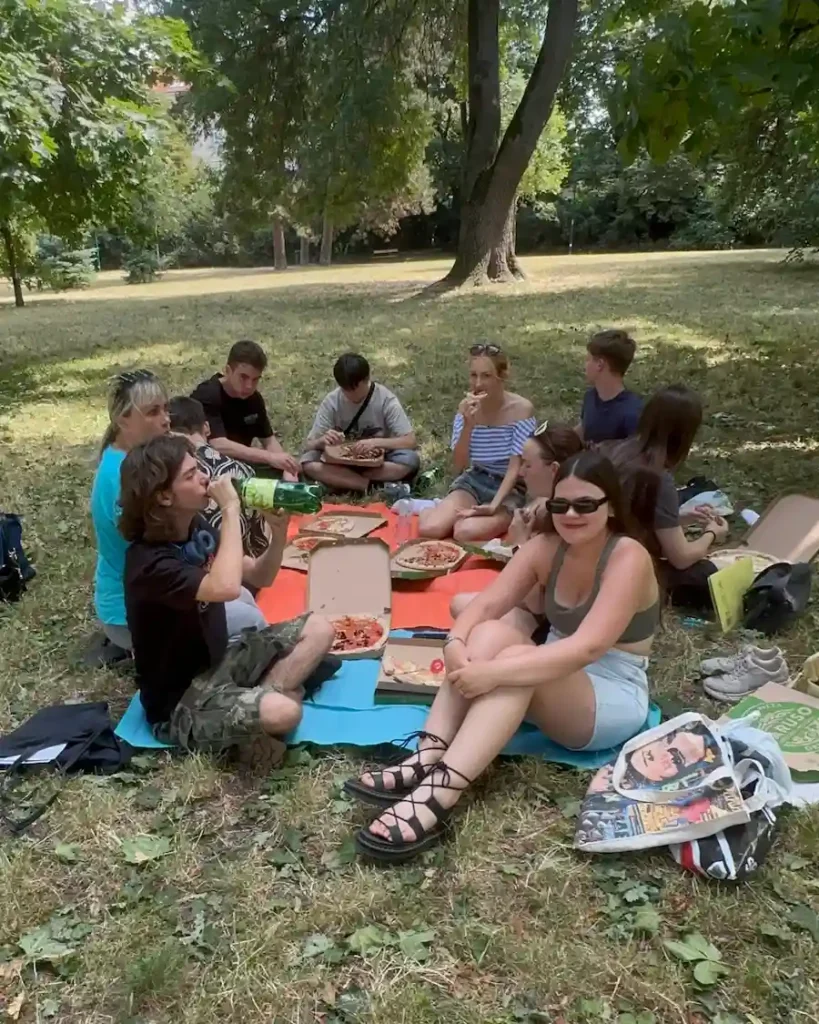
A Czech university treats every student as an adult, even before the age of 18. Letters about admission, housing and the timetable go to the applicant’s email, and the applicant answers them. Families therefore agree in advance who keeps track of deadlines.
Dormitory rules depend on the faculty. Some faculties house first-year students right after enrollment, while others give priority to senior students. It makes sense to look for housing early.
Parents of a minor applicant may also need to sign documents. In the Czech Republic, a person becomes an adult at 18.
The Czech Ministry of the Interior lists parental consent among the residence permit documents for applicants under 18. This applies when you apply at an embassy. Embassies publish their own detailed rules. For example, the Czech Consulate General in Los Angeles asks for written consent from both parents. If they do not sign it at the consulate, a notary must certify their signatures.
University requirements for minors, such as signatures on the application or the dormitory contract, differ between schools. Check them on the website of your faculty before you apply.
School diploma, exams and residence for study
Before moving, a school leaver deals with three more topics: entrance exams, the school diploma and the residence permit.
Do Czech universities accept SAT, A-levels or national exams?
Czech universities assess your secondary school diploma and their own entrance exams. Each faculty sets its own requirements. Some programs use general study aptitude tests, while others hold subject exams or interviews. For example, most faculties of Masaryk University use their own TSP test. Other universities often use the OSP test by Scio.
Whether a faculty takes international results into account, such as SAT, A-levels or the IB, depends on the faculty. Check its admission page or write to the admissions office before you register for any test. This saves you from taking an exam that the faculty does not use.
Nostrification and apostille
A foreign school diploma is not recognized in Czechia automatically. That is why applicants go through nostrification.
The faculty carries out internal nostrification, which recognizes the diploma only for that faculty. External nostrification at the regional authority is valid in the whole country but takes more time. The authority may also set nostrification exams. Applicants who receive their diploma in summer often have time only for internal nostrification before enrollment.
For external nostrification, the diploma needs an apostille or superlegalization, depending on your country. Read more in our guides to nostrification in the Czech Republic and apostille for the Czech Republic.
Long-term residence for study
Citizens of countries outside the EU who study in Czechia for more than 90 days need a long-term visa or a long-term residence permit for study. You can apply at a Czech embassy or, in some cases, at a Ministry of the Interior office in Czechia. The current list of documents is on the page about long-term residence for study.
How EdVista helps with a bachelor degree in the Czech Republic
A school leaver has to learn the language and finish school while following the deadlines of Czech universities. Our admission support to a Czech university takes the organizational part off the family.
Each applicant works with a personal coordinator. The coordinator helps choose universities, submit applications, collect documents and go through nostrification. Together you build a list with programs that require entrance exams and programs that do not. This gives the applicant a backup option. EdVista coordinators work in Czechia, so they can handle local questions on the spot. Coordinators also check whether a faculty needs extra documents from your school.
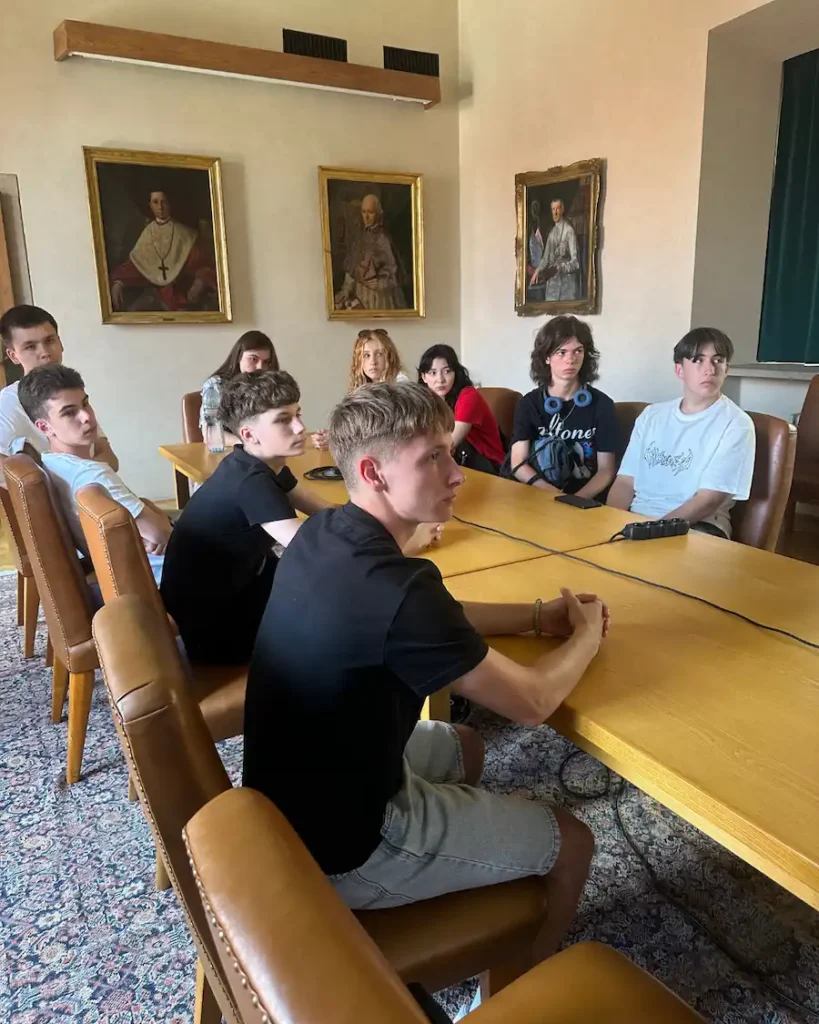
Support runs in three stages: university selection, preparation and enrollment.
Our summary of the webinar about free education in the Czech Republic shows how admission and the first months of study look in practice. Two current students and the founder of EdVista shared their experience there.
According to EdVista, 95% of its graduates entered Czech universities. Founder Oksana Stupak, Doctor of Pedagogical Sciences, teaches at Masaryk University.
Planning to study in the Czech Republic after school? Book a free consultation to build a preparation plan for your situation.