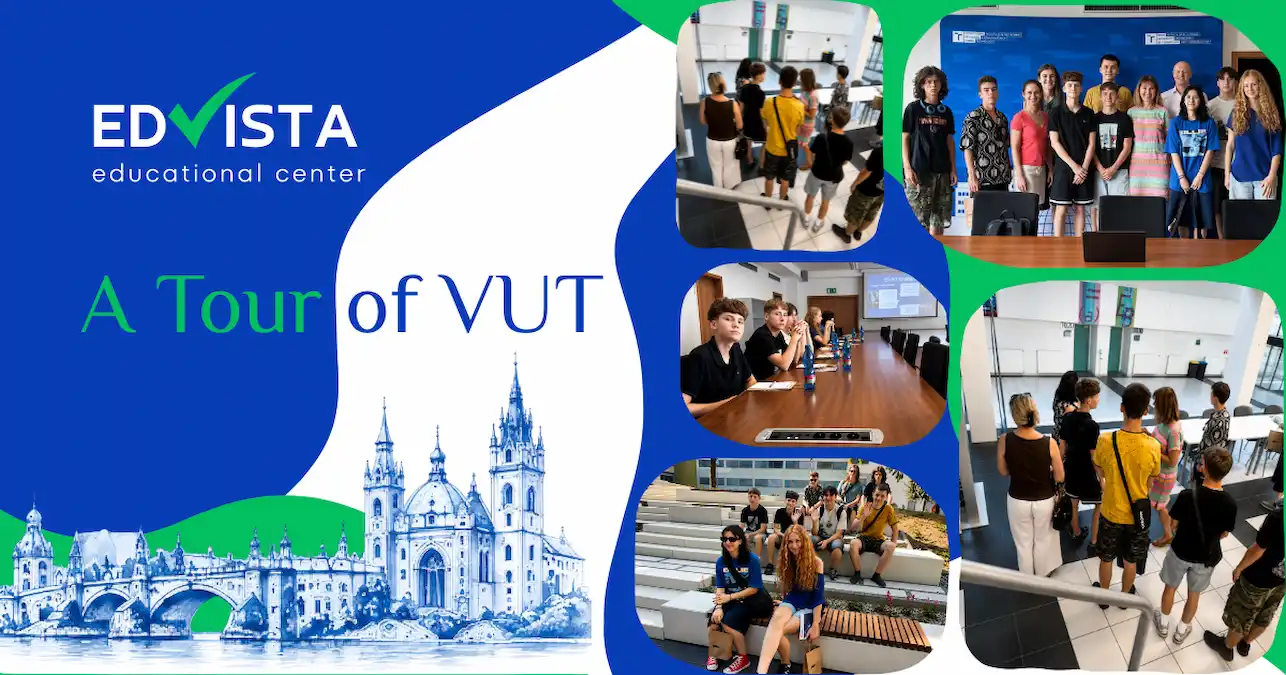
EdVista applicants’ excursion to the VUT faculty in Brno
18.08.2026selector.space
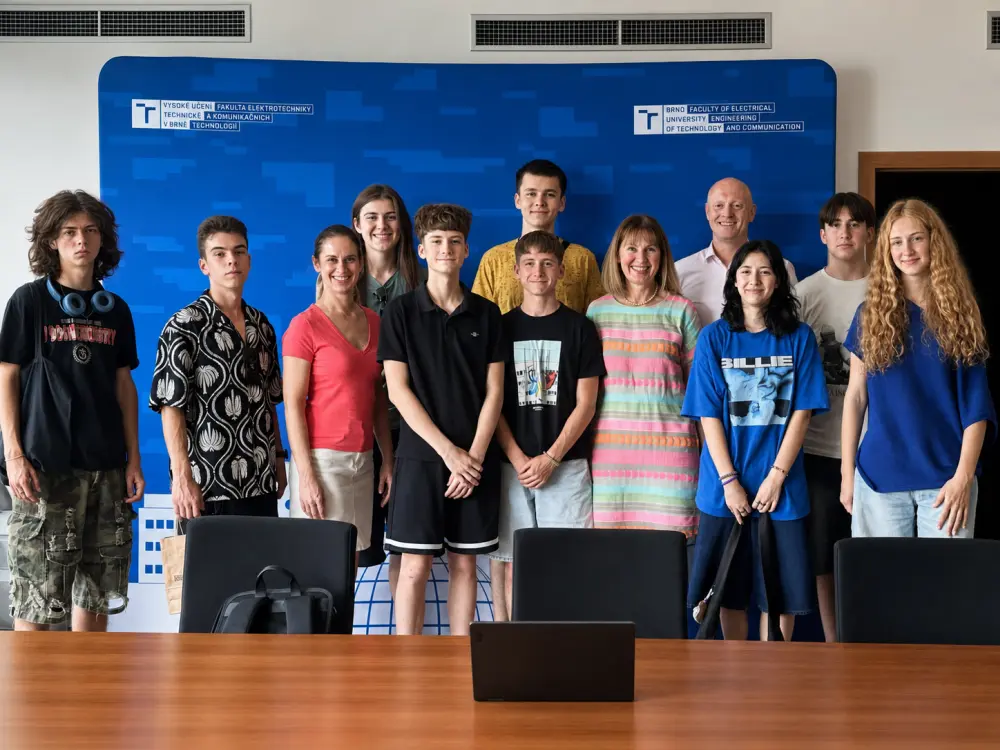
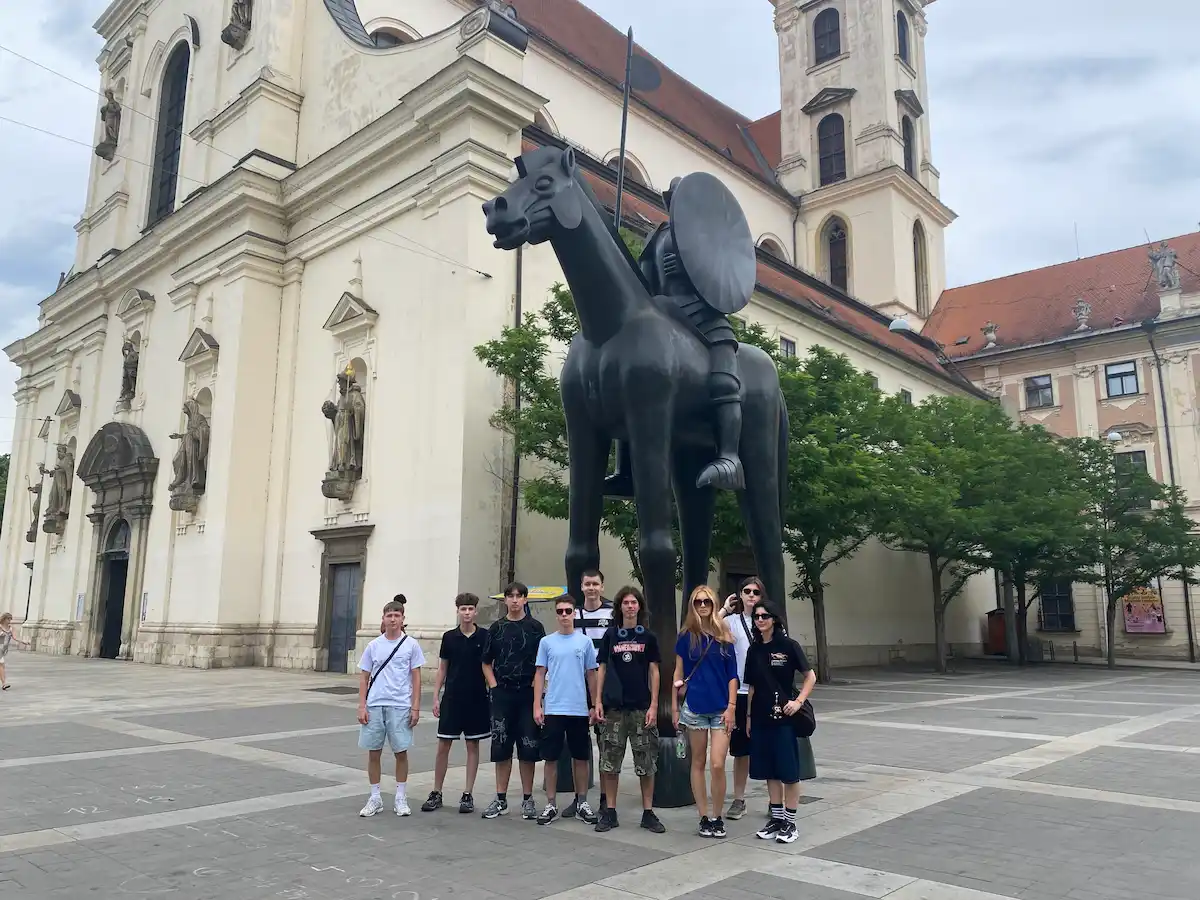
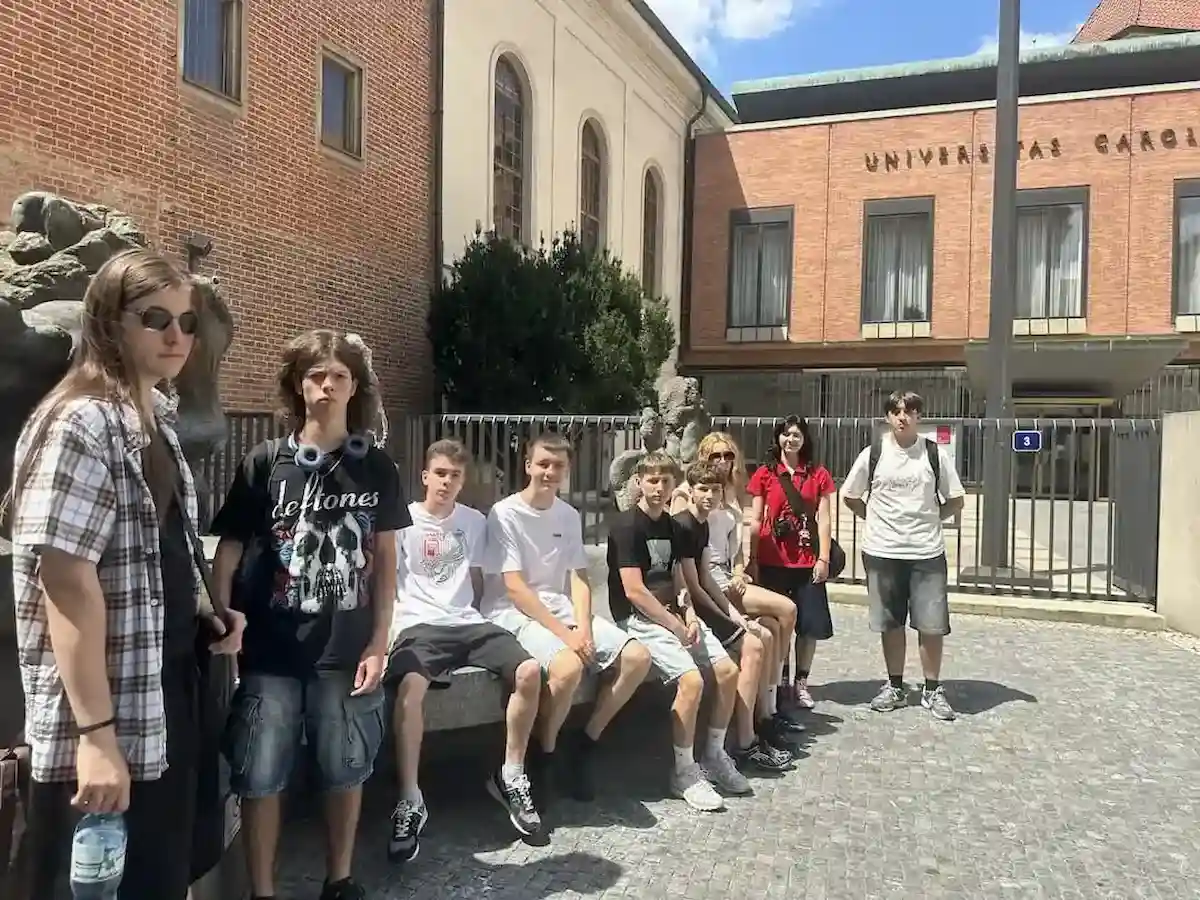
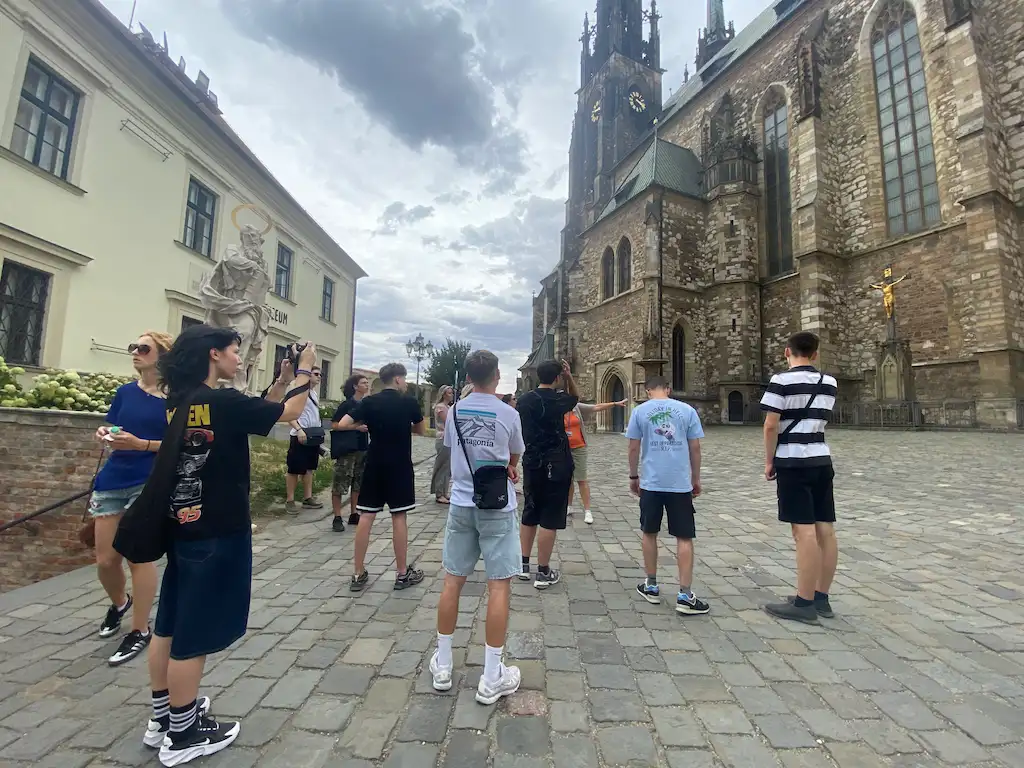
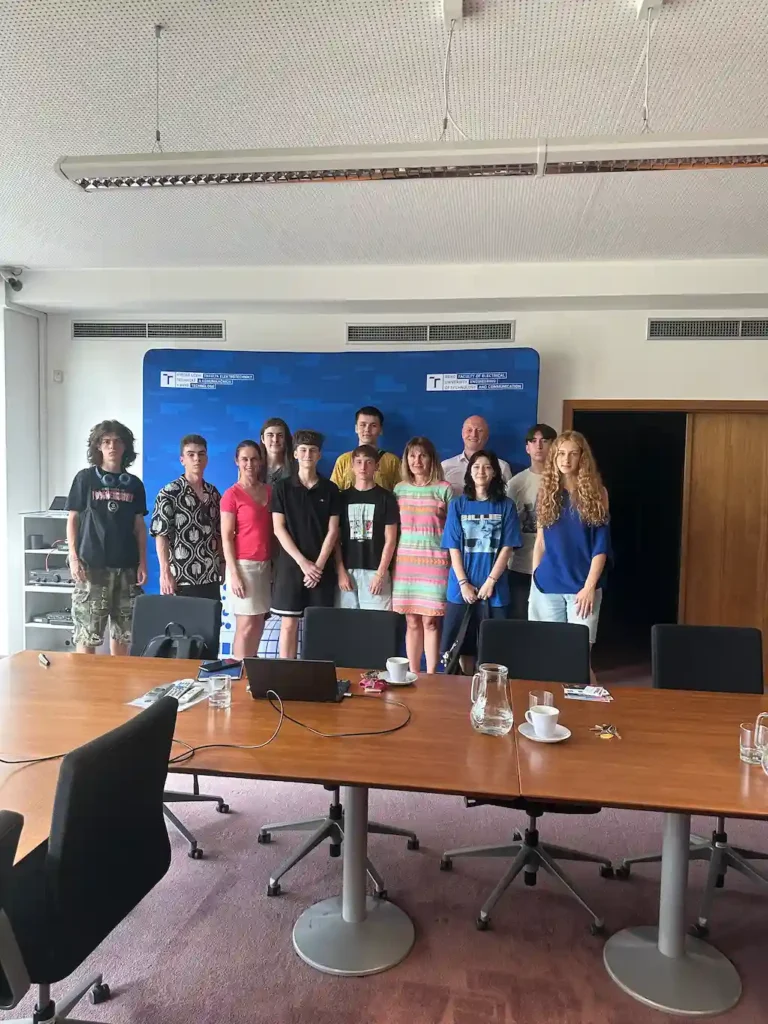
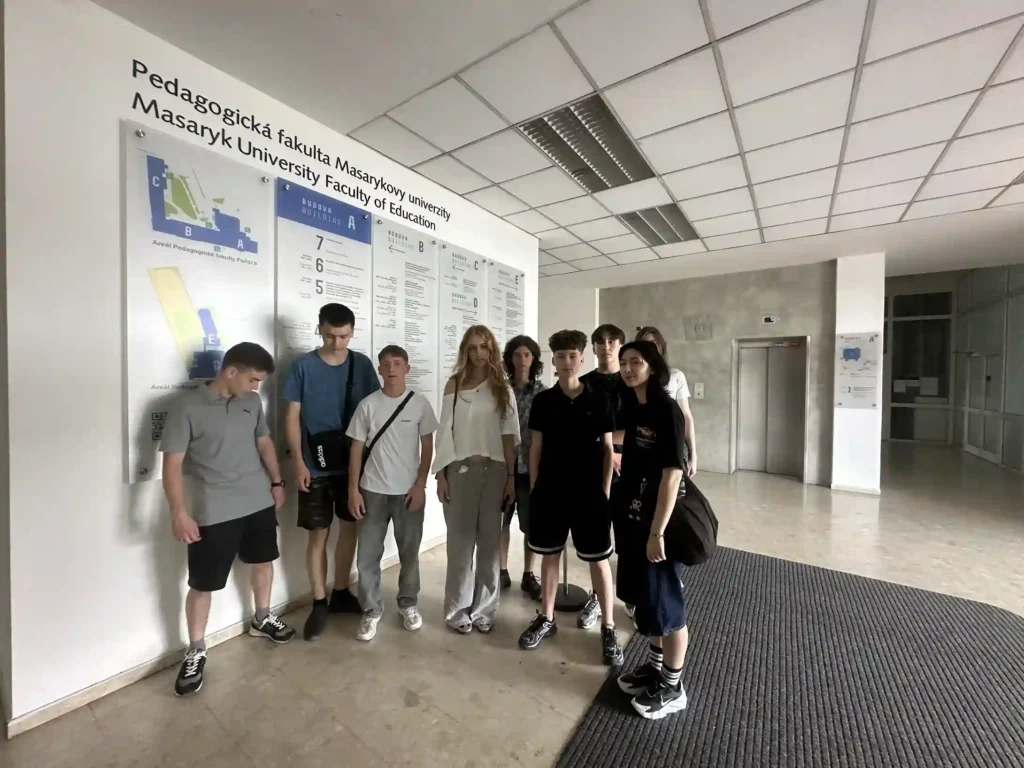
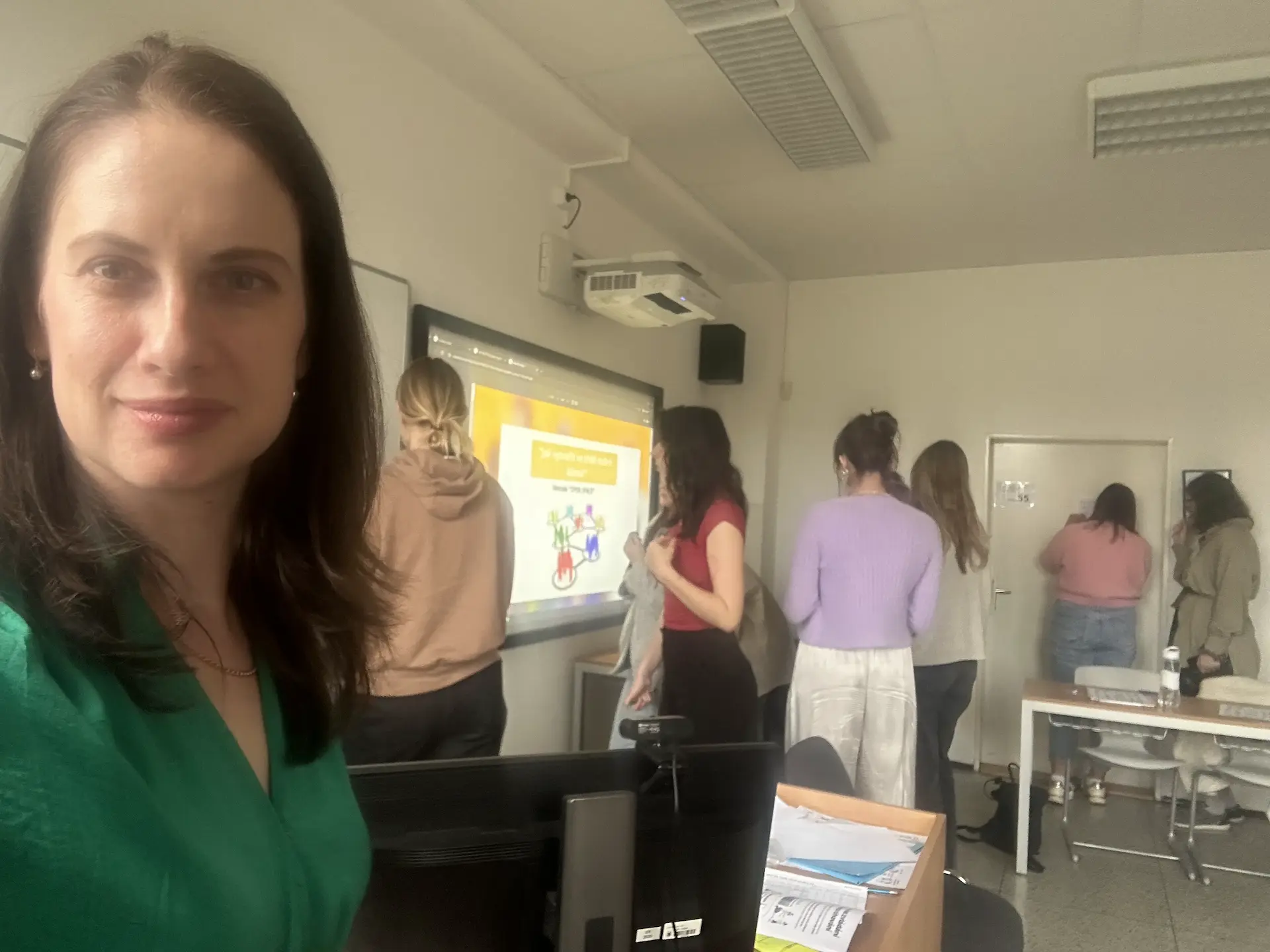
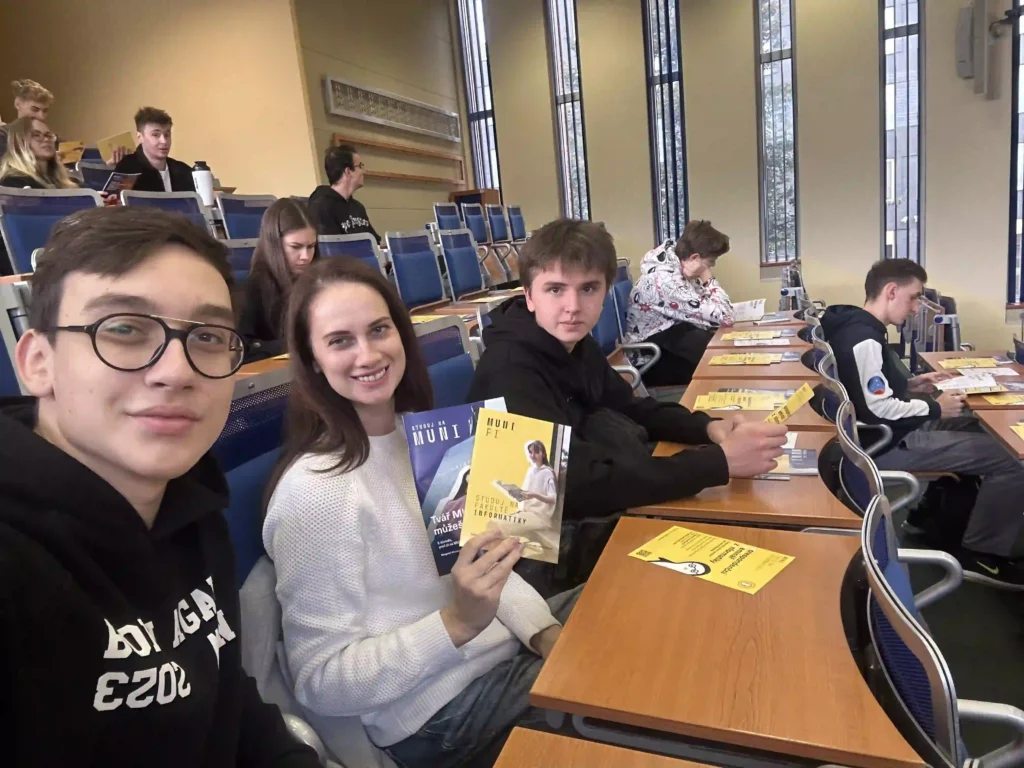
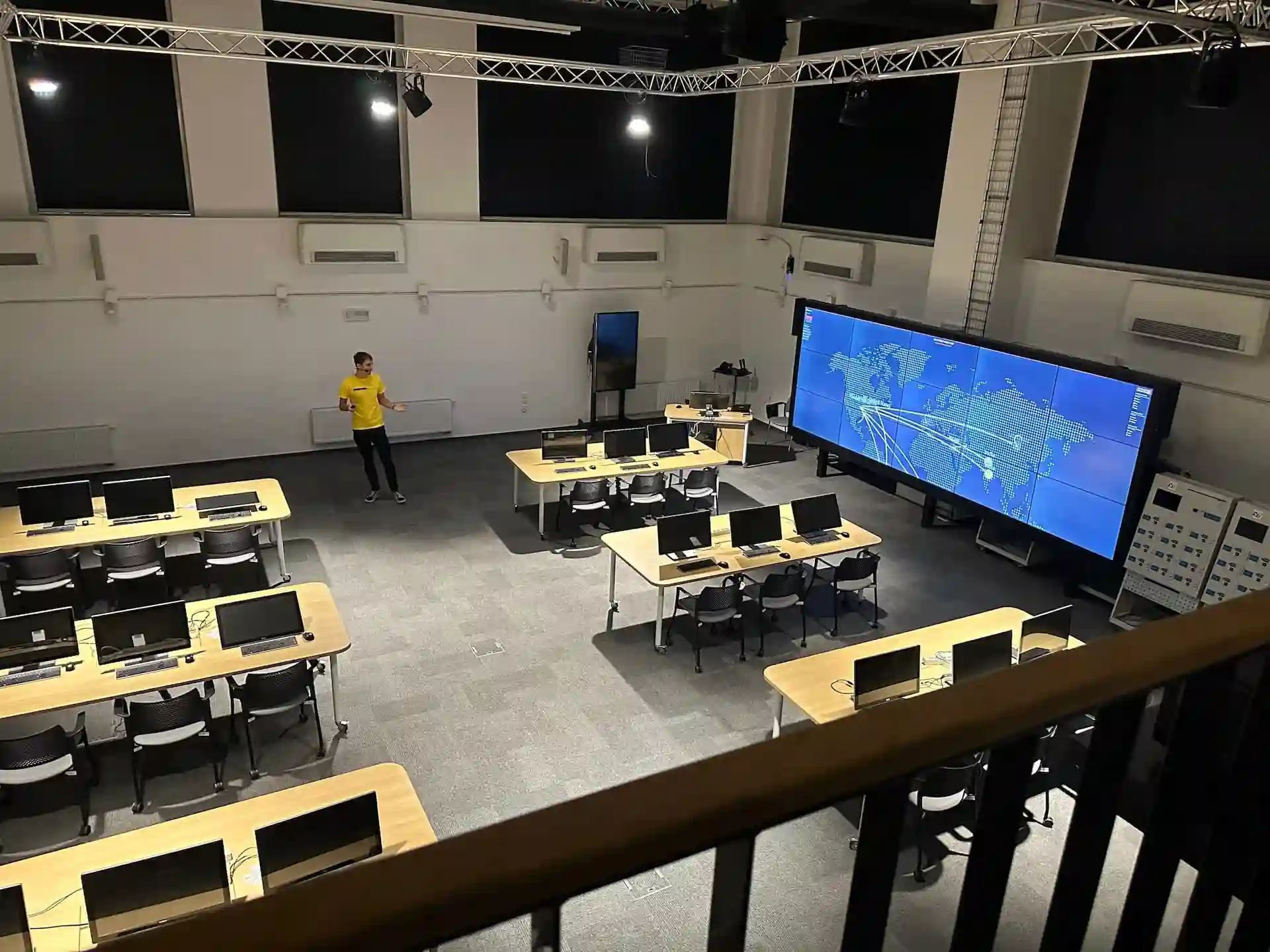
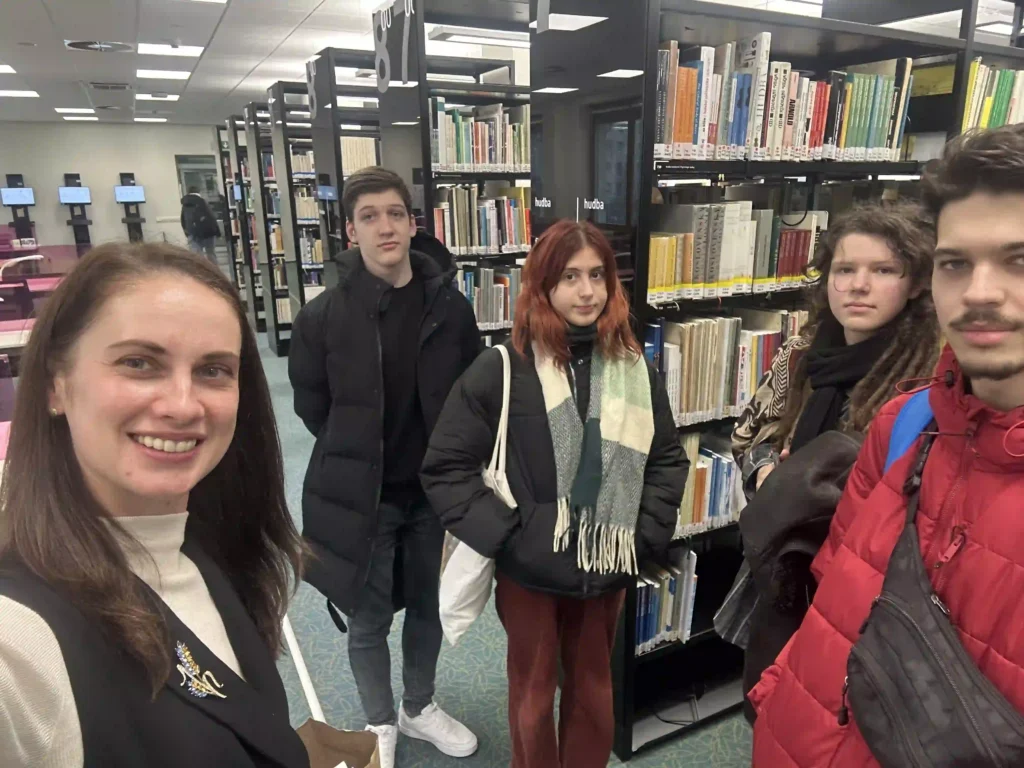
On July 14, 2026, an excursion to VUT (Brno University of Technology) took place. A group of applicants from Ukraine visited the Faculty of Electrical Engineering and Communication Technologies, located at: Technická 3058/10. Oksana Stupak, the founder of EdVista, organized the visit. Read the report about this event below. You may want to join the next meeting of a similar format.
How the excursion to VUT faculty in Brno took place
Not only Oksana Stupak but also Vice-Rector for Internationalization Stanislav Klusáček and Vice-Rector for Studies Vlasta Sedláková welcomed the applicants interested in studying in the Czech Republic. The young people explored student life and the bachelor’s programs at FEKT.
Admission to a Czech university is a step you should carefully consider. Visiting the institution helps a lot in this: it is better to see and hear everything yourself. On the website you can learn about English-language and other educational programs, and moreover explore the admission conditions and the structure of study. However, a tour of VUT is a live communication and a completely different experience.
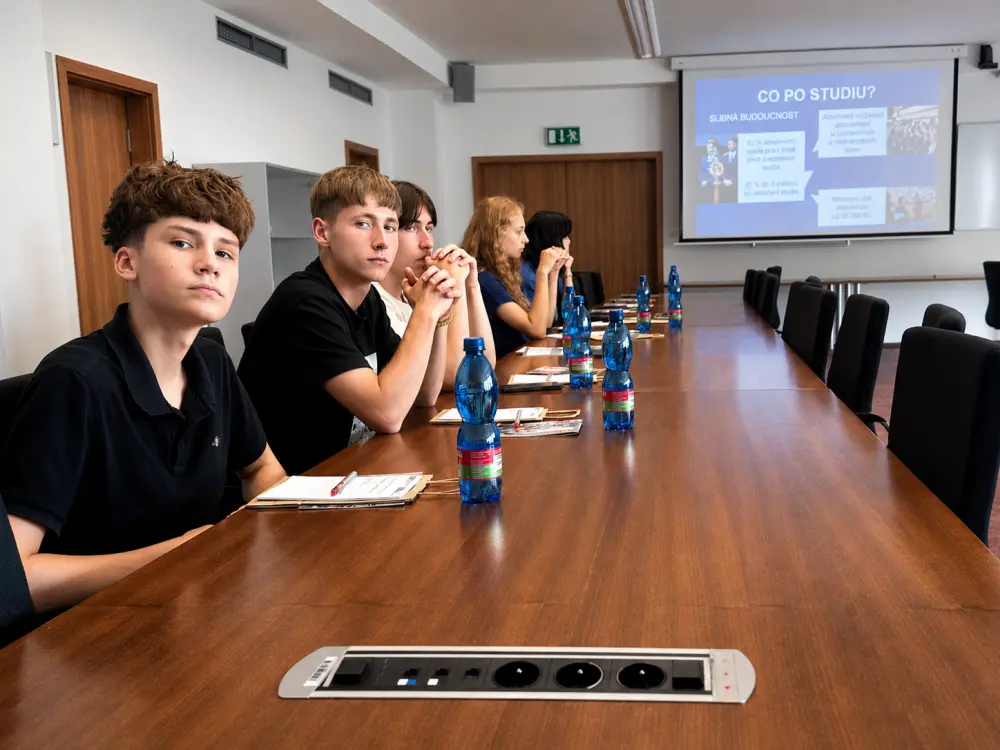
As part of the meeting, university representatives presented the FEKT VUT faculty, talked about its structure and the nuances of preparing for admission. The tour program included the following parts:
Getting to know the faculty.
Overview of available educational programs.
Providing information on studying in English and Czech.
A story about all the nuances of admission.
A conversation about the life of student youth.
Discussion of the course of study.
That is, it was not just a walk through the corridors, but a truly useful meeting. The students had an interesting time and received answers to all their questions from representatives of the faculty.
It was the live format that became the main component of the meeting. The applicants were not readers of information. They directly communicated with university representatives. This turned the usual acquaintance with information into an active dialogue. As a result, the students left without a single unclear moment.
Excursion to VUT: what applicants learned about the faculty and programs
The excursion to VUT let the students explore the educational opportunities of FEKT in detail. In particular, the applicants learned that the faculty has 11 full-time bachelor’s programs with a duration of 3 years. The main ones are as follows:
Automation and measurement technology.
Bioinformatics and biomedical technology.
Communication technologies and electronics.
Information security.
High-current electrical engineering and power engineering.
Microelectronics and technologies.
Audio engineering and others.
In general, the directions cover a wide range of modern electrical engineering and electronics, communication and information technologies. Therefore, such a wide choice showed young people that directions within one faculty can be different. The students learned that within FEKT there is a place for everyone who is interested, in particular, in electronics, automation, information security, semiconductors and biomedical technologies.
An important part of the excursion was obtaining information about the English-language bachelor’s program in Electrical Engineering. Ukrainian applicants were told that FEKT can be considered not only in the context of studying in the Czech language. This program has two specializations: Power Systems and Automation and Electronics and Communication Technologies.
What accession issues were discussed at the meeting?
The main goal of the excursion to VUT was to present the faculty. Students also asked dozens of questions that interested them. FEKT representatives provided comprehensive answers. During the discussion, the university admission procedure was actively discussed. Young people were also very interested in the course of study and the nuances of student life.
For applicants, the discussion turned out to be no less important than the presentation. Each person present was able to clarify the points that concerned him. Obtaining the maximum amount of information turned out to be relevant for Ukrainian students. The fact is that now they need not only to choose an educational program, but also to understand the following points:
how is the study organized;
what is the student environment in the Czech Republic;
what are the requirements for applicants.
However, the meeting that took place cannot be called a substitute for obtaining up-to-date information about admission. Current requirements, deadlines and a list of documents – all this needs to be clarified directly and taking into account the chosen program. On our website you will also find a lot of useful information. In particular, you may find useful material on how to choose a university and a specialty in the Czech Republic just 9 months before admission.
Why visits like the VUT tour are important for prospective students
A prospective student needs to compare Czech universities and understand where exactly he wants to study. At EdVista, we do everything we can to ensure that applicants can get to know Czech universities not only online, but also in person. The excursion to VUT provided an opportunity to:
learn more about the faculty;
see how the university lives;
learn about the educational opportunities of the institution;
talk to representatives of the faculty;
ask questions about admission and study.
An important component of the excursion was communication within the group itself. Applicants came to the meeting with different interests, expectations and questions. During the event, they heard the opinions of other participants, learned about their interests and
Impressions from the meeting
As the students noted, the excursion to VUT turned out to be very important for them, especially now – at the stage of comparing several educational institutions. Personal acquaintance with the faculty gave the boys and girls the opportunity to understand what questions they need to ask themselves for the final choice.
For us, excursions and other similar events are part of comprehensive support for students. The goal of EdVista is not only to prepare young people for admission. We want students to orient themselves in the Czech higher education system and consciously make a choice of university. Thanks to the event, we have understood the needs of Ukrainian applicants even better. This will help us to continue to pay maximum attention to the practical aspects of preparing young people. The support should be useful for those who plan to get an education in the Czech Republic.
EdVista is grateful to the representatives of FEKT VUT for the excursion and the opportunity to clearly show everything to applicants. We hope that there will be even more such meetings. This way, our future students will be able to get to know different universities, compare their educational programs and other features.
To sum up: the excursion to VUT was one of the important steps for the group of applicants from Ukraine. There are still many stages of preparation ahead of them. However, already now, getting to know the university environment has made the future path for students more concrete and understandable.
Higher education in the Czech Republic for Ukrainians: overview and comparison of countries
11.08.2026selector.space
There is no “universal” country for studying. Each person has their own selection criteria: some students are primarily focused on the cost of education, others on a specific university or the availability of programs in English. Therefore, higher education in the Czech Republic for Ukrainians is only one of the options, not the best choice. It can be compared with other European destinations, in particular, Germany and Poland. This is what we will do: we will provide you with general information to understand the situation.
Why there is no single “right” country for Ukrainians to obtain higher education
Choosing a country to study in is not just about deciding on a university. Applicants need to consider the following:
By what criteria should countries be compared: higher education in the Czech Republic and beyond?
In order for the choice of a country for studying abroad for Ukrainians to be justified, it is necessary to compare not individual universities and their ratings, but the conditions that will affect the life of a student. These include, in particular, the language of instruction, the cost of stay and the complexity of preparing documents. Higher education in the Czech Republic for Ukrainians in this context is the choice of many. But let’s not get ahead of ourselves. More on the main thing later.
Language of instruction and time to master it
Dozens of universities offer programs in English. But it is still important to learn the local language: it will be useful for everyday life and further employment. In the Czech Republic, the opportunity to study Czech in public educational institutions for free is particularly interesting. Data from the European Education Area confirms this.
For university studies, it is not enough to understand the everyday language – Czech, German, Polish or another. A student must understand lectures, write term papers and diploma theses, and take exams. It is usually possible to learn a language at a level sufficient for university in at least 1 year or even more. The terms depend on the intensity of classes and individual perception. Therefore, it is worth doing language training in advance – while still at school, and not considering it as a stage that takes several months.
When comparing the Czech Republic, Poland and Germany, one should not only assess the complexity of the languages. It is necessary to take into account how much time the family is willing to invest in language training before the start of studies. For an applicant who quickly masters Slavic languages, the Czech Republic or Poland may be a convenient option. The advantage of Germany is the availability of English-language programs.
Tuition and living costs
Many are interested in Czech universities, because language experts have the opportunity to study there for free. The situation is similar with Poland: learning Polish for Ukrainians can be free. This rule applies to foreigners who have the right to education on the same terms as Polish citizens.
Free education is also provided in Germany. In most public universities, tuition fees for bachelor’s and master’s programs are not charged. However, there may be some exceptions for people from outside the EU. Another point: students pay Semesterbeitrag. This is the name of the semester contribution for various services, self-government, etc.
Visas, documents, nostrification
When choosing a country to study, it is important to consider administrative requirements. Ukrainian applicants should find out which documents a particular country recognizes, what rules apply to foreign students there, and whether they need to confirm their previous education.
Special attention needs to be paid to nostrification. This is the procedure for officially recognizing an educational document. Universities carry out nostrification during admission to confirm a Ukrainian diploma or certificate of basic general secondary education.
When comparing the Czech Republic, Germany and Poland, we recommend checking the following points:
University requirements (what documents a specific program needs).
Rules of stay and entry – what status does a student need and how to confirm it with documents.
Nostrification – is this procedure mandatory in the selected country.
Whether the country needs a translation of documents, and in what language.
Visa rules can change faster than the rules for admission to educational institutions. This is especially relevant now – due to the temporary protection for Ukrainians in the EU. It will be useful to find out, in particular, whether this protection can replace a student visa.
Higher education in the Czech Republic, Poland, Germany: what is the difference for Ukrainians?
Higher education in the Czech Republic is interesting for Ukrainians who want to get a diploma from a state university and learn the language for free. The key advantages of this direction are as follows:
geographical proximity of the Czech Republic to Ukraine;
relatively understandable language environment;
simple nostrification.
Studying in Europe for Ukrainians is not only about the Czech Republic. A good choice for those who do not want to travel far from Ukraine is Poland. There you can study in Polish or choose one of the many programs in English.
Germany is an option for applicants who are not afraid of a more complex language and are considering the possibility of further employment in a German-speaking environment. It is worth remembering that the rules of each federal state regarding requirements for students may differ, as well as the cost of living there.
Who is higher education in the Czech Republic suitable for Ukrainians?
The opportunity to study in the Czech Republic is a direction for those who want to:
learn the language of the country and thus reduce the cost of education;
stay close to Ukraine and maintain contact with relatives;
live in the Czech Republic for at least a few years, and not just get a diploma.
To sum up: the Czech Republic is a logical option for families who are looking for a balance between geographical proximity, budget, and the quality of European education. However, this destination may not be suitable for those with a major for which there are a large number of English-language programs in other countries.
What to consider before choosing the Czech Republic as a destination for higher education
Before making a decision, read about all the nuances of applying to Czech universities and compare the Czech Republic with several alternatives. To avoid making a mistake, answer a few important questions:
What language is the student willing to study in?
What is the maximum budget a family can spend per month?
Is it important to get a job in this country in the future?
How close to Ukraine do you need to stay?
Do you need a paid program in English, or does it make sense to learn the local language?
Higher education in the Czech Republic is not universally the best option for Ukrainians, but it has many strengths. These include an accessible language environment, close proximity to Ukraine, and life prospects in Central Europe. So think carefully and decide where to study is best for you – with your budget, language, and future plans.
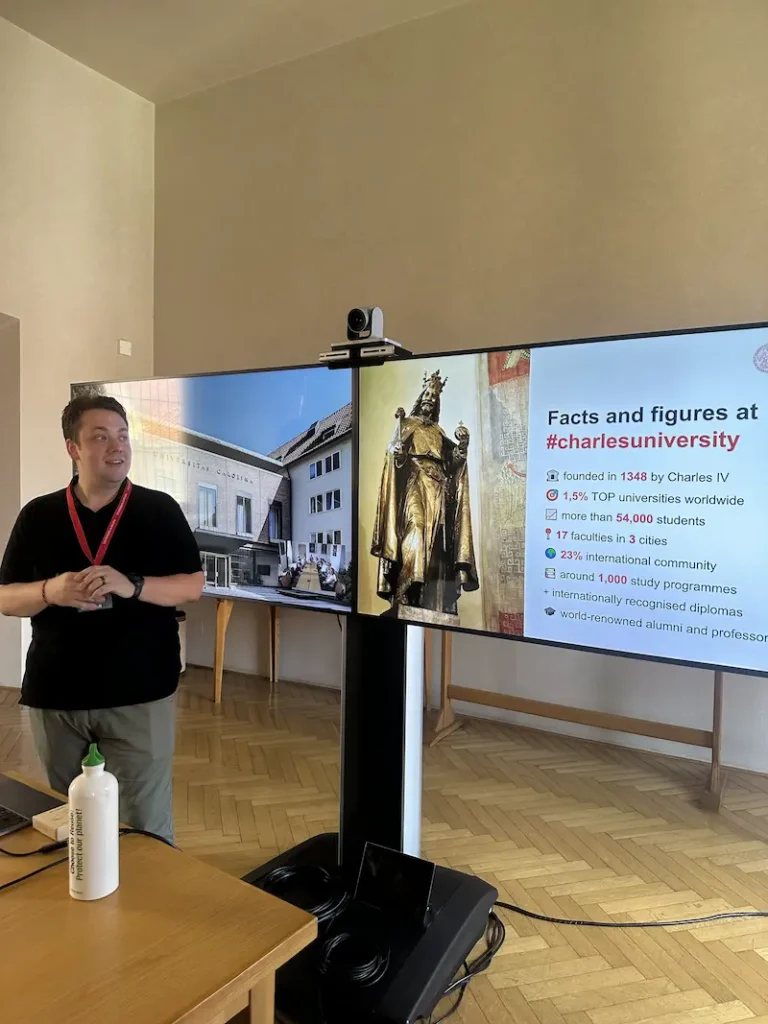
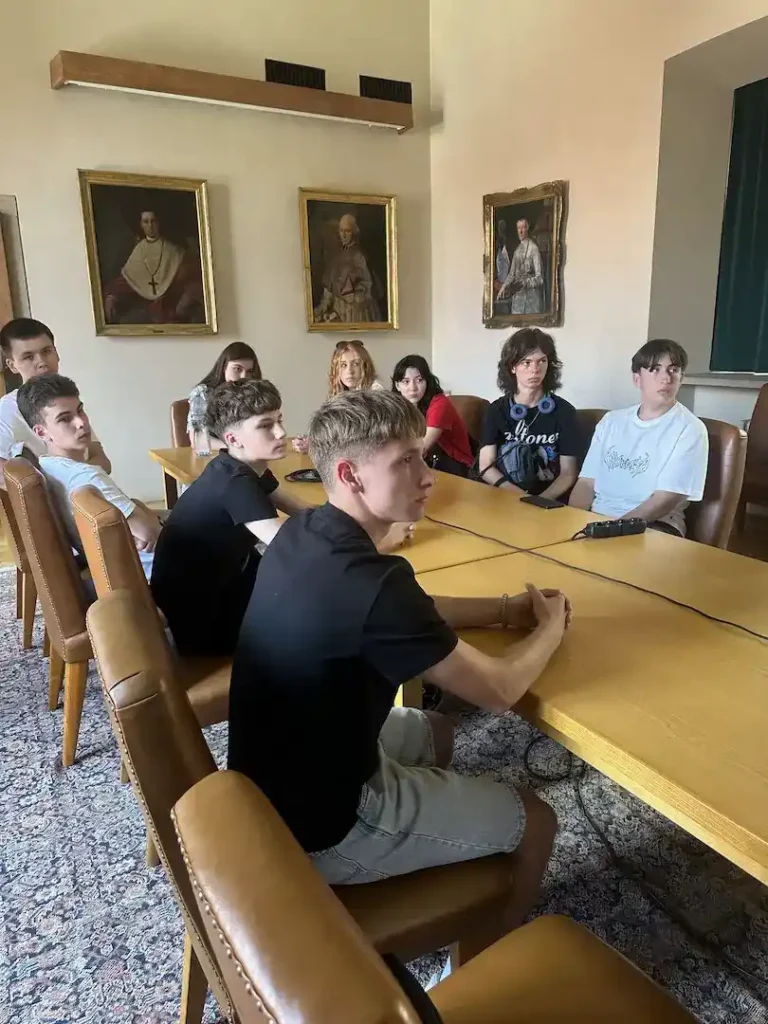
The EdVista Czech summer school in Brno lasted from July 4 to 20, 2026. Participants studied Czech every day, met Ukrainian students of Czech universities, went on excursions in Brno, visited Masaryk University and the Technical University in Brno, and in Prague they visited Charles University. The program combined language learning with immersion in the life of a Czech student city.
This article tells how the event went, not invites you to it. A separate page of the summer school in Brno covers the format and conditions of participation. Here we share what happened each day, who the participants met, and what places they visited during their two weeks in Brno.
The EdVista team ran the school under the leadership of founder Oksana Stupak, a doctor of pedagogical sciences and lecturer at Masaryk University. The format combined classroom lessons with language practice in a real environment, so participants spoke Czech not only in class but also on the streets of the city.
What is the Czech summer school in Brno from EdVista?
EdVista Summer School is a two-week offline program for those who are learning Czech and planning to study in the Czech Republic. It combined daily language classes with a cultural program and an introduction to student life. Participants came to Brno and lived in the rhythm of the Czech city for two weeks.
Above all, the main idea of the school is immersion. Instead of learning the language only from a textbook, participants immediately apply it in the city: in cafes, on public transport, in museums and on excursions. This format speeds up the transition from theory to confident communication.
The school brought together Ukrainian students who are preparing to enter Czech universities. For many, it was their first trip to Brno and their first opportunity to see the city where they plan to study. Two weeks gave them a taste of what everyday student life in the Czech Republic is like.
In addition, the participants came from different cities in Ukraine and had different language levels. Some had just started learning Czech, while others were already preparing for the entrance exam. The group was formed so that everyone received tasks according to their level, so beginners didn’t get lost, and stronger students had more difficult exercises.
The program was designed to alternate between study and rest. Participants spent the morning in classes and the afternoon on excursions and language practice in the city. This rhythm was not tiring and gave the participants time to absorb what they had learned without overload.
Czech courses every day at the summer school in Brno
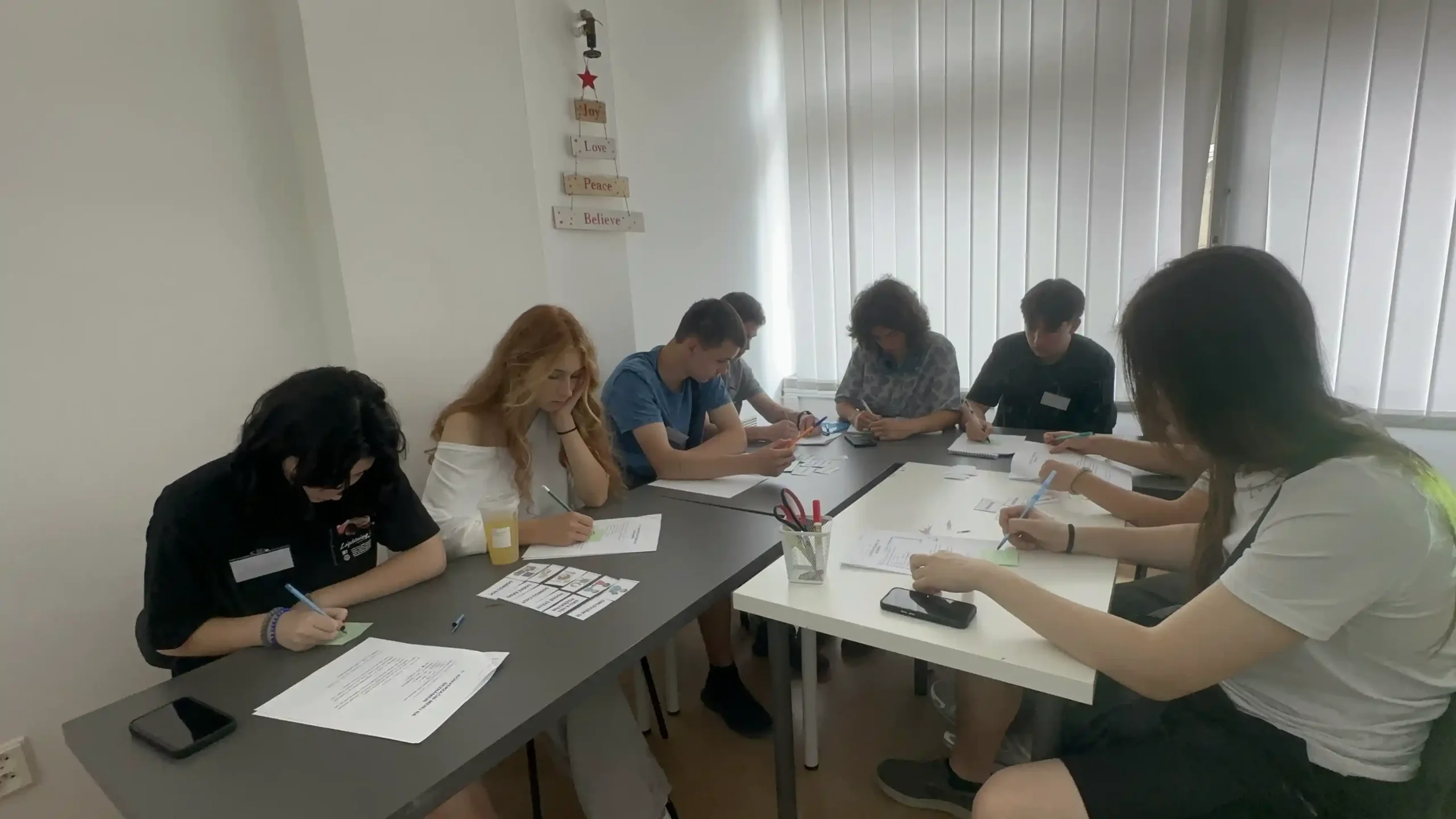
The core of the program was daily Czech language training in Brno. Participants studied in classrooms with teachers, and then reinforced the material in real-life situations outside the classroom. Each day combined grammar, vocabulary, and conversational practice.
Czech-speaking teachers taught the classes, so the participants heard the live language from day one. After the lessons, they went out into the city and immediately applied what they had learned, from ordering coffee to talking to locals. This mix of theory and practice consolidated the language faster than regular courses.
Moreover, the language environment worked 24/7. The participants lived among native speakers, so Czech was heard not only in classes, but also in everyday life. This is the main advantage of the offline format over distance learning: the language cannot be turned off when you live in a Czech city.
The teachers selected the topics of the lessons according to the real situations that awaited the participants that day. Before the excursion, they analyzed the vocabulary about the city and transport, before the visit to the university, words about studies and documents. Therefore, each lesson immediately had a practical application, and did not remain an abstract theory.
At the end of each day, the participants summarized what they had learned. They recounted their impressions in Czech, and the teacher saw which topics had been mastered and which needed to be repeated. Such daily control kept the pace and prevented what had been learned from being forgotten.
Speaking practice was a prominent part of each session. Participants worked in pairs and small groups, acting out dialogues and asking each other questions. This removed the language barrier that often prevents beginners from speaking.
Czech summer school in Brno: excursions and acquaintances
A separate part of the program consisted of excursions, city walks, and meetings with those who were already studying in the Czech Republic. This part combined relaxation, cultural acquaintance, and language practice in one block. The participants saw Brno and immediately spoke about it in Czech.
Trips: Prague and Brno Universities
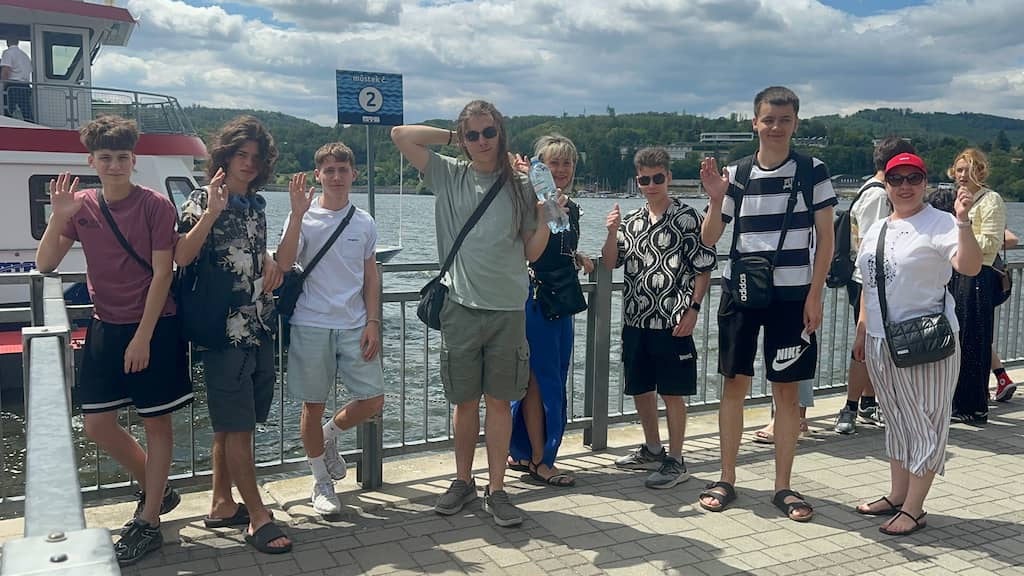
The participants saw the historical center of Brno, the main squares and landmarks of the city. You can learn more about them on the official Brno tourist portal. The walks gave them a feel for the atmosphere of the city, where many of them plan to study.
Each walk was also a language practice, because the guides and escorts spoke Czech. The participants listened to explanations, asked questions, and gradually got used to perceiving the language by ear at a natural pace. The walks through the city became a continuation of the classes, not just a break.
The participants saw Brno not as a tourist attraction, but as a city to live in. They saw where students study, where they relax, and what a daily route through the city looks like. This formed a realistic idea of future student life.
Meeting with Ukrainian students of Czech universities
An important part was meeting Ukrainian students who are already studying at Czech universities. They talked about admission, study, and life in the Czech Republic from their own experience. For the school participants, it was an opportunity to hear about student life not from advertising, but from those who have already gone through this path.
Students answered practical questions about housing, dormitories, and combining studies with part-time work. Participants learned how much it costs to live in a Czech city and what a student’s day is like. This specifics turned out to be more useful than general advice, because it was about real experience.
As a result, such meetings remove the fear of moving. Applicants saw real people who were in their place a few years ago and are now confidently studying in the Czech Republic. This gave confidence to those who are still hesitant about applying.
Excursion to VUT: a look at the university from the inside
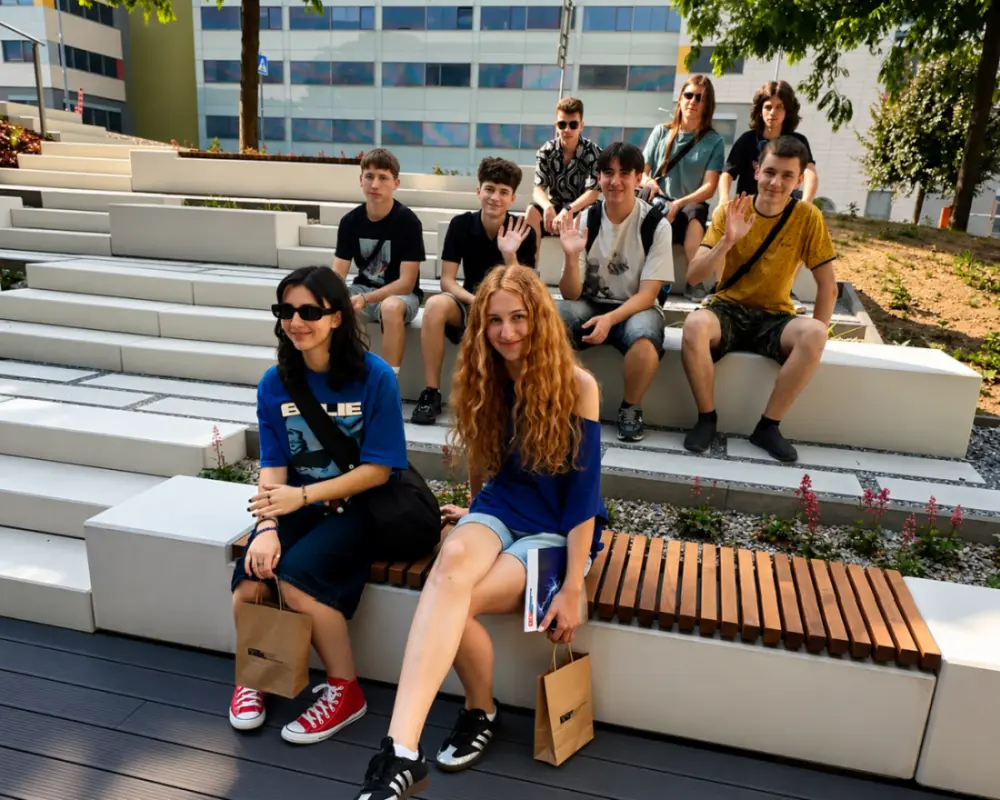
A separate event was a field trip to the VUT University in Brno, one of the largest technical universities in the country. More information about the institution can be found on the official VUT website. The participants saw the campus from the inside and imagined themselves in the shoes of students.
The visit to the university had a practical purpose. The applicants saw how a Czech university is organized, what classrooms and spaces there are for studying. For those preparing for admission, it was a concrete reference point, not an abstract goal.
The excursion showed that entering a Czech university is an achievable goal, not a distant dream. The participants walked the same corridors that students walk through and saw the environment in which they will study. This made the preparation for admission more objective.
Trip to Prague
The trip to Prague showed the participants another side of Czech life. They saw the capital and its scale, and also visited Charles University. This event made their future studies more concrete.
One day in Prague
Among the program events was a trip to Prague. The participants saw the capital of the Czech Republic, walked through the historic center and felt the scale of the city, which many knew only from photographs. The trip expanded their understanding of the country beyond Brno.
The one-day trip to Prague was full of activities, but it didn’t turn into a typical tourist excursion. Participants spoke Czech, navigated the city using signs, and ordered food on their own. The capital became a platform for practicing the language in real-world settings.
Prague showed the participants that Czech cities differ in rhythm and scale. After the calmer Brno, they felt the pace of the capital and understood what to choose from when entering. This helped to form a more complete picture of life in the Czech Republic.
The road between cities also became part of the experience. The participants saw how transport is arranged in the Czech Republic and how long it takes to travel between major cities. This trifle turned out to be useful for those who plan to choose a university far from their future home.
Results of the Czech summer school in Brno and the student project
The school ended with the project “I am a student at a Czech university”. In it, participants tried on the role of a student at a Czech institution and summarized everything they had learned in two weeks. The project combined language, acquaintances and impressions of universities into one experience. The participants presented their conclusions in Czech, and this became a final test of everything they had learned in two weeks.
In two weeks, the participants not only improved their Czech, but also saw the country, the city, and the university with their own eyes. They talked to students, visited the institution, and experienced what studying in the Czech Republic looks like from the inside. This is the main result of the school, and it is difficult to obtain it in a distance learning format.
Many participants left with a clear plan of action. Some decided to improve their language skills before entering, others decided on a city and direction. Instead of a general intention to study in the Czech Republic, they received specific steps with which they will begin their preparation this year.
Offline or online: choosing a Czech learning format
The Czech summer school in Brno has shown that offline immersion accelerates both language and admission decisions. For those who cannot come to Brno, there is an online intensive Czech language course that takes students from zero to B2 according to a structured program. It offers the same system of classes, only in a distance format.
The school’s experience will also be useful to those who are choosing between offline and online formats. Some participants decided to continue their studies remotely after Brno, while others will return for future offline events. Both paths lead to the same goal, and the choice depends on everyone’s capabilities.
For those who are preparing for admission, university entrance preparation, which combines language and entrance exams, is suitable. You can find out about the format of the next school on the Brno summer school page, and the impressions of the participants are collected in the reviews.
How much does it cost to study in the Czech Republic: a student’s real budget
28.07.2026selector.space
The cost of studying in the Czech Republic depends on the language and type of university: Czech is free for everyone at state universities, while foreign language studies cost from 3,000 euros per year at state institutions and from 5,000 euros per year at private ones, depending on the specialty. Living expenses add to this: in 2026 they run approximately 800 to 1,500 euros per month. Below we have broken down the full student budget: tuition fees, accommodation, food, transport and insurance, so that you can see the real amount per year.
This article calculates costs at the country level, not the cost of courses at a particular center. We combine official data and practical figures into one budget, which you can use to assess your own situation before you move. We discuss each cost item separately below, with ranges of amounts.
The cost of living in the Czech Republic is lower than in most Western European countries. This is one of the reasons why Ukrainian applicants choose Czech universities: quality education comes with moderate living costs. The main issue is not in the tariffs, but in how to plan the budget in such a way as to avoid hidden overpayments.
Cost of studying in the Czech Republic per year
Tuition fees are the first item on your budget, and they depend the most on your choice. The language of the program and the type of university determine whether you pay tuition at all. Let’s look at three typical situations.
Public universities in Czech for free
In all state universities, Czech-language programs are free for all students, regardless of citizenship. This applies to bachelor’s, master’s, and doctoral studies. Charles University, Masaryk University, Czech Technical University, and other state institutions do not charge fees for studies in Czech.
That is why language proficiency at level B2 directly affects the budget. By mastering Czech, you gain access to free education and save thousands of euros per year. An online intensive Czech language course helps you prepare for this level, which leads from zero to B2 according to a structured program.
Free tuition does not mean no costs at all. Universities may charge small administrative fees for application or document issuance. These amounts are insignificant compared to fees for English-language programs, but they are also worth considering when planning your first year.
How much does it cost to study in English in the Czech Republic?
If you choose a program in English or another foreign language, tuition becomes paid. In public universities, it costs from 3,000 euros per year, and in private ones from 5,000 euros per year, depending on the specialty. Private institutions set their own rates, and they are usually higher.
Medical, technical and business programs in English are more expensive than humanities. For example, studying to become a doctor can cost from 20,000 euros per year. Therefore, before choosing, it is worth considering whether it would be more profitable to learn Czech and enroll in a free program. For many applicants, a year of language preparation pays off in the first year of free study.
Cost of studying in the Czech Republic: nostrification
Before admission, a Ukrainian certificate or diploma must be nostrified, that is, officially recognized in the Czech Republic. The registration fee for submitting a single application is approximately 20-30 euros, and internal nostrification of a Ukrainian certificate at the faculty is another 20-30 euros. Translation of documents into Czech for nostrification costs approximately 100-150 euros.
Nostrification takes 30 to 60 days and sometimes requires additional exams. This affects not only the budget, but also the timing, so it is worth starting the procedure in advance. The admission to Czech universities page describes the procedure in more detail.
Cost of studying in the Czech Republic: accommodation
Housing is the largest item of a student’s monthly expenses. The choice between dormitories and renting has the greatest impact on the final budget. The difference between these options can be several hundred euros per month.
Hostel
A dormitory is the cheapest accommodation option for a student in the Czech Republic. Public universities offer students dormitory accommodation, although the number of places is limited. In Brno, for example, dormitories start at around 350 euros per month, while in Prague a place costs from 137 to 254 euros (3,500-6,500 CZK).
The rooms are usually double, less often single, with basic furniture and a kitchen on the floor. The price mostly includes utilities, which simplifies budget planning. Students submit dormitory applications in advance through the university, because places are fewer than applicants.
Apartment rental
Renting offers more privacy, but is more expensive. A room in a shared apartment starts at €352 (9,000 CZK), a private room starts at €469 (12,000 CZK), and a studio apartment starts at €781 (20,000 CZK) per month. The rent includes utilities, which the landlord usually does not include in the price.
Sharing a room with other students significantly reduces costs. Instead of paying the full price of an apartment, you share it with several people, and the cost per person is closer to the price of a dormitory. This is a compromise between the privacy of renting and the economy of a dormitory.
When renting, consider the one-time payments at the start. Owners usually ask for a deposit of one or two months’ rent and return it at the end. Sometimes an agency fee is added to this. These amounts are not included in the monthly budget, but you need to have them right away, so it is worth setting them aside as a separate reserve before moving in.
Comparison by city
The city determines the level of housing costs the most. Prague is the most expensive, and rent and dorms are noticeably more expensive there. Brno is a bit cheaper, and smaller university cities like Olomouc or Ostrava offer savings of 78 to 195 euros (2,000-5,000 CZK) per month compared to Prague for similar accommodation.
When choosing a city, you are essentially choosing the level of monthly expenses. Studying in a smaller city is often not inferior in quality, but it significantly reduces the burden on the budget. For students with limited funds, this is a real way to make education more affordable.
It is also worth considering the part-time job market. In Prague, there are more vacancies and higher rates, so some students compensate for the more expensive housing with earnings. In contrast, in smaller cities, housing is cheaper, but there are fewer jobs. This balance between expenses and possible income is also included in the calculation of the real budget for the year.
Cost of studying in the Czech Republic per month
Beyond housing, regular expenses for food, transport and insurance shape the budget. Together, they determine the daily budget of a student. Student expenses in the Czech Republic are predictable in this part, because most of them have fixed student tariffs. Let’s analyze each item separately.
Food
Food costs start at around 200 euros per month, depending on how often you cook at home. Student canteens at universities are a great way to save money: a meal there costs around 3 to 6 euros, compared to 8 euros in a regular café. This is one of the main advantages of being a student.
Buying groceries from Lidl, Kaufland or Albert is cheaper than eating out at a cafe. The combination of eating out and cooking at home keeps food costs at the lower end of the range. For frugal students, this is a manageable budget item.
Lunch in a restaurant costs significantly more than in a student canteen: on average about 8 euros versus 3-6 euros per meal in the refectory. Therefore, regular meals off campus quickly increase monthly food costs, and this is where students most often exceed their planned budget.
Transport
Public transport in the Czech Republic is cheap for students. A ticket for people under 26 costs around 20 euros (500 CZK) per quarter. A single ticket for 60 minutes on any public transport in the city costs around 1 euro (30 CZK). This is one of the smallest items in a student’s budget.
A student card gives you access to discounts not only on transport, but also at cafes, museums and cinemas. The ISIC card extends these benefits to over a hundred countries. Therefore, transport is rarely a problem for your budget if you use student fares.
Insurance
Non-EU students must have health insurance, and visas require it. Comprehensive commercial coverage costs from around €100 per month, depending on the duration and scope of coverage. You should not overlook this expense when planning.
Many students take out a minimum policy and then pay extra to extend coverage. Therefore, it is worth assessing the level of insurance you need right away to avoid overpaying later. It is worth checking the policy requirements with the conditions of your specific visa, as insufficient coverage will result in a refusal to extend your stay.
Communication and everyday life
Mobile communication with a data package costs from 12 to 39 euros (300-1000 CZK) per month. Household expenses are added to hygiene products, clothing and small purchases, which together add up to several thousand CZK. These amounts are small, but they are worth considering.
Leisure expenses depend on your lifestyle. Cinema, concerts and cafes add from several hundred CZK per month. Student discounts significantly reduce these amounts, so active leisure does not necessarily destroy the budget.
Traveling in Europe
A separate article for many students is traveling around Europe. The Czech Republic’s location in the center of the continent provides cheap access to neighboring countries by train and low-cost airlines. An approximate budget for travel starts at 400 euros, depending on the destinations and frequency, and this amount should be set aside separately from monthly living expenses.
Cost of studying in the Czech Republic: final budget
Calculating your yearly budget
To estimate your full budget for the year, add up your tuition fees and twelve months of living expenses. For studying Czech at a state university, the fees are zero, so living expenses make up the entire budget. At 800-1500 euros per month, a year comes out to around 9600 to 18,000 euros.
If you choose an English-language program, this amount is added to the tuition fee of 3,000 euros per year at a public university or 5,000 euros at a private one. Together with accommodation, the total increases accordingly. Therefore, the language of instruction is the main lever that determines the total cost of the year.
Students from outside the EU must prove that they have sufficient funds to cover their living expenses for a long-term visa. The amount is approximately 115,810 CZK per academic year and is calculated from the essential minimum of 3,130 CZK per month. This figure is reviewed periodically, so it is worth checking the current rate before applying. You need to show funds before you get a visa, so it is worth planning ahead.
How to reduce the cost of studying in the Czech Republic
Real savings come from preparing for admission and knowing the language. Mastering Czech opens up access to free education, and a smart choice of city reduces living costs. Preparing for university admission, which combines language and entrance exams, helps you prepare systematically.
By calculating all the budget items together, you will understand how much studying in the Czech Republic costs in your case. You can check official data on living expenses on the Czech Republic admission portal, and financial requirements for a visa are described on the official portal of the Czech Ministry of Foreign Affairs. This will allow you to plan your studies and relocation consciously, based on specific figures, rather than approximate estimates.
How to choose and change your major during your studies
21.07.2026selector.space
A change of major at a university in the Czech Republic is possible, but it rarely happens automatically: in most cases, it is a new application for a different program with recognition of some of the credits already taken. There is no single nationwide transfer procedure, as each university decides for itself. Therefore, the most important step is taken before admission, when you choose your major. Below, we explain how to choose a major consciously and what to do if you later need to change it.
This article helps you navigate the logic of choice and change. It does not replace a detailed analysis of the criteria for choosing a university, but shows the general picture: how to think at the admission stage and what options are available later. Next, we will consider choosing a specialty before admission, changing during study, and transferring between programs.
Choosing a major is a decision that affects several years of study and subsequent work. Ukrainian applicants often choose a major in a hurry, and then look for ways to change it. A calm choice at the start saves time, money, and nerves later.
How to choose a major before entering
The question of how to choose a major at a university in the Czech Republic is based on several guidelines that should be weighed together. There is no universal rule, but there are factors that reduce the risk of error. Let’s consider the three main ones: interests, job prospects, and language of instruction.
By interests and strong subjects
The most reliable guide is a combination of interest and strong school subjects. If the subject comes easily to you and does not bore you, the chance of successfully completing the program is higher. A specialty chosen solely for its prestige often leads to disappointment and a desire to change direction.
It’s worth honestly assessing what tasks you enjoy in practice, not in theory. A person who likes to solve problems and a person who likes to write texts need different programs. This basic comparison will eliminate many obviously unsuccessful options at the start. The sooner you do it, the less risk you have of looking for ways to change direction later.
It is useful to talk to students in your chosen major or review the program syllabi. They show you what subjects to expect in the first years. Often, it is the discrepancy between the idea of the specialty and its real content that pushes students to change majors after the first semester.
By employment prospects in the Czech Republic
The second benchmark is the demand on the labor market. Technical, IT and medical fields in the Czech Republic are in steady demand, but require a strong base. Humanities specialties provide a wider choice, but competition for jobs in them is higher.
When assessing prospects, look not only at current demand, but also at whether this job interests you in the long term. A popular specialty that doesn’t suit you will become a burden over time. A balance between demand and your own interest is a smart choice.
Also, consider that the labor market changes over the years of study. Instead of a narrow forecast for today, it is worth looking at areas that provide flexible skills. Such specialties leave room for maneuver, even if a specific industry transforms over time.
Language of instruction: Czech or English
The third factor is the language of the program. Education in Czech at state universities is free, so knowledge of the language at the B2 level directly expands the choice of specialties. English-language programs are available, but usually have a fee.
Language also affects future employment in the Czech Republic, where most employers expect Czech. Therefore, choosing the language of instruction is not only a matter of comfort, but also a strategic decision that determines both the available specialties and further opportunities on the labor market. A detailed analysis of the criteria for choosing a direction and institution is collected on the page how to choose a university and specialty in the Czech Republic.
Change of major at a university in the Czech Republic during studies
A change of major at a university in the Czech Republic while studying is a real, but not instant, procedure. Czech universities are independent, and each sets its own rules for transferring and recognizing subjects. This means that there is no universal scheme for all institutions.
In practice, a change of major at a university in the Czech Republic is most often done as a new application for a different program. You submit documents for the desired major, and the university decides which of the courses you have already taken to recognize. Recognition is done through the ECTS credit system, which allows you to transfer courses that are similar in content.
It is important to understand that only courses from accredited programs are recognized. The National Accreditation Office maintains a register of accredited programs, and it is accreditation that ensures that your credits count. If the programs are similar in content, some of the courses will be credited, and you will continue your studies without having to repeat them completely.
When the new specialty is significantly different from the previous one, it will not be possible to recognize much. In this case, you will have to start closer to the first year. Therefore, changing related areas is easier than moving to a completely different field.
There is another aspect for foreign students. Studying in the Czech Republic is related to a residence permit, so a long break or a change of institution may affect your residence status. This should be agreed in advance so that changing your major does not create problems with your visa or residence permit.
Transferring between majors and universities in the Czech Republic
Transferring to another major or institution is subject to the internal rules of a particular university. The general logic is similar, but the details differ. Let’s consider three typical situations separately.
Change of major at a university in the Czech Republic within the institution
Transferring to another major within the same university is usually the easiest. The institution knows your grades, and related faculties often have common core subjects. The application is submitted to the faculty’s academic department, and the decision is made by the dean.
Some of the courses you take are recognized for credit, so you don’t lose all the progress you’ve made. The closer the programs are, the more courses will be credited. This is the least risky option for changing majors.
Before applying, it is worth talking to the academic department and finding out exactly how many credits they will recognize. This way you will understand in advance which course you will be placed on and how many subjects you will have to take. This conversation often changes the decision: the student sees the real amount of work and weighs whether the change is worth the effort.
Transferring between universities
Changing universities in the Czech Republic is more difficult because the new institution evaluates your previous program from scratch. It only recognizes those subjects that match in content and were taken in an accredited program. The rest of the courses will have to be taken additionally.
An individual curriculum helps here, according to which you select uncredited subjects from lower courses. This format allows you to flexibly fit into the desired semester. The conditions for submitting documents should be clarified directly at the chosen university.
Consider the financial side separately. There is no fee for studying Czech at a state university, but changing institutions can mean an extra year and associated living expenses. Therefore, transferring between universities should be weighed not only in terms of academic but also budgetary implications.
Deadlines and documents
The transfer deadlines are tied to the admission campaign, which usually lasts from late February to March. Transcripts with grades and syllabi of completed courses are required for recognition of subjects. These documents describe the content of the studies and provide the basis for credit transfer.
It is a good idea to keep your syllabi from the first semester, as it is more difficult to restore them later. If you are translating documents into Czech, factor the translation time into your overall schedule. Applications for course recognition can be submitted to many institutions throughout the academic year, but the semester-specific nature of your course determines when you will start classes.
Missing the deadline postpones the transition for a year, so documents are prepared in advance. The application procedure and admission requirements are described on the admission page to Czech universities. A package of documents collected and translated in advance significantly simplifies the procedure and reduces the risk of missing the deadline.
Change of major at a university in the Czech Republic: what to consider
The main rule is not to rush into the application process. The time spent on choosing is worth it, because changing direction later is more expensive than making a calm decision at the start. Before applying, it is worth weighing your interests, market demand, and language of instruction together, not separately.
The second important point is preparation. A strong base in core subjects and language at the B2 level expands the choice and reduces the risk of expulsion. Preparation for university entrance, which combines language and core disciplines, helps to prepare systematically.
The third is a realistic assessment of your own strengths. A prestigious but overwhelming program is more likely to lead to a change of direction than a more modest one that is appropriate for your level. It is better to choose a specialty that you will complete than one that you will have to abandon.
It is also useful to set aside time for adaptation. The first semester in a new country and a new language is more difficult than expected, so you should not draw conclusions about the specialty in the first few weeks. Often, difficulties are not related to the choice of direction, but to getting used to the study format, and the situation evens out in a few months.
If you do need a change of major at a university in the Czech Republic, do so through the university’s official channels and don’t miss the deadlines. The admissions process and useful details are available on the Czech university admissions page. You can check the official application rules and the list of programs on the Czech Republic admissions portal, and check the accreditation of a specific program on the website of the National Accreditation Office. This way, you can make a decision based on facts, not assumptions.
How much does it cost to enter a Czech university: independently or with EdVista
14.07.2026selector.space
How much does it cost to enter a Czech university in 2026: on your own, it costs approximately 500 to 1,500 euros. With EdVista support, it starts at 1,000 euros. The difference depends on how many stages you take on: nostrification, translations, registration fees, language exam and visa costs. Below, we break down each cost item separately so you can see what the budget consists of and where you can really save.
This article does not repeat our pages on preparation and support. Here we are talking only about money: we break down the cost for each item included in the independent path and what the agency takes on. This way you can calculate your own budget even before submitting documents.
Admission to a Czech university for Ukrainians consists of several paid stages. Some of them are state fees with fixed rates, some are services of translators and language centers, and some are visa and accommodation costs during the admission campaign. We will analyze each of these blocks with figures.
This question does not have a single answer for everyone. The amount depends on the number of applications, the need for in-person exams, and whether you prepare the documents yourself. Therefore, below we give not one figure, but a structure according to which everyone calculates their own case.
How much does it cost to enter a Czech university by stages
The cost of admission is the sum of several independent payments. You pay them at different times and to different recipients, so it is important to see the full picture in advance. The total budget is formed by nostrification, registration fees, language exam, translations and visa and living expenses.
Nostrification of a certificate or diploma
Nostrification is the recognition of your Ukrainian education document in the Czech Republic. Without it, you will not be able to apply to a university. The application is submitted to the regional government at the place of residence, and in Prague to the magistrate. The administrative fee is about 1,000 crowns, or approximately 40 euros.
To this amount are added the costs of apostille and translations, which we will talk about below. If the regional government appoints nostrification exams, there are costs for preparing for them. It is at this stage that many underestimate the budget, because they only count the state fee.
How much does it cost to enter a Czech university: registration fees
The university charges a registration fee for each submitted application. Its maximum amount is set by the state and for 2025 it does not exceed 800-900 CZK per application, that is, about 30-35 euros. The exact amount is set by each university individually.
Applicants usually apply to multiple programs or faculties to increase their chances. If you apply to five, the application fee will be around 170 euros. This is a predictable expense that is easy to calculate in advance.
Language exam and certification
To study in Czech, you need a confirmed level, usually B2. This requires either a certificate or passing a university entrance language exam. The cost of the certification exam is approximately 100-200 euros (2,500-5,000 CZK), depending on the center and level.
The main expense here is not the exam itself, but the preparation for it. It is difficult to bring the language from zero to B2 on your own, so most applicants take courses. The price of preparation forms the main difference between independent and accompanied admission.
Translations and certification of documents
All Ukrainian documents must be translated into Czech and certified by a court translator. Translation of a certificate, grade supplement, certificates and passport is paid separately for each page. The total translation usually ranges from 100 to 250 euros, depending on the volume.
Translations are accompanied by an apostille, which is placed on original documents in Ukraine. This is a state service with its own tariff. Mistakes at this stage often force documents to be translated again, which doubles the costs.
Visa and accommodation during the admission campaign
If the entrance exams or nostrification tests are taken in person, a visa and accommodation in the Czech Republic for this period are required. The consular fee for a student visa and travel and accommodation costs form a separate budget block. Accommodation for several weeks of the entrance campaign costs from several hundred euros.
This block is easy to ignore because it is not directly related to the documents. However, for those taking exams in person, it is a real and often large part of the cost.
How much does it cost to enter a Czech university on your own?
Independent entry into the Czech Republic is cheaper in terms of direct payments, but more expensive in terms of time and risks. If you add up only state fees and translations, the minimum budget comes out to be in the range of 500 to 800 euros, not including language preparation.
That amount sounds attractive when everything goes according to plan. But it doesn’t take into account the cost of errors, resubmissions, and wasted time. Below, we show you exactly what you’re paying for and where the hidden costs add up.
When calculating your own budget, it is important to add not only money, but also hours to study procedures. You yourself search for current requirements, check the deadlines of each faculty and translate official explanations into Czech. For someone without experience working with Czech bureaucracy, this is a separate burden that is easy to underestimate at the start.
What you will have to do yourself
When applying independently, you personally go through each stage. You apply for nostrification, follow deadlines, prepare translations, choose universities, and submit documents in the correct format. Each institution has its own requirements, and non-compliance leads to rejection.
You will prepare separately for the language exam and for the nostrification tests, if they are assigned. This requires an understanding of the Czech education system and fluent orientation in documents in the Czech language. For most applicants, this is the most difficult part.
Hidden risks of self-admission
The main risk is missing a deadline. The admissions campaign has strict deadlines, and one mistake with the date delays admission for a whole year. The second risk is incorrectly completed documents that are returned for revision.
Another risk concerns the choice of university for diploma validation. If the program does not match, additional exams are assigned or the application is rejected. As a result, savings at the start turn into additional costs and another year of waiting.
What does EdVista support provide and what does it save you?
Admission support is a service in which the agency guides you through all stages from nostrification to enrollment. The cost of EdVista admission support ranges from 1,000 to 2,000 euros, depending on the content: visa, dormitory, search for training courses, and other components. For minors, there is a separate support format for 100 euros per month.
For this amount, you get control of deadlines, verification of documents, selection of universities and preparation for admission procedures. The curator knows the requirements of Czech institutions and does not allow you to miss the deadline or submit an incomplete package. This removes the main risks of an independent path.
The savings here are not in the state fees, which are the same for everyone, but in the cost of mistakes. One lost year costs more than support, if you count accommodation, repeated fees and a delayed start of studies. More details about what is included in the service are described on the university admission support page.
When you compare the independent path and support, look not only at the amount of checks. The probability of reaching enrollment on the first attempt is more important. This is where the real price of the issue appears. Support does not make the state fee lower, but it increases the chance of passing all stages on time and without repetitions. For applicants who are entering for the first time and do not speak Czech, this difference often turns out to be decisive.
EdVista also offers entrance preparation, which combines language and entrance exams. Its terms and format are described on the university entrance preparation page.
How much does it cost to enter a Czech university: calculating the budget
To estimate your own expenses, put all the items into one list. Take nostrification, registration fees for the required number of applications, translations, apostille, language exam and, if necessary, a visa with residence. The sum of these items is your minimum budget.
Then add the cost of language preparation, because without a B2 level, admission is impossible. This is the point that has the greatest impact on the result. If you choose support, add its cost, but subtract the risk of a lost year that support eliminates.
For an accurate calculation, it is convenient to make a table with two columns: independently and with support. This way you will see where the difference is in direct payments and where in probable losses. A step-by-step preparation plan with deadlines is described on the page How to prepare for entry into the Czech Republic 2026.
Hidden costs that are forgotten
In addition to the obvious fees, there are costs that are rarely budgeted for in advance, such as re-translations due to errors, additional registration fees when applying to multiple programs, and fees for retaking nostrification exams.
This also includes travel costs to the Czech Republic for eye procedures, medical insurance for the duration of the stay, and living expenses during the admission campaign. It is also worth considering the nostrification of the diploma supplement if the university requires a detailed breakdown of subjects and hours.
Special attention should be paid to insurance. Health insurance is required for the duration of your stay in the Czech Republic for admission procedures, and its cost depends on the duration and coverage. Applicants often take out a minimum policy and then pay extra for an extension when the stay is prolonged due to additional exams or waiting for a decision.
These items are small individually, but together they add several hundred euros to the budget. It is because of them that the actual cost of self-admission often turns out to be higher than the initial calculations. Therefore, it is worth making a reserve for unforeseen payments in the calculation, and not focusing only on the minimum tariffs.
Deadlines: when to pay and for what
Payments are spread over time, which affects budget planning. Apostille and translations are paid first, in Ukraine, before submitting documents. Nostrification fee is paid when submitting an application to the regional government or magistrate.
Registration fees for applications are due during the admission campaign, usually from February to April. The language exam is paid for before taking it, and visa and living expenses arise when physical presence in the Czech Republic is required. The exact deadlines for each university should be checked on the official admission portal.
By calculating all the points, you will get the real cost of entry for your case. This will allow you to consciously choose between an independent path and support, based on numbers, not general impressions.
Enrollment for online intensive Czech language course: August stream
07.07.2026selector.space
Enrollment for online intensive Czech language course at EdVista is open: the second stream will start in August 2026. The program takes you from zero to level B2 in 5-9 months. It suits those who plan to enter a Czech university, move or work in the Czech Republic. Enrollment is already open, and the group has a limited number of places.
The first stream showed that the format works: students go through a structured program with fixed deadlines and clear goals at each stage. The second stream repeats this logic. You know in advance how long the training lasts and what level you reach. Below we explain what the program includes, who the August intake suits and how to register before the start.
The EdVista team leads the classes under the founder, a doctor of pedagogical sciences and a lecturer at Masaryk University in Brno. The course structure itself reflects years of teaching Czech to Ukrainian-speaking students.
What enrollment for online intensive Czech language course at EdVista gives you
The online intensive Czech language course is an accelerated program that takes students from zero level to B2 in 5-9 months. However, the duration depends on the starting level and the pace of the group. Classes run online, so you can join from anywhere in Ukraine or abroad.
The intensive differs from regular online Czech language courses in the frequency and density of classes. You study several times a week, and each module builds on the previous one. This provides uniform progress without long pauses, which often dilute what has been learned.
Many people start with individual lessons or apps, and then switch to online Czech courses when they realize they need a system. Intensive fills this need: it sets the pace, sequence of topics, and control over the result. You don’t decide on your own what to learn next, because the program leads you along a set route.
In addition, the format is convenient for those who combine studies with work or school. Classes keep a fixed schedule, materials stay available online, and you receive feedback from the teacher at each lesson. The page of the main intensive program describes the structure and terms in detail.
Who the enrollment for online intensive Czech language course suits
The August intake targets several groups of students. The largest of them are applicants who plan to enter a Czech university and who need a B2 level before submitting documents. For them, the intensive course solves the main task: to bring the language to the required level within the expected time frame.
The second segment is those who are preparing to move to the Czech Republic for work or to their family. Here, academic training is not important, but working Czech for daily communication, documents, and everyday life. The program covers both areas, as it brings the student to B2, which is the level of an independent user.
The third group is students who have already tried to learn the language on their own, but are stuck at the initial levels. Czech language courses for Ukrainians online in the intensive format give them the structure and pace that are lacking in independent learning. Instead of scattered materials, you get a consistent program with progress control. Online intensive Czech language courses return such students to systematic learning and bring them to the desired level in a predictable time frame.
Moreover, the program takes into account that the audience is predominantly Ukrainian-speaking. Explanations build on the proximity of the languages, and the course tackles typical difficulties in switching from Ukrainian to Czech separately. This speeds up learning compared to groups where students have different language backgrounds.
The intake is also suitable for those starting from scratch. Teachers form the group by starting level. Beginners do not lag behind, and those with a base do not repeat what they know.
What is included in the program from zero to B2
The program takes you through all levels of the Common European Framework of Reference for Languages, from A1 to B2. Levels A and B on this scale correspond to the basic and independent user, and the intensive course leads to the latter. You can read the description of the levels on the official website of the Council of Europe.
Overall, each level covers four language skills: reading, listening, speaking and writing. The lessons combine grammar, vocabulary and conversational practice, so you don’t just learn the rules, but immediately apply them in your speech. This is especially important for those preparing for job interviews or living in a Czech-speaking environment.
Language environment and practice with native speakers
The intensive teachers are Czech-speaking, so you are immersed in the language environment from the first lessons. Conversation clubs with native speakers complement the program, and there you practice live communication. Separately, EdVista holds online meetings with specialists from the Czech Republic: programmers, journalists, teachers. They show how language works in a real profession.
In addition, the program includes regular progress monitoring. After each module, you can see what you have already learned and what you need to work on. This approach eliminates the feeling that you are learning blindly and shows real progress towards your goal.
Stages of the route from A1 to B2
The Czech route from zero to B2 follows successive stages with intermediate goals. At the start, the focus is on pronunciation, basic vocabulary and simple constructions. Then the course adds more complex grammar topics, work with texts and extended conversational practice. By the end, you will be confident in using the language in typical educational and everyday situations.
A separate block covers practical situations: communication at the university, document processing, everyday dialogues. Those entering Czech universities should check the application procedure on the official admission portal in advance. This helps coordinate language preparation with the admission campaign.
For those who already have level B1 and want to reach B2 faster, a separate program is suitable. The page of intensive B1-B2 in 5 months explains its conditions and duration. You can compare the total terms of the path to B2 using the table of learning stages.
How to sign up for the August stream
Enrollment for online intensive Czech language course is already open for the second stream. The group holds a limited number of places, because the format involves the teacher working with a small number of students. This affects the quality of feedback, so the groups are not made crowded.
First, leave a request on the EdVista website to join. After that, the team will agree with you on the starting level and schedule to find the right group. If you are not sure about your level, a short interview before the start will show it.
Before enrolling, you can review reviews from students who have already taken EdVista courses. In short, they give you an idea of the pace, workload, and results you can expect.
The course starts in August, so you still have time to prepare documents and agree on a schedule. If you plan to enroll or move in the fall, the August intake gives you a margin. You reach the required level of Czech on time.
3 levels, 3 terms: how long does the online intensive Czech course last?
30.06.2026selector.space
The duration of the Czech language course depends on the level from which the student starts. It ranges from 5 months for level A2 to 9 months for those starting from scratch. EdVista has three online intensive options, and each leads to B2 in a clear timeframe tied to a specific starting point. Below are all three scenarios, with a detailed description of the program and factors that really affect the pace.
How the starting level determines the duration of a Czech language course
The CEFR level records how much language material a person already has. The higher the starting level, the less you need to work on to B2, and the shorter the total duration of the Czech language course. That is why EdVista does not offer a single standard term: the three online intensive programs are designed for three real starting points.
Level zero, A1 and A2 involve different amounts of vocabulary, grammar and listening skills. The duration of the Czech language course and the number of weeks to a confident B2 depend on this amount. A general guideline for self-testing, where each level is described in detail with example tasks, is published on the Council of Europe website.
An important nuance: the duration of the Czech language course at EdVista is designed for students who study 5 times a week. Each lesson lasts 1.5 hours. If the intensity is lower, the total term will increase in proportion to the number of missed lessons.
Level 0: the path to B2 in 9 months of online intensive
For those who want to learn Czech from scratch with clear deadlines, the one-year online intensive covers the entire path from the first words to a confident B2 in 9 months of active learning. Classes are held 5 times a week for 1.5 hours in small groups: this is the basis for the calculated duration of the Czech language course for zero level.
At the zero level, special attention is paid to phonetics: pronunciation and conjugation are laid down correctly from the beginning, because it is much more difficult to correct systematic errors later. Grammatical progress is monitored through control tasks once every two weeks. In parallel, students receive an orientation block in the Czech education system, useful for those who are purposefully preparing for admission to Czech universities.
One of the key features of the zero level: the emphasis on forming the habit of daily contact with the language. Students listen to simple authentic audio recordings between classes and keep a vocabulary diary. This is part of the methodology that explains why the result is achieved in 9 months, not 12. It is this logic that underlies the calculation of the duration of the Czech language course for the zero level.
The zero-level program also includes a block on Czech culture and realities. Students are introduced to the context in which the language functions in real life. This accelerates the acquisition of vocabulary: new words are immediately tied to specific situations and images, and do not remain abstract units from a list.
Level A1: reach B2 in 7 months and what is included in the program
If a person is already familiar with basic grammar and has a vocabulary within A1, starting at a higher level means reducing the total duration by two months. The online intensive Czech language course from level A1 to B2 takes 7 months with the same 5 lessons per week.
In this section, the program focuses on expanding grammatical structures, academic vocabulary, and developing written communication skills. These are the competencies tested in entrance exams to most Czech universities. Students also practice listening on real academic texts, original and not adapted.
A separate block at level A1 is devoted to analyzing typical mistakes of Ukrainian-speaking students in Czech: false friends, declensions and differences in word order. These topics are worked out purposefully, and not only when the mistake is already entrenched. This is what reduces the duration of the Czech language course from level A1 to 7 months, instead of 10-12.
For those who are unsure of the exact level, the official descriptions of Czech language levels with examples of real exam questions are published by the ÚJOP of Charles University. This is a reliable reference point to understand whether the A1 level is complete or whether some of the material needs to be repeated before starting.
A good indicator for self-testing: if a person confidently understands simple dialogues about everyday life and builds sentences in the present and past tense, level A1 is there. If in doubt, it is better to take the EdVista entrance test than to start at a higher level and catch up with the program in the process.
Level A2: 5 months to B2 and duration of the Czech language course
The 5-month online intensive B1-B2 is designed for those who already confidently use basic grammar and need to reach the academic level. This is the format with the highest workload: a significant proportion of independent work between classes, an emphasis on written and oral academic tasks.
The second factor: willingness to receive feedback in writing. At level A2, a significant part of the classes transitions into the format of analyzing written works and academic essays. Students who take this block seriously finish the course with a level of Czech sufficient not only for everyday communication, but also for the academic environment of the university.
At this level, teachers also focus on presentation skills: students prepare short oral presentations on academic topics and receive detailed analysis. This directly prepares them for the interview format and oral parts of entrance exams at Czech universities.
If the ultimate goal is to combine language training with entrance exams, this format is often supplemented with a separate block on how long it takes to learn Czech to B2, where subject exams are processed separately from the language program.
How to find out your level before starting an online intensive Czech course
Determining your starting level is the first step, as it determines the duration of your Czech language course and the choice of a specific program. EdVista conducts a free entrance test and a short conversation with a teacher: this takes 15-20 minutes and gives you an accurate answer as to which group to enroll in.
You can independently navigate using the following markers. Level Zero: you know the alphabet and a few basic words, but cannot maintain even a simple dialogue. Level A1: you confidently conduct simple everyday dialogues and understand slow speech. Level A2: you build coherent text and understand the main idea of most authentic texts at a normal pace.
Passing the entrance test is important for another reason: programs differ not only in duration, but also in methodology and pace. Getting into a group that is not your level means either getting bored with repeating what you know, or getting lost in a pace that does not correspond to the current base. The exact starting point directly determines the duration of the Czech language course and which program to choose in order to reach B2 within the stated time frame.
The duration of the Czech language course for each level is transparent and fixed in the program, but achieving results within this time frame is realistic only if you study regularly and are willing to work between classes. Before the test, it is useful to review the online intensive page on the EdVista website, which describes the requirements for each level at the entrance and what each month of the program includes.
One day at an intensive Czech language course: what it looks like
26.06.2026selector.space
Intensive Czech language courses allow you to master the language in a few months instead of several years. The online format makes it accessible regardless of where you live: EdVista students from Ukraine, the Czech Republic, Germany and other countries study in real time with a live teacher. To understand how intensive Czech language courses are organized online, it is worth considering one typical school day from the inside.
How does a day at an online intensive begin?
The day at the intensive Czech language courses starts at 8:00 or 9:00 am, depending on the group. The student receives a message with a link to the class on Zoom or Google Meet 10 minutes before the start. No additional preparation is required: the teacher sends all the materials to the shared chat the evening before. On the screen, the student sees a video of the teacher and the rest of the group, a shared document with the lesson materials, and a chat for short answers. A camera is required during the class. The microphone is turned on as needed: during the explanation, most students listen, during speaking practice, everyone speaks in turn.
The first 5-10 minutes of the lesson are devoted to reviewing what has been learned. The teacher asks short questions orally or via chat, and students answer. This is not a test, but a warm-up: the brain switches to Czech and remembers yesterday’s material. Online Czech courses at EdVista are built on the principle of daily repetition, as it is this that ensures long-term mastery of vocabulary and grammar. The size of groups in intensive Czech courses is small: usually from 5 to 8 students, which allows the teacher to pay attention to everyone.
Lesson structure in intensive Czech language courses
In intensive Czech language courses, one lesson lasts 90 minutes and is divided into three consecutive blocks. The first block is dedicated to the introduction of new material: a grammatical construction or a lexical topic. The teacher explains, gives examples, students listen and immediately ask questions in the chat or by voice.
The second block is dedicated to practice. Students complete exercises in real time: fill in the blanks, translate sentences, answer questions. The teacher sees the answers immediately and corrects mistakes without unnecessary delay.
The third block is devoted to conversational practice. Students receive a topic and communicate with each other or with the teacher in Czech: order coffee, describe the route, talk about weekend plans. This is the most important block for those who learn Czech online for the purpose of real use, and not just passing exams. The teacher assigns different pairs for conversational practice each time so that students do not get used to the same interlocutor. The lesson is recorded: the student can watch the recording after the lesson and hear his speech from the outside. This is one way to notice pronunciation errors that are difficult to track during a conversation on your own.
On the Kwiga platform, students can also watch videos from the teacher explaining the main important topics of Czech grammar and vocabulary. And completing quizzes and interactive tasks helps to practice the studied material.
The lesson ends with a brief summary: what was learned today and what needs to be reviewed by tomorrow. The teacher announces the homework orally and duplicates it in the chat.
It is worth mentioning separately the language of communication during classes. From level A1, classes are conducted in Czech so that students are immersed in the language environment, hearing the correct accents and pronunciation from the first lesson. This natural immersion in the language is one of the key advantages of intensive Czech language courses.
What happens between intensive Czech lessons: assignments, feedback, practice
After classes in intensive Czech language courses, students receive 20-30 minutes of homework. Usually, this is a short reading text, several grammar exercises, and one writing task: write 5-7 sentences on a given topic in Czech.
Students send completed tasks to the platform for checking by the teacher. Some tasks are in the format of quizzes: the student immediately sees the correct answer and can go through the topic several times to work it out to a confident result.
Between classes, students also have access to additional materials: audio recordings of dialogues, word lists, short videos. All this is collected on the Kwiga platform, which is accessible throughout the course. That is why intensive Czech language courses give results in 5 months: the density of contact with the material during the day is significantly higher than in classes once a week.
In addition to live classes, each student gets access to a personal chat with the teacher for urgent questions. If something is unclear after the lesson or a question arises while doing homework, the answer usually comes within a few hours. This is especially important in intensive Czech language courses, where the material accumulates quickly and an open question can slow down the assimilation of the next one.
A brief overview of the Kwiga platform from a teacher
Research in the field of foreign language learning confirms that intensive learning with a high frequency of classes produces significantly better results compared to one or two lessons per week. Learn more about the effectiveness of intensive language learning: https://www.sciencedirect.com/science/article/pii/S0346251X23001398.
What does progress look like during a week of intensive training?
During the first week, the student takes 6 to 8 90-minute lessons. This is 9 to 12 hours of pure study time plus homework. This pace explains why intensive Czech language courses produce results much faster than the standard twice-weekly format.
By the end of the first week of intensive Czech language courses, a student who started from scratch usually knows how to: greet and say goodbye, state their identity and age, ask for the price and order something in a cafe, and understand simple short texts in Czech. Students at level A2 begin to construct sentences more confidently by the end of the week and notice that they understand more of what they hear in real language.
Progress is recorded in writing: at the end of each week, the student receives a short report from the teacher with an assessment of achievements and specific recommendations for the next week. Thanks to this, the student always understands where there is improvement and where more attention is needed. After the first month of study, the teacher assesses the student’s level and, if necessary, recommends moving to the next group or additional study of specific topics.
It is important to understand that the pace of learning in intensive Czech language courses requires regularity. Missing even one lesson is noticeable in the next lesson, since each lesson builds on the previous one. That is why EdVista students are encouraged to plan their schedule in advance and report possible absences: the teacher may offer a recording of the lesson or materials for independent study.
EdVista’s learning formats are designed for different levels of preparation. Intensive Czech language courses here cover the path from complete zero to level B2, sufficient for university admission. For those who want to start from scratch or brush up on their skills, an online intensive Czech language course is suitable. If the level is already A2-B1 and the goal is to reach B2, there is a special intensive B1-B2 course for five months. For those looking for a complete path from zero to B2, a program from 0 to B2 has been developed. You can view all available formats on the online Czech language courses page.
English-language programs at Czech universities: who can enroll?
19.06.2026selector.space
English-language programs at Czech universities provide access to quality education in Europe without the need for knowledge of the Czech language. Ukrainians can enroll in bachelor’s, master’s and doctoral programs taught entirely in English and compete with applicants from all over the world on equal terms. If you are considering studying in the Czech Republic in English, it is important to understand that the requirements, deadlines and list of documents differ from Czech-language programs.
English-language programs at Czech universities: where to study
Leading Czech universities, where English-language programs of Czech universities operate, have extensive faculties for international students. Among the most popular among Ukrainians, several key institutions stand out.
Charles University (Universita Karlova) is one of the oldest universities in Europe and offers over 200 English-language programs. Medicine, law, natural sciences, social sciences: the choice is wide even for those with a clear profile. Official program page for international students: https://cuni.cz/UKEN-1.html
Masaryk University (Masarykova univerzita) in Brno is the second largest university in the country. It offers over 100 programs in English at all levels, including management, IT, law, and healthcare. More information about admissions: https://www.muni.cz/en/admissions
The Czech Technical University (ČVUT) in Prague specializes in engineering and technical specialties. English-language programs are available at the bachelor’s and master’s levels. There are also offers among universities in smaller cities: Palacký University in Olomouc, University of Pardubice, University of Harads Králové.
Areas and specialties: what you can study
English-language programs at Czech universities cover most of the relevant fields. Below are the main ones with a brief explanation of the specifics of each.
Medicine and dentistry are among the most popular areas. Charles University accepts hundreds of foreign students every year specifically for the English-language medical faculty. The study lasts 6 years and costs about 14,000 euros per year. The entrance exam covers biology and chemistry, so preparation takes time.
Economics and management are widely represented at VŠE (Prague University of Economics), Masaryk University and universities in smaller cities. Programs are available at bachelor’s and master’s levels. Tuition fees are lower than at medical schools, ranging from 3,000 to 6,000 euros per year.
Law and social sciences are mainly offered at master’s level. Bachelor’s programs in law in English are less common and are only offered at a few universities.
Technical and IT specialties are represented at FIT ČVUT and the Brno Technical Faculties. Competition is strong, but admission requirements are more predictable than for medical programs.
Natural sciences, chemistry, biology and ecology are available at several universities and are especially relevant for those planning to enter doctoral studies. It is also worth noting that some universities offer double degree programs in cooperation with universities in other EU countries. This allows you to obtain two degrees during one study period and significantly expands employment opportunities after graduation both in the Czech Republic and abroad.
Admission requirements for English-language programs at Czech universities
Admission to English-language programs at Czech universities involves three mandatory components: language level, package of documents and compliance with deadlines.
Language level
Most universities require a certificate of level B2 or C1 according to the CEFR. They accept IELTS from 6.0, TOEFL iBT from 79, Cambridge B2 First or C1 Advanced. Some universities have their own language exams. If you studied entirely in English at school or another university, some of them accept an official letter from the educational institution instead of a certificate.
Documents to submit
The standard package includes a certificate or diploma of previous education with a notarized translation into Czech or English, an academic certificate or transcript of grades, a motivation letter, 1 to 2 letters of recommendation depending on the university, a copy of your passport and proof of payment of the entrance fee. For medical programs, the results of the entrance test in biology and chemistry are additionally required.
If you plan to submit documents yourself, consider a few practical points. First, you need to order translations of documents in advance: notarization takes from 3 to 10 business days. Second, some universities require an apostille on the certificate, so clarify this requirement in advance. Third, the motivation letter for English-language programs is written mainly in English and should correspond to the academic style.
Application deadlines
Most universities accept applications for the fall semester from November to February-March. Charles University medical programs have a deadline in February. Masaryk University opens applications in November and closes in February-March. Applications are submitted through the official university systems or centrally through IS/STAG.
Tips for submitting documents
We recommend applying early: processing documents for international students takes longer than for local students. First, order translations of documents in advance – notarization takes from 3 to 10 business days. Second, some universities require an apostille on the certificate, so clarify this requirement in advance. Third, the motivation letter for English-language programs is written mainly in English and should correspond to the academic style.
Why you should consider an English-language program alongside a Czech-language one
English-language programs at Czech universities have their own advantages and limitations compared to Czech-language ones. Understanding the differences helps you choose a strategy that suits your situation.
When an English-language program is the best choice.
If your Czech level has not yet reached B2, but time is limited, English allows you to start studying in the next admission season. This is a justified solution for those who already have a stable B2+ in English and do not want to spend a year preparing for a Czech-language program. For medical and technical specialties, an international diploma based on an English-language program also opens up wider opportunities for further work in other EU countries.
When is it better to choose a Czech-language program?
If you are already in the Czech Republic and plan to stay here, the Czech language is a strategic asset. Czech-language programs are usually free for students, while English-language programs cost from 3,000 to 15,000 euros per year, depending on the university and specialty. Knowledge of Czech also simplifies adaptation, job search, and interaction with government agencies.
What if you combine both ways.
The best option for many Ukrainians is to prepare for the Czech-language and English-language programs in parallel. This increases the chances of admission and leaves the choice after receiving the results. If you are planning to enter a Czech university and want to understand the details without mistakes, contact EdVista: we help with preparation for both formats and know the requirements of each university.
For those who are still at the beginning of their journey and are considering Czech language preparation in parallel with English-language admission, there is an online intensive B1-B2 for five months. Students just starting to learn Czech from scratch will find an online intensive to be the right fit. More details about document requirements and application deadlines can be found on the Czech university admission page. If you are already preparing for a specific exam, see the university admission section.