Czech for entry: which level do you need – A2, B1 or B2

The required level of Czech for admission depends on the university, specialty, language of instruction, and your starting point. If your goal is to learn Czech B2 from scratch, your training path should be planned separately from the A2-B2 or B1-B2 scenarios. That is why levels A2, B1, and B2 cannot be assessed abstractly or on the principle of “this should be enough.” For admission, it is important to focus not only on the formal minimum, but also on whether you can actually study in Czech, understand the material, complete the tasks, and pass the introductory stages without a permanent language barrier.

Why the level of the Czech language cannot be determined “by eye”

The level of Czech cannot be determined “by eye”, because the requirements depend not only on the fact of admission, but also on the specific university, specialty and format of study.

For some programs, one level may be a sufficient guideline, for others the requirements will be higher, so the decision should be made only after checking the conditions of a specific direction on the official portal Study in Czechia.

It is especially important to distinguish between admission and further studies. Even if the language level is formally sufficient for submitting documents or passing a separate stage of admission, this may not be enough for full-fledged studies after enrollment. Lectures, academic texts, deadlines, written assignments and communication with teachers require much higher linguistic confidence than basic communication.

That is why everyday understanding of the language does not equal academic readiness. The fact that an applicant can maintain a simple conversation, understand everyday phrases or solve everyday problems does not mean that he is ready to study Czech in a university environment. For admission, it is important to assess not only the general feeling of “I already know a little bit of the language”, but also the actual ability to work with the educational content.

What does level A2, B1 and B2 mean in the context of entry

Czech at level A2 – a basic start, but not the final point

Level A2 means that a person already has a basic understanding of the Czech language, can navigate in simple everyday situations, read simple texts and maintain an elementary conversation. This is an important base for a start, but in the context of university admission, such a level cannot be considered sufficient in most cases. A2 is not readiness for study, but only a point from which you can build a further route to a stronger language level.

Level B1 – working minimum for some scenarios

Level B1 gives much more confidence than A2. At this stage, the applicant already understands oral speech better, can read more complex texts, formulate thoughts and maintain more meaningful communication. For some admission scenarios, B1 can be the working minimum from which it is realistic to move on to submitting documents and preparing for the admission stages. But even in this case, B1 does not always mean full readiness for studying in a university environment, especially if the program involves a serious academic load.

Czech language B2 from scratch: when this level is really needed

Level B2 is a more stable goal for an applicant who wants not only to formally meet the minimum requirements, but also to be really ready to study in the Czech language. At this level, it is easier to work with lectures, read academic texts, write written works, understand terms and get involved in the educational process without constant language stress. That is why for many entrance routes B2 becomes not an overstated requirement, but a practical guideline for those who want to enter and study more confidently.

You can read separately about the intensive route in the material Intensive 5 months “B1-B2” for entering a Czech university: what is included and what is the result at the finish.

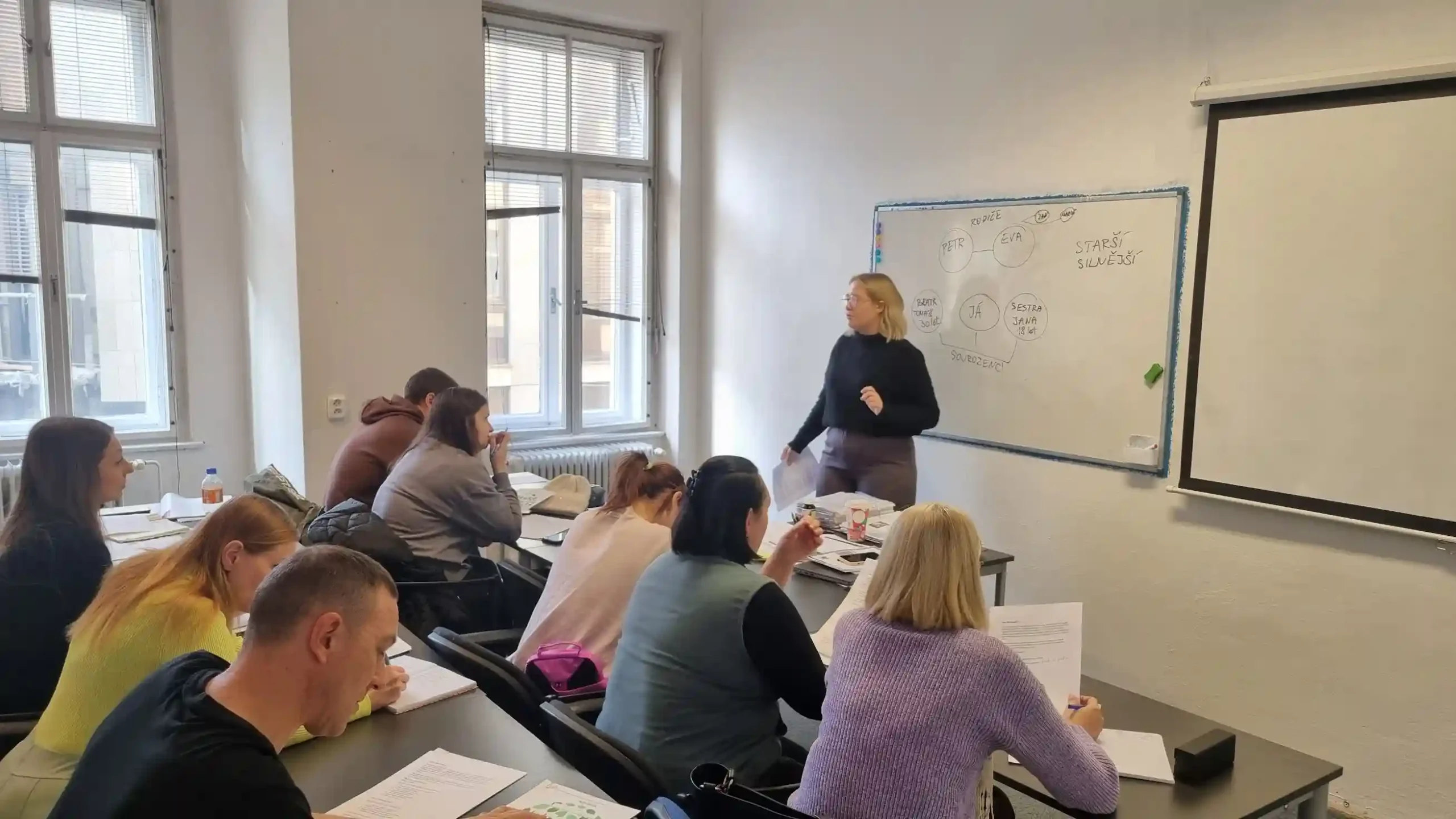
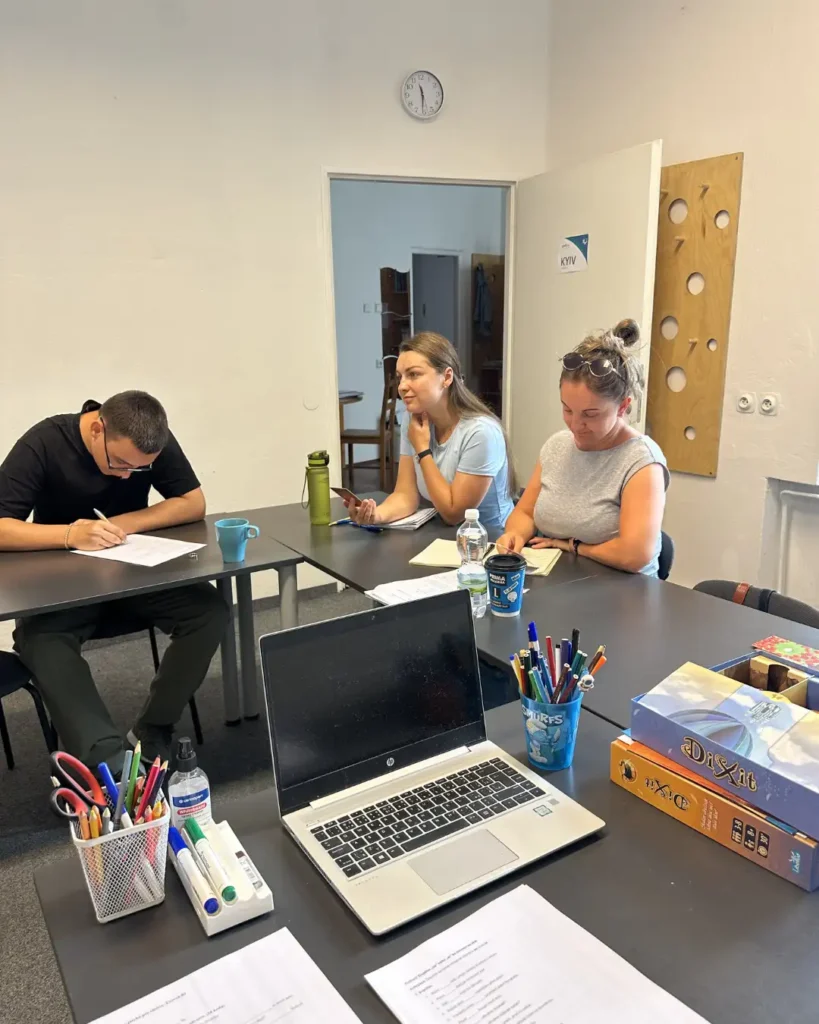
Students are preparing for admission and learning the Czech language
Preparing for entry into the Czech Republic begins with choosing the right language route

Which level do you need depending on your goal?

If your goal is adaptation and basic communication

If you need to first adapt to a new environment, understand everyday language and feel more confident in everyday communication, the starting goal may be level A2 or moving up to B1. This level helps you solve everyday problems, understand simple messages, communicate in a shop, on public transport or when completing basic documents. However, this is usually not enough for university admission.

If your goal is to enter a Czech university

If your main goal is to enter a Czech university, you should focus not on a general feeling of language proficiency, but on the requirements of a specific program and the real level of readiness for the entrance stages. For some scenarios, the working guideline may be B1, but for many areas the target level becomes B2. That is why it is important to assess not only the formal minimum, but also whether you will have enough language to complete the entrance route without constant difficulties.

If your goal is to learn without constant language stress

If you want to not only enroll, but also study without the constant feeling that the language is not enough, you should focus on B2. This level gives much more confidence when working with lectures, academic texts, written assignments and communicating with teachers. In this case, B2 becomes not just a desirable bar, but a practical goal for a comfortable start in the university environment.

If you haven’t decided on a major yet

If you have not yet decided on a specialty, you should not build a route based on the minimum language threshold. In such a situation, it is safer to focus on a stronger level of training so as not to narrow down your choice of programs in the future. The less certain you are at the start, the more important it is to have a language reserve that will provide flexibility when making the final choice of university and direction of study.

Czech language B2 from scratch: how long does the journey take?

From B1 to B2

If you already have a B1 level, the path to B2 will be the shortest among the main language routes. In this case, the preparation lasts 5 months, provided that you study systematically at a fairly intensive pace. This is a real option for those who already have a base and want to reach a stronger level before entering.

From A2 to B2

If your starting point is A2, the path to B2 will be longer, as you need to not only consolidate the base, but also move to a more complex level of understanding, speaking and working with texts. In this scenario, the preparation lasts 7 months. This route is suitable for those who already have basic knowledge of the Czech language, but are not yet ready for the introductory and educational workload.

From 0 to B2

If your goal is Czech B2 from scratch, the path to this level will be the longest and will require the most consistency. In this case, the 0-B2 route lasts 9 months.

This means that Czech B2 from scratch requires a clearly planned route, where language learning is combined with an assessment of entry requirements, program selection and an overall entry trajectory through Czech courses from 0 to B2.

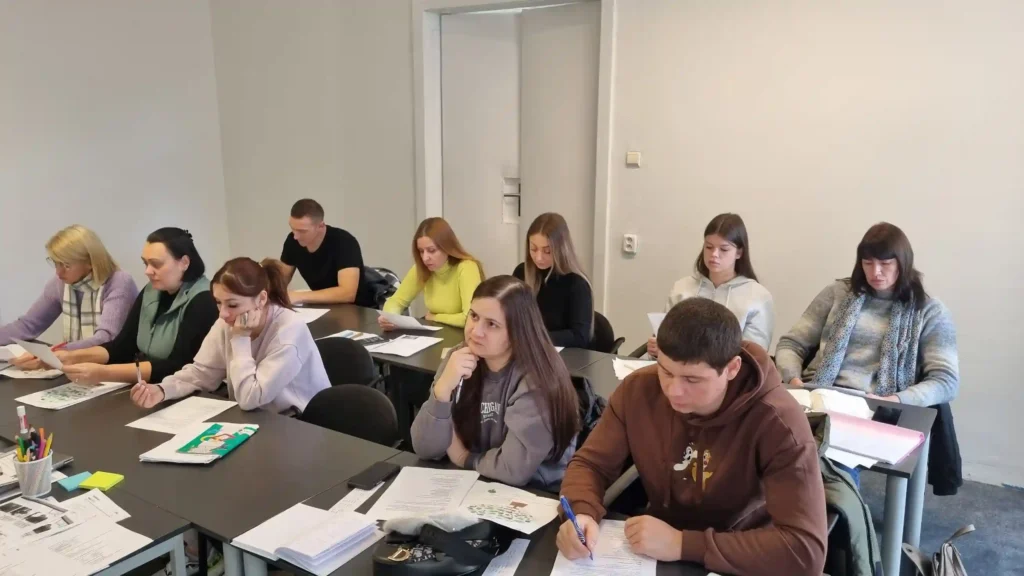
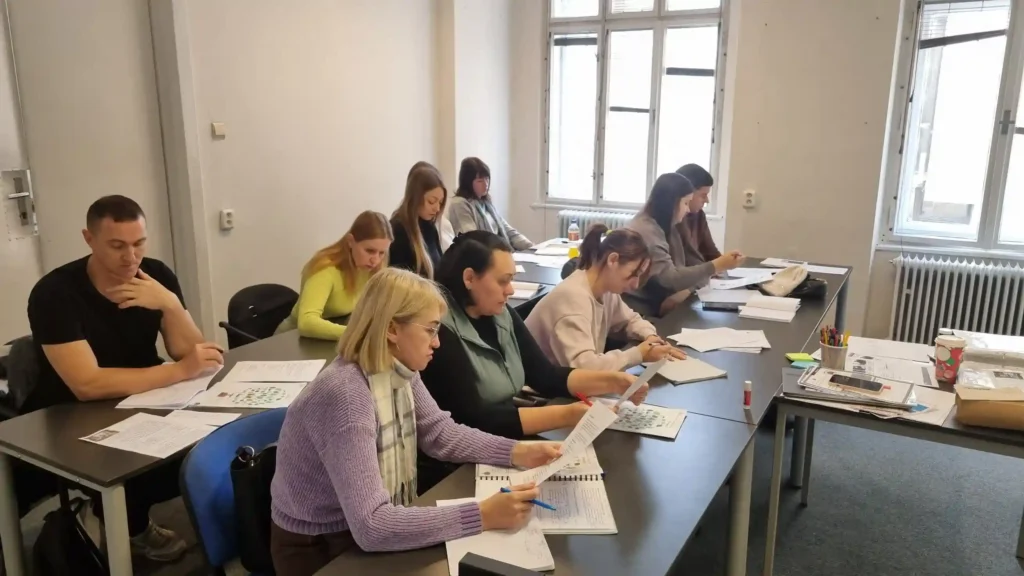
Students study Czech before entering university
Preparing for entry into the Czech Republic requires systematic study of the language and work with materials.

When A2 is not enough, and when B2 is really needed

Level A2 is no longer enough when an applicant moves from basic language learning to a real entrance route. If the program has clear language requirements, provides for introductory stages in Czech, or requires working with academic materials, A2 does not provide sufficient support. In such a case, this level can only be considered as a starting point, but not as readiness for admission.

B2 is really needed when the complexity of the study requires not just understanding individual phrases or maintaining everyday conversation, but fully participating in the university process. Lectures, deadlines, written assignments, academic texts, and communication with teachers require significantly higher language confidence than everyday communication. That is why for some applicants, B2 is not an inflated bar, but a practical level of readiness.

It is also important to consider the need to have a reserve, and not to go by the minimum. If the route is built only for the lowest permissible limit, any additional language load immediately creates difficulties. When an applicant focuses on B2, he has more space to adapt, learn and pass the entrance stages without constant stress.

B2 also becomes especially important in a situation where there is little time for error. If the preparation starts later, if you need to quickly combine language, documents and the entrance route, a level with a margin gives more stability. In this case, focusing only on the minimum increases the risk that even a slight language weakness will affect the entire result.

What mistakes do applicants make when assessing their level?

Focus on feeling, not diagnosis

One of the most common mistakes is to assess your level of Czech language based on your own feelings. If an applicant feels that he “already understands something” or “can speak on everyday topics”, this does not mean that his level really meets the admission requirements. Without diagnostics, it is easy to overestimate your knowledge or, conversely, underestimate your strengths. Because of this, the training route is built incorrectly right from the start.

Confusing everyday language with academic readiness

Another common mistake is to assume that everyday language comprehension automatically means readiness for university studies. The ability to communicate in simple situations is not the same as the ability to listen to lectures, work with terms, read academic texts, and complete written assignments in Czech. That is why it is necessary to assess not only general comfort with the language, but also the ability to work with the educational content.

They build the route for the minimum, not for the real load

Often, applicants focus only on the lowest possible level that may be formally suitable for admission. But such a strategy creates a very narrow margin of safety. If the training turns out to be more difficult, if the program has higher requirements, or if the language load is intensive, this minimum will no longer be enough. That is why the training route should be built not for the formal limit, but for the real academic load.

Postponing preparation for deadlines

Another mistake is to postpone language preparation or deciding on a route for too long. When an applicant postpones assessing their level until the deadline is approaching, there is almost no room left to correct weaknesses. In such a situation, even the right goal may be delayed. That is why it is necessary to assess the language level and build a real route as early as possible, and not when the deadlines are already approaching.

Czech B2 from scratch: how EdVista helps build a route

EdVista helps you choose a real language route not according to the general principle of “everyone needs B2”, but taking into account your starting point, the goal of admission and the time you have for preparation.

The first step is to test the starting language level with feedback to understand from what position you are starting and which route will be realistic in your situation. Then the route can be combined with preparation for admission to Czech universities.

After that, a route is selected for a specific admission goal. If the applicant already has a base, the logic of preparation will be the same. If your goal is Czech B2 from scratch, a longer and more consistent path is needed. That is why the options 0-B2, A2-B2 and B1-B2 are not interchangeable. For EdVista, these are separate routes lasting 9, 7 and 5 months, respectively.

It is especially important that the language route is considered not by itself, but in combination with the admission goal. This means that language preparation is inseparable from the choice of university, major, program requirements and deadlines.

This approach helps not just “learn Czech”, but to combine language preparation with the choice of university, major, program requirements and deadlines for admission through support for admission to Czech universities.

Frequently asked questions

Is level A2 enough to enter a Czech university?

In most cases, Czech at level A2 is not sufficient for entry. This is a basic start that helps with everyday communication, but for studying in a university environment at this level is usually not enough. More often, A2 is an intermediate point on the way to B1 or B2.

For which cases is B1 sufficient?

Level B1 can be a working minimum for some entry scenarios, if it meets the requirements of a specific program. It provides a better linguistic basis for the entry stages than A2, but does not always mean full readiness for further study. That is why B1 should not be assessed in isolation, but in the context of a specific entry goal.

Why is B2 often a safer target?

B2 is often a safer target because it provides not only formal compliance with the requirements of some programs, but also more room for real-world learning. At this level, it is easier to deal with lectures, deadlines, written assignments, and academic texts. This reduces the risk that the language load will be too difficult after entry.

How to understand your real level of Czech?

The real level of Czech should be determined not by feeling, but by diagnostics. Self-assessment is often inaccurate, especially if a person is focused only on everyday communication.

To choose the right training route, you need to assess how ready you are not only to speak, but also to work with the educational content. It is worth watching “Entry to a Czech University: Step-by-Step Calendar for an Entrant”.

Share post

You may also be interested

Online Czech Intensive B1–B2 in 5 Months: Studying with Headphones at a Laptop

Intensive 5-month course “B1-B2” for entering a Czech university: what is included and what is the result at the finish line

This is an online intensive course for 5 months, which combines the language track “B1-B2” and parallel support for admission to a Czech university: from choosing universities and programs to preparing and submitting applications, documents, and passing the admission stages. This format works as a roadmap, not just a Czech course. The task here is […]

Preparation for Admission to Czech Universities — EdVista Support

Support for admission to Czech universities: what is included in the support and what tasks does it cover?

What is admission support and who needs it? Support for admission to Czech universities is personal support that guides the applicant through the entire preparation and application process: from choosing universities and majors to planning steps, monitoring deadlines, and checking the readiness of the application package. This format is suitable for those who plan to […]

Nostrification document with Prague symbols

Nostrification for entry into the Czech Republic: step by step, deadlines, common mistakes

Nostrification is the stage at which the admission deadlines are most often “burned out”: formally everything is simple (prepare documents and submit), but in practice, deadlines are easily disrupted due to minor discrepancies in data, the wrong translation format, an incomplete package, or additional requests during consideration. And the problem is not in the procedure […]

What learning format should you choose in the spring: online Czech language courses, intensive or supervised course?

An online Czech language course in the spring should be chosen based on your goal, starting language level, and how much time is left before the introductory stages. If the goal is to move to a new level faster or prepare an introductory route in parallel, it is worth comparing an online course, an intensive course, and a course with support.

Why does the issue of learning format become critical in the spring?

In the spring, there is less time for mistakes, so the difference between learning a language at a comfortable pace and preparing for admission according to a clear route becomes fundamental. The format of training should be chosen not by popularity, but by the goal, language level and real workload. It is worth considering:

  • What is your starting level? The pace of learning depends on the initial level. For students starting from scratch, it is important to explain basic grammar and work on expanding your vocabulary.
  • Are you planning to enter this year? If you are planning to enter this year, one language course may not be enough. In this case, you need to assess whether you need an intensive format or a course with support.
  • Do you need to prepare documents in parallel? Preparing for admission is a comprehensive plan of action. In addition to the language, you need to prepare documents and solve organizational issues.
  • How much time can you realistically allocate each week. You can choose the best program, but if you do not study irregularly, it will not give results. Realistically assess your schedule. Determine how much time you are willing to devote to studying.

Who is the online Czech language course suitable for?

The online Czech language course is suitable for systematic learning in a flexible schedule, an online intensive Czech language course is suitable for a faster transition to a new level, and preparation for admission to Czech universities is suitable when you need to learn the language and prepare an admission route at the same time. Classes are held with a teacher in real time, without recordings and without an independent platform as the main learning format.

Student takes a Czech language course online
Online Czech language training to prepare for entrance exams

During classes, the teacher immediately sees which topics are more difficult and which language structures cause difficulties.

The online course can be used to prepare for level A2, B1 or B2, depending on the starting point and program format. More information about this is described in the material Online Czech language courses: Czech language course, who is suitable for learning and what results it gives.

When is the online format really convenient?

The format is convenient in the following cases:

  • You do not live in Brno. You can study online, regardless of your place of residence.
  • Flexible schedule. You can choose the time of classes, repeat the material at any convenient time.
  • You need to combine studies with work or school. A clear schedule of classes helps in achieving the goal.

What results does an online Czech language course really give?

The online course provides full-fledged systematic training, provided that you attend regular classes and practice constantly. Constant contact with the teacher helps you learn the language systematically, not fragmentarily.

When is an online course no longer enough?

If your goal is to enter a Czech university this year, a language course alone may not be enough. In this case, you need to consider the choice of program, documents, admission stages and deadlines separately, so some applicants may be better suited to a guided course.

Who is an intensive Czech language course suitable for?

The intensive course is recommended for those who want to achieve a specific language result faster and who are ready for a higher workload. In addition to regular classes three to five times a week, the format includes homework, midterm tests, and tutor support.

Intensive for those who already have a base

Applicants to Czech universities need more than just a basic level. Language level requirements vary by university and program, but for many admission scenarios, the target level is B2. If your starting level is A2 or B1, an intensive course can be a viable route to this level. EdVista offers a 5-month B1-B2 route, a 7-month A2-B2 route, and a full 0-B2 route, lasting 9 months. You can read more about the B1-B2 format in the article 5-Month B1-B2 Intensive Course for Czech University Admission: What’s Included and What’s the End Result?

How is the intensive course different from the regular course?

Intensive is a format with a faster pace, a denser program, and higher discipline requirements.

What mistakes do those who choose intensive courses make?

When choosing an intensive course, applicants often make the following mistakes:

  • overestimate their free time. This affects the quality of the learned material.
  • underestimate the amount of independent work. And this is additional time and effort.
  • choose intensive without understanding the ultimate goal. Because of this, motivation drops very quickly.

Who is the course + support format suitable for?

The supported course format is worth choosing for those who need to not only improve their language skills, but also choose an educational institution, prepare a package of documents, and monitor deadlines. EdVista includes a personal admission strategy, assistance with choosing a university, document preparation, and monitoring the admission stages.

What exactly does the escort cover, besides language?

Admission support includes not only language training, but also support at key stages of admission:

  • choosing a university;
  • analyzing university requirements;
  • submitting an application;
  • preparing a package of documents, taking into account the requirements for recognition of previous education;
  • monitoring all stages.

When does this format save time?

The supported course format is appropriate when you need to simultaneously determine the admission route, prepare documents, and not miss deadlines.

  • Start in the spring. Support helps to divide the preparation into stages and not miss the deadlines.
  • There is no clear route. Don’t know which university or specialty to choose? Support will help determine the direction of preparation and the sequence of next steps.
  • It is difficult to understand the requirements yourself. The requirements of different universities and programs differ, so support helps to compare them with your preparation route.

Who doesn’t need full support?

If the applicant has decided on a university, major, and meets the deadlines, full support is not needed.

How to choose a training format for your situation?

The training format should be chosen depending on your goal, language level, and training time.

  • If your goal is to learn a language, but the study schedule should be convenient, you can choose an online course. You can study on a convenient schedule and at your own pace.
  • If the goal is to reach a new language level as quickly as possible, choose an intensive course. The format is suitable for those who want to move to a new language level at a more intensive pace of study. It involves a clear program and regular practice. The format is suitable for applicants who already have a starting level of A2 or B1. In addition to online lessons, the intensive course includes conversational practice, thematic meetings, practical tasks with testing.
  • If your goal is not only to learn a language, but to enter a university without chaos, choose a course with support.

To choose a training format, answer the following questions:

  • What is your goal: to enter a university or just to learn the language?
  • What is your level of language proficiency?
  • How much time per week are you willing to actually devote to studying?
  • Are you planning to enter a university this year?
  • Are you willing to independently prepare a package of documents and monitor compliance with the deadlines on the official Study in Czechia portal?

What mistakes are made when choosing a format?

When choosing a study format, students often focus only on the cost of the course or its popularity. But this approach is not always correct: the format may be convenient, but you do not get the desired result.

To ensure that your studies help you achieve your goal, whether it is to enter a university in the Czech Republic or to move, you should avoid common mistakes.

They choose by price, not by purpose.

You should not choose a course just because the price suits you or there is a discount. A cheaper format may seem advantageous at the start, but it does not always help to get the desired result. Control, constant language practice and feedback from the teacher are important.

The key question: what result do I expect and how much time is needed for this. The answer to this question will allow you to choose the format of training.

They don’t take into account their starting level.

Often, applicants choose a course but do not take into account their language level. However, the difference between someone who starts from scratch and someone who has a B1 level is significant.

If you already have basic knowledge but need to improve your level, you can choose an intensive program. A beginner may not be able to study at such a pace. And vice versa: people with a B1 level will not be interested in the basic course, because some of the material has already been covered.

Testing before starting training will help to avoid such a mistake.

Confusing language learning with entrance exam preparation

Often, students believe that a Czech language course is already equivalent to preparation for admission. This is not entirely true. Czech language courses for Ukrainians help to learn grammar, increase vocabulary, and improve communication skills.

And preparation for admission also includes other elements: preparation for interviews, the basics of academic vocabulary. Having chosen a course to study the language, an applicant planning to enter may feel that they are not sufficiently prepared.

Language study and preparation for admission are similar, but not identical tasks.

Ignoring deadlines and workloads

The approach of “I only study what I’m interested in and only do it when I have time” often leads to disappointment. The desired result depends on how well the course corresponds to the real calendar and time that the applicant has. For example, during intensive preparation for entrance exams, one or two classes per week are not enough. A very busy program can be difficult for an applicant who is preparing for other exams.

What does EdVista offer for different scenarios?

EdVista has separate formats for different scenarios: online courses, intensive programs, and a guided introductory course.

  • If you don’t know yet whether you will enroll this year, but want to improve your Czech level, choose Czech courses from 0 to B2. Courses from 0 to B2 are suitable for those who want to systematically learn the language on a convenient schedule. You can study remotely, in a group or individually.
  • If you want to study at a university in the Czech Republic, preparation for admission to Czech universities includes choosing an educational institution, analyzing requirements, completing an application and preparing documents.
  • You can choose a package that includes language study and support during admission. The duration of the program depends on the starting level. In the package with language and support, the duration of the route depends on the starting level: 0-B2 – 9 months, A2-B2 – 7 months, B1-B2 – 5 months. There is support from teachers at all stages of preparation. In addition to learning the language, specialists help with document preparation, preparation for entrance tests (OSP, TSP) and visa application. The shortened program is suitable for those who are planning to enter university but already have basic knowledge of the language.

The 0-B2 route lasts 9 months. It is chosen by beginners who need to learn Czech from scratch.

If you are not sure which learning format to choose in the spring, it is worth starting by assessing your goal, current language level and real path to entry.

Frequently asked questions about choosing a training format

What is better in spring: an online Czech language course or an intensive one?

The choice depends on your language level and available time. If time is limited, an intensive course is suitable. If you need a flexible schedule, it is better to choose an online Czech language course.

Is it possible to prepare for admission only through an online course?

Yes, but only if the course includes not only language preparation but also an introductory route. If the format focuses only on language, separate support will be required.

When should you take the course + support format?

The supported course format should be chosen when, in parallel with the language, you need to determine a university, prepare documents, and go through the admission stages without missing deadlines.

What format is suitable if I haven’t decided on a university yet?

If you haven’t decided on a university yet, you can start with an online course or a basic Czech language course. If you also need to narrow down your program choices and prepare your admissions path, it’s better to consider a guided format.

Share post

You may also be interested

Online Czech Intensive B1–B2 in 5 Months: Studying with Headphones at a Laptop

Intensive 5-month course “B1-B2” for entering a Czech university: what is included and what is the result at the finish line

This is an online intensive course for 5 months, which combines the language track “B1-B2” and parallel support for admission to a Czech university: from choosing universities and programs to preparing and submitting applications, documents, and passing the admission stages. This format works as a roadmap, not just a Czech course. The task here is […]

Preparation for Admission to Czech Universities — EdVista Support

Support for admission to Czech universities: what is included in the support and what tasks does it cover?

What is admission support and who needs it? Support for admission to Czech universities is personal support that guides the applicant through the entire preparation and application process: from choosing universities and majors to planning steps, monitoring deadlines, and checking the readiness of the application package. This format is suitable for those who plan to […]

Nostrification document with Prague symbols

Nostrification for entry into the Czech Republic: step by step, deadlines, common mistakes

Nostrification is the stage at which the admission deadlines are most often “burned out”: formally everything is simple (prepare documents and submit), but in practice, deadlines are easily disrupted due to minor discrepancies in data, the wrong translation format, an incomplete package, or additional requests during consideration. And the problem is not in the procedure […]

How to choose a university and major in the Czech Republic 9 months before admission: strategy + consultations + career guidance test

Choosing a university and major in the Czech Republic is not about “google the top 10”, but a decision 9 months in advance. It determines what exactly you are preparing for: what level and style of Czech is needed, what topics to focus on, how to plan your preparation and what steps to include in the admission trajectory so as not to waste time on chaotic attempts.

This article is not about university rankings or “the best city for a student”. Here is a working algorithm for choosing, which is used in conjunction with: career orientation test → personal admission strategy → consultations to narrow down options and fix decisions → final trajectory, for which preparation and online intensive are already being built. This is part of preparing for admission to Czech universities: the right choice directly determines the preparation plan and pace of study.If you need support for admission, see the preparation program for admission to Czech universities.

To check the types and conditions of recognition of education (nostrification), use the official explanation of the Czech Ministry of Education.

Why “top universities” don’t work and what needs to be resolved in the first 2-4 weeks

9 months before admission, the main thing is not to find the “best university”, but to determine the direction and conditions for which you will actually have time to prepare. The first 2-4 weeks should be spent on making basic decisions: specialty, requirements, training plan and monitoring deadlines. Without this, any list of “top universities” turns into a chaotic collection of options without understanding what suits you and what you will have time to do.

Decision #1 – specialty (and how not to choose “blindly”)

Mistake #1 – starting with the university or city, not the specialty. The specialty determines what will be “at the entrance”: what subjects and competencies are important, what type of training suits you, and what the further trajectory will be (study, practice, work). Therefore, the first task is to fix 1 main direction and 1 reserve, but not “from the list of popular ones”, but according to three simple filters:

  • Goal: why do you need this education (profession/career vector, not “just so”).
  • Realistic: does the direction match your background and time for preparation?
  • Motivation: are you ready to do it every day for 9 months of preparation and then during your studies.

To avoid choosing at random, don’t make a “broad choice” of 10 options. Start with a short list: 2-4 candidate areas → narrow it down to 1+1 (main/reserve).

Solution #2 – requirements (what exactly we check, without details of procedures)

The second typical mistake is to decide “I will apply for the chosen program”, but not to check the framework of requirements, without which this program becomes possible at all. At this stage, the details of the procedures are not needed – you need to check the entry conditions to understand whether you pass or not, and what exactly needs to be tightened up in 9 months. Separately review nostrification — steps and timelines.

What exactly do we record in the “framework of requirements”:

  • Language level: what level of Czech is expected at the admission/study stage.
  • Selection format: what exactly can you expect as a test (general: test/interview/profile check/portfolio – depending on the direction).
  • Profile expectations: what knowledge/skills are critical for the specialty (mathematics, logic, writing, analysis, etc.).
  • Time constraints: can you fit the preparation into your schedule (school/work/moving).

See here for information about entrance exams and the selection format.

The result of this block is not “I learned everything” but a clear “what exactly we are preparing” and “what we should not skimp on”.

Solution #3 – deadlines (which we fix immediately so as not to “burn out”)

The third mistake is to start learning Czech and looking for universities without setting deadlines. Deadlines are not a “check-box calendar”, but a system of priorities: what to do now, what in a month, and what not to take at all if you can’t commit. Record the deadlines in one place: a table or calendar with 4 checkpoints (1/3/6/9 months) + a buffer.

For information about entrance exams and the selection format, see here.

What to record right away (without reference to specific dates in the article):

  • Application window (indicative periods for your target programs).
  • 9-month checkpoints: what should be ready in the 1st, 3rd, 6th, 9th month.
  • Time buffer: set aside a reserve for unforeseen delays and clarifications.
  • “Minimum” and “optimum” plan: if time becomes less – what remains a priority and what is cut off.

When these three decisions are fixed, you are no longer “google universities”, but move along the trajectory: direction → framework of requirements → deadlines → specific preparation steps.

Career guidance test: how it works and what it provides for choosing a direction

The career orientation test is a starting point that removes the “random selection” and translates it into a guided process. Its goal is not to name you a single faculty, but to quickly gather facts about your interests, strengths and goals, and then transform this into several realistic directions that you can already work with under supervision. If you want to compare fields of study by classification, use ISCED (UNESCO) as a reference.

Students in a classroom holding university brochures

The test is taken online. The result is formatted as 2-4 candidate directions and screening criteria, which are then transferred to the admission strategy. Registration for a personal consultation on choosing a field of study and university.

What test result should be output?

At the end of the test, you should get 2-4 candidate areas – not specific faculties or “university #1”, but vectors, such as: “technical/engineering”, “economics and management”, “social sciences”, “creative industries” (these are examples of areas; your list is formed based on the test results). Why is this so: at the 9-month stage before admission, it is important to first correctly fix the area, and only then narrow down to programs and universities. Along with the areas, the test should form screening criteria so that you can honestly reject options that:

  • “not mine” – does not match your motivation and the type of tasks that interest you;
  • “I won’t have time” – requires preparation that is unrealistic to complete in 9 months at your pace;
  • “not suitable for the purpose” – does not lead to where you really want to go (study/career/relocation plan).

This is critical: the test is needed not to “add options”, but to narrow the field of choice and stop wasting time on other people’s trajectories.

Typical mistakes when choosing yourself and how the test eliminates them

“Choosing by prestige”. A person takes the “biggest name”, but does not check whether the type of training and the tasks of the specialty suit them. The test returns the choice to reality: it shows which directions correspond to your inclinations and what exactly suits you in terms of your thinking/working style.

“Choosing by city”. First, they choose Prague/Brno “because they want to live there”, and then they pull the specialty to the location. The test removes this bias: it fixes that the primary thing is the direction, and the city and university are already parameters that are selected for it.

“Choosing by the advice of acquaintances”. “Go there – it’s easy/promising/I liked it” often has nothing to do with your goals and your training schedule. The test removes “other people’s experience” as the main argument and provides the basis for decisions: your data → your directions → your strategy.

After the test, you move from a chaotic search to a structure: there are 2-4 vectors + screening rules, and then the consultations are no longer “about everything in the world”, but about narrowing down and fixing the final trajectory.

Personal admission strategy: how to turn a test and goals into an action plan

The career orientation test itself does not guarantee the right choice – it only narrows the field. Next, a step is needed that turns the “2-4 candidate areas” into a concrete plan: what to choose, how to check compliance with the requirements, and how to move forward during the 9 months. This is precisely why a personal admission strategy is formed based on the test results and your goals.

What is included in the strategy (document structure)

A personal strategy is a short working document that you can open at any time and understand: “where am I now, what’s next, what’s already done”. It should contain 4 key blocks:

  • Goal: a specified specialty or type of program (e.g., “technical direction”, “economics/management”, “humanities” – with a clear priority), as well as a baseline scenario: main and reserve direction.
  • University selection criteria: by what parameters you narrow the list (not “prestige”, but what affects the realism of the training and compliance with the goals). For example: type of program/language requirements/selection format (test/interview/portfolio).
  • Monthly training plan (in general terms): how the work is distributed over 9 months – without details of procedures, but with the logic of stages and priorities.
  • Checkpoints: what should be “ready” at certain stages (e.g.: fixed direction and short list of programs; defined training plan; confirmed progress in the language; agreed admission trajectory).
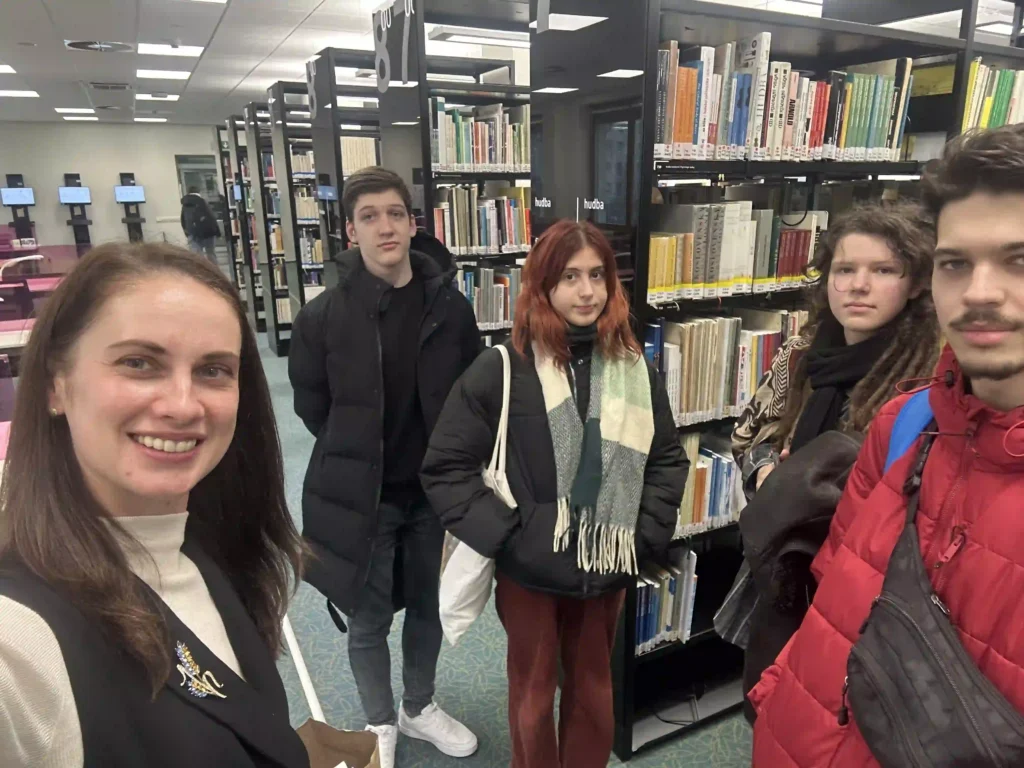
Students in a university library — an example of the study environment in the Czech Republic

Important: a strategy does not replace training or support – it provides a framework along which everything else moves without slack and repetition.

How strategy protects against “dispersion”

Without a strategy, most applicants make the same mistake: they keep dozens of options in their heads and don’t follow through on any of them. A strategy “cuts through the noise” and forces decisions to be specific.

  • “Not 12 options, but 2-3 priorities”. You stop collecting universities “just in case” and work with a short list that you can actually monitor, check and prepare for.
  • “Not chaotic actions, but consistency.” Instead of jumping around “today I’m looking for universities, tomorrow I’m learning vocabulary, the day after tomorrow I’m panicking about deadlines”, the route appears: decision → stage → checkpoint → next step.

Ultimately, the strategy makes the choice manageable: you know exactly what you chose, why it is, and what the path looks like for 9 months ahead without scattering and “chasing random options”.

18 consultations: why they are needed and what happens at them (step by step)

Consultations are carried out in stages (goals → short list → 7-14 day plan → final logic check) and end with a fixed decision and the next step. After the test and the initial strategy, many applicants are left with a “gray zone”: the options seem to be there, but the decisions are not fixed, and the preparation is not synchronized with the choice. This is where consultations are needed – as a tool that brings the process to specifics: narrows the list, removes contradictions, sets checkpoints and keeps the pace for 9 months. This is not “talking”, but stages of decision-making, after which you come out with a clear next step. Registration for a personal consultation.

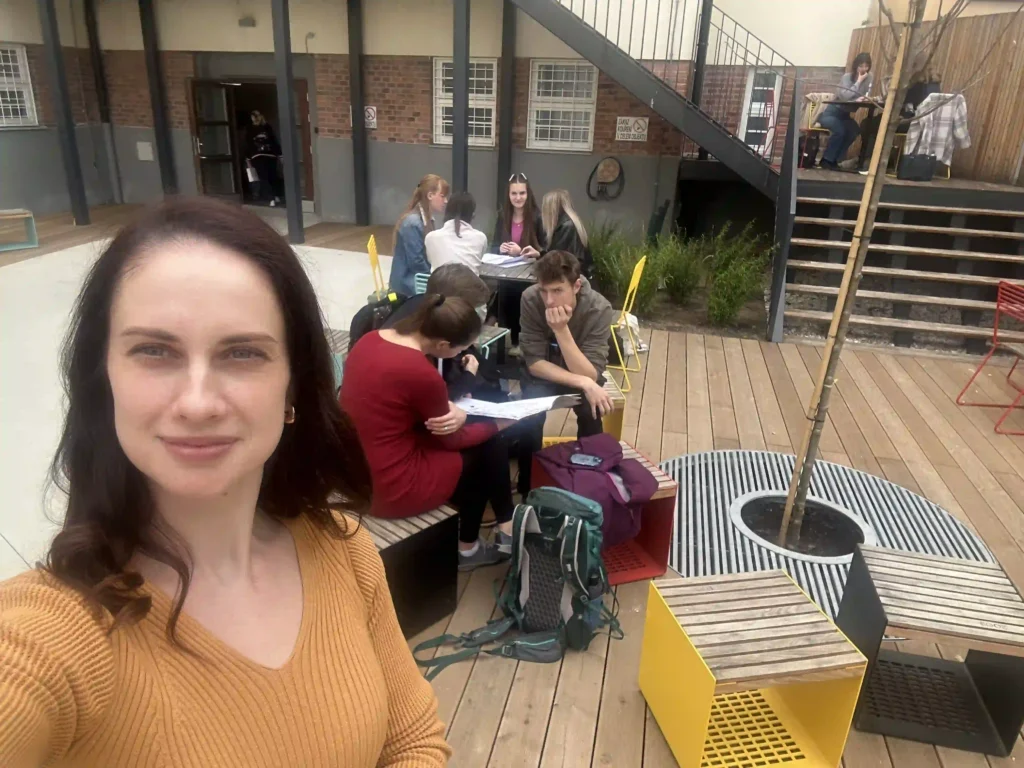
Students discussing their studies on campus — an example of student life in the Czech Republic

How consultations are broken down into stages (9 month logic)

Stage 1: clarifying goals + test results → focus direction.

At the start of the consultation, the test results are “grounded” into your reality: background, goals, schedule, resources. The result of the stage is not abstract “interesting/not interesting”, but a focus area (main + backup) and screening rules so that you don’t return to chaos.

Stage 2: narrowing down the list of universities/programs → 2-3 target trajectories.

Next comes a short list – not “dozens of bookmarks”, but 2-3 trajectories that are realistic to work with. At this stage, it is important not to look for the “ideal option”, but to collect 2-3 realistic scenarios: the main one, a backup one, and (if necessary) a “if conditions/terms change” option.

Stage 3: synchronization of choice with preparation → “what are we doing now”.

Here, consultations stitch together the choices with your preparation: what to study, what to focus on, how to plan 9 months so that each month works towards entry. The result is a specific action plan for the next 7-14 days and a checkpoint that shows that you are moving in the right direction (and not just “doing something”).

Stage 4: final check of the logic “goal ↔ requirements ↔ deadlines”.

At the end of the consultation, they check whether there is anything that contradicts each other: the chosen goal meets the requirements, and the requirements fit into your preparation time. This is the moment when “doubts disappear in a flat place”, because the decision is supported by logic and a plan, not feelings.

How do consultations differ from “one-time advice”?

One-time advice usually sounds like “choose this” – and that’s it. Guided consultations work differently: it’s not “advice”, but decision-making + checkpoints + fixing the plan.

  • Decision-making: you don’t accumulate options, but narrow down and fix priorities.
  • Checkpoints: there are criteria by which progress is visible (and it is clear what to do if something does not converge).
  • Fixing the plan: after each stage you are left with not a “conversation”, but a fixed step: what has already been decided and what we are doing next.

As a result, consultations turn 9 months into a manageable project: with stages, priorities, and sequence, rather than a constant search for the “best option”.

How choosing a university affects your Czech language preparation (and why you should consider it right away)

The choice of university and specialty affects Czech not “cosmetically”, but essentially. Czech for entrance is not only grammar and conversational topics, but also the vocabulary and style in which you will study, read materials, write and explain your thoughts in an academic context. Therefore, the direction of study should be fixed early: it determines what vocabulary to study, what academic style to train and what the pace of preparation should be in order to move towards the goal without unnecessary deviations.

Different directions are different “language tasks”. Somewhere you need an emphasis on terms and precise formulations, somewhere – on argumentation and structured writing, somewhere – on the ability to present yourself and explain motivation. If the direction is not determined, you learn the language “on average in a hospital”: you take everything a little at a time, but do not pump up what you will really need. As a result, you get the feeling that you are studying a lot, but the progress is not converted into readiness for entrance tasks.

That is why in the 9-month track it is important to synchronize the choice of direction with language preparation: when you have 2-3 priority trajectories, training can be built more precisely – with the necessary topics, formulations and practice for your future academic context. Without promises of “guaranteed admission”, but with the logic: clear choice → accurate preparation → less dispersion.

What results should you get 2-4 weeks after starting (checklist)

To prevent 9 months of preparation from turning into “information search without solutions”, you should have concrete, documented results within the first 2-4 weeks. Check yourself against this checklist:

  • Defined direction: 1 main + 1 reserve (not “still thinking”, but clearly fixed).
  • University selection criteria: by what parameters do you filter out options and why.
  • Short list of programs: 2-5 options that you are really ready to work with further.
  • Personal admission strategy: formatted as a document (so as not to keep everything “in your head”).
  • 9-month preparation plan: in stages, with the logic of “what to do when”.
  • Наступні кроки на 7-14 днів: конкретні задачі без розмитих формулювань типу “підготуватися краще”.

If at least 2-3 items from this list are missing, you haven’t really started yet, you are still “warming up” with information.

Frequently asked questions about choosing a university and major in the Czech Republic

What should I do if I haven’t decided on a major?

Start not with universities, but with the direction: 2-4 vector options that match your goals and background. Then narrow it down to 1 main + 1 reserve using the criteria “mine / not mine” and “will I have time / will I not have time”, and only then move on to the short list of programs.

Can I start choosing if my Czech level is still low?

Yes, and this is even desirable: early choice of direction helps to build language training more precisely (vocabulary, style, pace). If the choice is postponed “until better Czech”, the training often becomes blurred and less effective. If you’re starting from zero — the 0–B2 program.

How many universities can we realistically keep in focus?

The practical focus is 2-3 trajectories, not dozens of options. When the list is too long, you waste time comparing instead of making a decision and moving according to the plan. If you are preparing for two different types of entrance requirements in parallel, leave 2 trajectories, not 3.

Can I change direction after the test?

Yes, but not “because of doubts”, but because of new facts: clarification of the goal, change of conditions, understanding of the requirements or your pace of preparation. In this case, you update the strategy and narrow down the list to priorities again.

How not to waste time on the “wrong” options?

From the very beginning, fix the elimination criteria: “not mine / I won’t have time / it doesn’t fit the purpose”. Work only with a short list of programs (2-5) and keep control points: if at some stage something doesn’t fit, you eliminate the option, and don’t drag it “just in case”.

Start with the right choice – and 9 months will work towards admission

If you are planning to enter the Czech Republic, start with logic, not with chaotic lists: first a career orientation test → then a personal strategy → then move according to the plan with checkpoints. In the format of the 9-month intensive 0-B2, this is combined with support so that the choice of direction immediately turns into a clear trajectory of preparation for entry.

Program and package pricing | EdVista contacts

If you are not starting from scratch: the A2→B2 track lasts 7 months, and B1→B2 – 5 months (the logic and strategy of choosing a direction are preserved).

Share post

You may also be interested

Online Czech Intensive B1–B2 in 5 Months: Studying with Headphones at a Laptop

Intensive 5-month course “B1-B2” for entering a Czech university: what is included and what is the result at the finish line

This is an online intensive course for 5 months, which combines the language track “B1-B2” and parallel support for admission to a Czech university: from choosing universities and programs to preparing and submitting applications, documents, and passing the admission stages. This format works as a roadmap, not just a Czech course. The task here is […]

Preparation for Admission to Czech Universities — EdVista Support

Support for admission to Czech universities: what is included in the support and what tasks does it cover?

What is admission support and who needs it? Support for admission to Czech universities is personal support that guides the applicant through the entire preparation and application process: from choosing universities and majors to planning steps, monitoring deadlines, and checking the readiness of the application package. This format is suitable for those who plan to […]

Nostrification document with Prague symbols

Nostrification for entry into the Czech Republic: step by step, deadlines, common mistakes

Nostrification is the stage at which the admission deadlines are most often “burned out”: formally everything is simple (prepare documents and submit), but in practice, deadlines are easily disrupted due to minor discrepancies in data, the wrong translation format, an incomplete package, or additional requests during consideration. And the problem is not in the procedure […]

Intensive 5-month course “B1-B2” for entering a Czech university: what is included and what is the result at the finish line

This is an online intensive course for 5 months, which combines the language track “B1-B2” and parallel support for admission to a Czech university: from choosing universities and programs to preparing and submitting applications, documents, and passing the admission stages.

This format works as a roadmap, not just a Czech course. The task here is not to “learn the language at all”, but to reach the finish line with two results at the same time: a target level of Czech and a clear and implemented admission plan – with the necessary steps, deadlines, and a package of prepared/submitted documents.

Next, we will analyze how the B1-B2 track is organized for 5 months, in what format the online participation takes place (lessons/modules, conversational practice, chat, task checking), what exactly is included in the admission support, what the “step 1-4” path looks like (universities → applications/documents → admission stages → admission) and in which cases it is more appropriate to choose a 9-month offline intensive course.

You can also enhance your speaking skills separately through a conversation club format.

This is not just a “Czech course”, but a roadmap for entry

In this program, language and admission go in parallel, not “first we learn Czech, then we think about the university”. While you are moving along the B1-B2 track, the team leads the admission part: helps with the choice of universities, the logic of submission and documents, so that you do not lose time and do not miss the deadlines. The B1-B2 levels correspond to the CEFR scale. That’s why the Online Intensive B1-B2 in 5 months is structured as a pathway: language learning + admission tasks in parallel, with clear checkpoints.

Study and Admission Plan: Online Intensive B1–B2 in 5 Months and Application Support

In parallel with the language track, you go through all the key stages of admission – from choosing universities to being ready for admission procedures. This eliminates the risk that you will learn the language, but miss the deadlines or collect an incomplete package of documents. As a “roadmap”, the program covers the following tasks:

The road map consists of three parallel directions: selection of programs according to requirements, preparation and submission of applications/documents according to deadlines, and preparation for the admission stages according to the format of the selected programs.

B1-B2 in 5 months

Start with diagnostics: determine the entry point

At the start, we do diagnostics and determine the entry point (A2/B1) to immediately enter the “B1-B2” track without repetitions. If you already have basic knowledge, this is immediately visible – and you don’t waste time repeating the obvious.

At the start, we fix the current level (A2/B1 or another confirmed one), agree on the pace and schedule, and tie the training to the entry deadlines to move along the track without repetitions and failures.

Sign up for a personal consultation/assessment.

Movement through levels: how the 5-month pace is built

The intensive is structured as short learning cycles: you go through the material, consolidate it with practice, submit assignments and receive feedback – without “slacking” for several weeks. The pace is maintained by regular practice (including speaking), which shows real progress, and not a feeling of “getting better”.

Progress is recorded in two ways: a test/level check after the blocks and a writing and speaking check to see that the knowledge is actually applied.

What is training for the entrance?

The language part of the track does not prepare you for “abstract Czech”, but rather the skills that are really needed for entry and further study. A separate focus is on understanding requirements and the ability to clearly formulate requests/messages.

Parallel introductory track within the 5-month online intensive: what is done simultaneously with training

While you are going through the language track “B1-B2”, the entrance track is being conducted in parallel – so as not to waste months on “analysis of admission later” and not to face a situation where the level is already there, and the application deadlines have already passed. All tasks are tied to real dates and stages of submission.

Parallel to the study, three areas are being conducted: selection of universities/programs according to the requirements, work with applications and documents (preparation, verification, submission) and preparation for the entrance stages in accordance with the requirements of the programs.

Participation format in the 5-month ONLINE intensive: how the training goes each week

Online modules/lessons

The training is built in modules: you go through the topics sequentially, consolidate them with practice, and move on only after it is clear that the base has “settled down”. Each module closes the topic, provides practice, and fixes the result before moving on.

  • materials + tasks for consolidation
  • summary: what you already know and what you will practice next
Intensive Course Materials: “Česky krok za krokem” Textbook for Learning Czech

Conversation practice (online)

The speaking part is regular practice that keeps the pace of the intensive and translates knowledge from “I understand” to “I can say”.

Speaking practice improves speaking and listening through situational dialogues. At the same time, you point out and correct recurring mistakes so that progress is noticeable in live communication.

Chat, task review, feedback

To ensure that progress is manageable, learning is supported by communication channels and practice checks – not just “I passed the lesson and forgot.”

Homework is submitted in an agreed format, and the check is done by the program teacher/mentor. You receive specific feedback: what to correct and what to repeat. In the chat – brief clarifications on topics and organization of learning.

The teacher/mentor reviews homework and provides feedback during the Online Intensive B1–B2.

How to combine learning and introductory tasks (without chaos)

The logic is simple: the course proceeds at its own pace, and the entrance tasks are tightened at those moments when they are needed by the deadlines, so as not to accumulate “debts” at the end of the intensive. That is, you do not do everything at once – you take the entrance steps when it gives results and does not break the learning rhythm.

How are the focuses distributed by periods:

Early stage: determining the goals and deadlines of admission, initial selection of universities/programs, start collecting requirements and a list of documents

Middle stage: clarifying the list of universities, preparing documents, application plan, synchronizing the entrance steps with your progress in the language

Final stage: final check of compliance with the requirements, submission of applications (within the program), preparation for the entrance stages (generalized) and control language sections before the finish

What exactly do you get: a list of deliverables (without marketing generalizations)

You receive consultations on admission by stages and a personal admission strategy with deadlines. Within the terms of the product, the team supports the preparation/submission of applications and work with documents according to the requirements of the selected universities, and at the start (if available in the program) a level diagnosis is carried out.

Admissions Path “Step 1-4”: What the Process from Selection to Enrollment Looks Like

Step 1: Universities → requirements → selection

What is done: requirements for universities and programs are collected, relevant options are selected, priorities are formed (where to apply first, and where as an alternative).

Result of the step: list of selected universities/programs + fixed deadlines and key requirements for each option.

Step 2: Applications and documents

What is done: a package of documents is prepared according to the requirements of the selected programs, completeness and compliance are checked, after which applications are submitted within the planned stages.

For some applicants, nostrification of their secondary school certificate will be a separate stage.

Result of the step: applications submitted + a package of documents for specific universities is collected and checked.

Step 3: Introductory stages (exams/tests/interviews – depending on requirements)

What is being done: preparation and training for the format of the entrance stages required by a specific program (without a “universal scenario” – it all depends on the requirements).

Result of the step: readiness to pass the entrance stages at the selected universities on the required dates.

Preparation for Admission to Czech Universities.

Step 4: Admission/Enrollment

What is being done: actions after receiving the answer/decision: clarifying the next steps, preparing what is needed to complete the enrollment procedure.

Step result: a clear understanding of the next steps for enrollment and a completed action plan after the university’s decision.

What is the result at the end of the 5-month online intensive?

At the finish line, the program gives two parallel results – a language and an entrance.

  • Language result: you pass the track “B1-B2” at a given pace and record your progress through control checks and intermediate sections. This includes level tests and written and speaking tests.
  • Entrance result: within the program you have ready and/or submitted applications, a prepared and checked package of documents for the selected universities, as well as readiness to go through the entrance stages (according to the requirements of specific programs).

5 months “B1-B2” vs 9 months “0-B2”: how to choose a track

The difference is in the starting level and duration: “B1-B2” lasts 5 months, “0-B2” – 9 months. Both options follow the “roadmap” of entry, but are suitable for different paces, conditions and deadlines.

You can compare packages and pricing on the pricing page.

Who is the 5-month ONLINE intensive suitable for?

  • tight deadlines – fast pace required
  • willingness to work regularly between classes
  • comfortable learning remotely
  • flexibility required

Who needs the 9-month intensive “0-B2”

  • need a more stable pace without forcing
  • better to maintain the regime in the classroom
  • want more live practice offline
  • have time before deadlines

What is the 9-month intensive “0-B2” introductory course and what does it consist of?

Offline classes

The 9-month intensive “0-B2” is regular learning at a steady pace: you go through the material sequentially, practice it, and move on without “gaps” between topics. The format is suitable for those who value learning at the lively pace of a group and having systematic offline discipline.

Offline speaking practice

A separate emphasis of the offline format is live language practice, regular conversation sessions, and simulations of situations where it is easier to train spontaneous reactions and “live” communication.

Study materials and homework

Materials and homework are needed to consolidate topics between classes and not “lose” progress from lesson to lesson.

Introductory support within the offline intensive

The offline intensive also runs an introductory track in parallel with the language – so that you have a plan ready and key actions completed by the deadlines.

As part of the support, you receive:

  • admissions consultations (by stages)
  • personal admissions strategy with deadlines
  • preparation and/or submission of applications (within the product)
  • support with documents according to the requirements of selected universities
  • preparation for admissions stages (generalized, depending on the requirements of the programs)

What should be the result after 9 months offline?

After 9 months of offline intensive training, the result is also recorded in two areas – speech and introduction.

  • Language: stable progress towards the target level according to the program track, confirmed by control checks (scores, level tests, writing and speaking tests within the educational process).
  • Admission: a package of documents has been formed and checked according to the requirements of the selected universities, applications have been submitted (within the program) and readiness to go through the admission stages in accordance with the requirements of specific programs.

FAQ: Frequently asked questions about the intensive and admission

What is the difference between the tracks “B1-B2 (5 months)” and “0-B2 (9 months)”?

The track “B1-B2” is designed for those who already have a base (approximately A2/B1) and want to reach B2 in an intensive period.

The track “0-B2” starts from scratch, so it lasts longer – 9 months, in order to pass the basic levels without failures and reach B2.

In both tracks, admission support is provided in parallel: strategy, applications, documents and preparation for the admission stages according to the requirements of the selected universities.

Is it realistic to go from level A2/B1 to B2 in 5 months online?

It is realistic if you are ready for an intense rhythm and regular independent work between classes. At the start, your pace and work rules are fixed so that you do not “fail” after 2-3 weeks. If we see overload, the focus and task performance mode are adjusted.

How much time per week should you dedicate to studying?

It depends on the starting level, pace, and entry deadlines. In the 5-month format, it is important to set aside time not only for lessons, but also for homework and speaking practice. The specific volume is selected after the initial diagnosis and schedule coordination.

How is the homework check done and what should I do if I don’t have time?

Homework is submitted in the format specified by the program, and you receive specific feedback on mistakes. If you don’t have time, you don’t accumulate “debts”: you record what exactly went wrong and agree with the teacher/mentor which tasks are priorities so as not to break the pace of the track.

What exactly is included in “entry support”: what do you do and what do I do?

Ви відповідаєте за надання вихідної інформації та документів, а команда веде процес: допомагає сформувати стратегію, підібрати університети за вимогами, підготувати заявки й перевірити пакет документів перед подачею. Розподіл задач узгоджується на консультаціях, щоб було зрозуміло, хто за що відповідає на кожному етапі.

Can I come to the intensive course if I already have A1/A2?

Yes. At the start, a short diagnostic is done to confirm your level and not skip what you have already learned. Then you connect to the track from the point that corresponds to your base and synchronize with the introductory tasks for your deadlines.

How are universities selected and how is the application strategy formed?

The selection is based on the requirements: programs, deadlines, application format, entry stages, required documents. After that, a strategy is formed: where to apply first, what are the fallback options, which stages/waves of application you fall into, and what actions need to be taken by each date.

What documents are usually required (without a universal list) and how do you help with them?

The set of documents depends on the specific university and program, so there is no “universal list.” You will receive a check of the requirements for the selected options, tips on preparing the package, and compliance control before submission – to avoid rejections due to technical errors or an incomplete package.

How to Enroll in the 5-Month B1-B2 Intensive

Both formats follow the same logic – the “roadmap to admission”: you simultaneously move through the Czech language and complete the admission tasks (universities, applications, documents, preparation for stages). Choose 5 months online if flexibility and a fast pace are important, or 9 months offline if a longer rhythm and classroom learning are needed. If you are still deciding on your pathway, explore all study packages. Enrollment for the 5-month Online Intensive B1-B2 is now open: we begin with a level assessment and align your admission pathway.

Register for the 5-month online intensive + admission consultation

Register for the 9-month intensive “0-B2” + admission consultation

Share post

You may also be interested

Preparation for Admission to Czech Universities — EdVista Support

Support for admission to Czech universities: what is included in the support and what tasks does it cover?

What is admission support and who needs it? Support for admission to Czech universities is personal support that guides the applicant through the entire preparation and application process: from choosing universities and majors to planning steps, monitoring deadlines, and checking the readiness of the application package. This format is suitable for those who plan to […]

Nostrification document with Prague symbols

Nostrification for entry into the Czech Republic: step by step, deadlines, common mistakes

Nostrification is the stage at which the admission deadlines are most often “burned out”: formally everything is simple (prepare documents and submit), but in practice, deadlines are easily disrupted due to minor discrepancies in data, the wrong translation format, an incomplete package, or additional requests during consideration. And the problem is not in the procedure […]

Support for admission to Czech universities: what is included in the support and what tasks does it cover?

What is admission support and who needs it?

Support for admission to Czech universities is personal support that guides the applicant through the entire preparation and application process: from choosing universities and majors to planning steps, monitoring deadlines, and checking the readiness of the application package. This format is suitable for those who plan to enter Czech universities for Ukrainians and want to reduce the risk of mistakes, not waste time on chaotic actions, and have a clear “road map” to admission.

What tasks does support cover: from choosing a university to finalizing the application?

Choosing a university and major (according to goals and language level)

The support starts with choosing a direction and universities according to your goal: future profession, study format, city and the feasibility of admission with your level of Czech. The curator helps narrow down the options to a short list so that you don’t spend weeks “reviewing everything in a row” and choose a program that doesn’t match your trajectory. If you need a basic overview of the stages and required documents, see our admission guide: “Admission to Czech Universities.”

Personal entry strategy and roadmap of steps

Next, a strategy is formed: which steps to take first, what to prepare in parallel, and what to postpone for later. You get a roadmap with checkpoints — so that it is clear how to move from “I want to join” to the readiness of the process and preparatory materials, without failures between stages.

Controlling deadlines and “what to do now and what to do later”

One of the key tasks of support is to eliminate timing chaos. The curator fixes deadlines, reminds of critical points and helps to prioritize: what to do right now, what can be postponed, and what is dangerous to ignore. This reduces the risk of a situation where “everything was almost ready”, but there is no time left to finalize the package for submission. For official nostrification rules and the list of relevant authorities, see the website of the Czech Ministry of Education (MŠMT).

Preparation for Admission to Czech Universities – Online Application and Document Package Preparation

Preparation for communication with universities (requests, clarifications, checks)

The support also covers the communication part: how to formulate requests correctly, what clarifications to ask, how to check information and get confirmation of important points. You are not left alone with correspondence – the curator helps to prepare messages and the logic of checks to avoid misunderstandings and unnecessary “switching” between the university and the applicant. General rules for international students (visa, studies, basic requirements) are available on the official Study in Czechia portal.

What is included in the support (support package)

  • You receive a professional orientation test to determine the direction of study and understand which specialties are really “yours” and which are a random choice. This provides support for further selection of programs.
  • You receive assistance with choosing a Czech university and specialty in the form of consultations to compile a short list of options for your goals and current language level, without scattering across dozens of programs.
  • You receive a personal admission strategy (based on tests + your goals) — a clear logic of “where to enroll and why” and how to move through the stages so as not to change your decision at the last moment.
  • You receive an admission guide — a step-by-step instruction on the process that removes “what to do next” and helps you move along the same pattern, even when there are many tasks.
  • You receive a roadmap for readiness for studying at a Czech university — a step-by-step plan with checkpoints: what should be ready at each stage and how to check progress.
  • You receive preparation and verification of the readiness of the “submission package”: the curator leads you to the “can be submitted” state, checks the readiness of the preparatory materials and helps to close the gaps before finalization.
  • You receive support at the stages of the admission campaign so that the steps are carried out sequentially: without missed deadlines and without situations “we remembered too late”.
  • You receive participation in a workshop/webinar about admission and study at Czech universities to understand the process and typical mistakes on real cases, and not “from hearsay”.

Where support saves time and reduces risks

The most common failures in entry are chaotic actions, missed deadlines, and inconsistent preparation. Support eliminates these risks through a plan, checkpoints, and readiness checks before each stage.

A plan instead of chaos

You don’t spend weeks “finding the right order of things to do.” There is a sequence of steps and it’s clear what to do now so you don’t have to redo the same thing multiple times.

Deadlines under control

The curator keeps the timing and reminds us of critical points. This reduces the risk that an important step will be taken “at the last minute” when there is no time to correct it.

Check before submission

Before finalization, the curator checks the readiness of the submission package and preparatory materials. This way, you don’t “send as is,” but reach the “ready to submit” state.

One responsible point of contact

Instead of dozens of scattered pieces of advice, you have a person who leads the process and is responsible for the logic of actions. This saves time on doubts and reduces the number of errors due to conflicting information.

Parallelism: language + introductory tasks

As you learn Czech, the introductory tasks move in parallel—without the “language first, then introduction” scenario. The result is less stress and more control over the process.

How does accompaniment combine with an online intensive Czech course for 9 months?

Online intensive Czech for entrance gives language results, and support ensures progress on entrance tasks – synchronously with learning.

What is done on the course (language/practice)

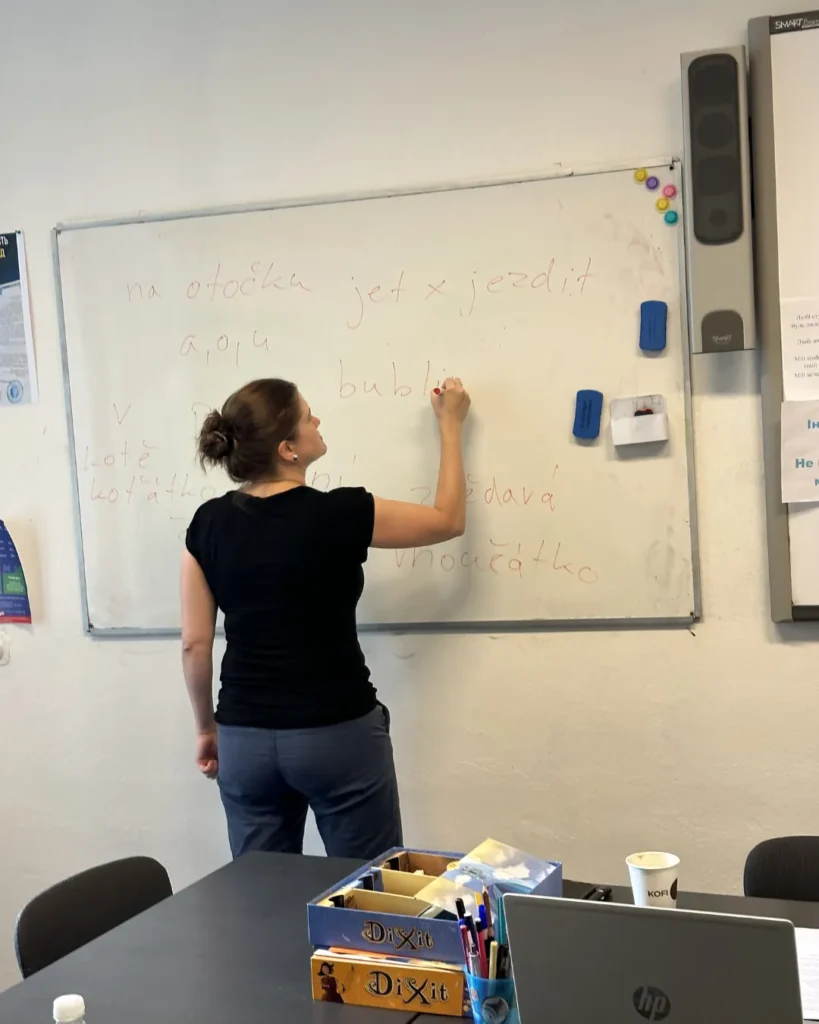
Preparation for Admission to Czech Universities — Czech Language Lesson with a Teacher

During the course, you systematically improve your Czech level: you cover the basics, build vocabulary and grammar, train listening and reading comprehension. A separate focus is on language practice in real situations: study, everyday life, communication, so that you can confidently use Czech, not just “know the rules.”. The level program and formats are available on the Czech Courses from 0 to B2 page.

What is done in support (strategy/plan/control/readiness)

In parallel, the admission trajectory is built: choosing universities and majors, personal strategy, roadmap of steps and checkpoints. The curator guides you to the readiness of the “application package” and preparatory materials, keeps deadlines and helps not to lose the logic of the process over the long haul.

Preparation for Admission to Czech Universities — Planning Your EdVista Support

What is the format of interaction (curator/consultations/checkpoints)?

Interaction is built through a curator and regular consultations: you agree on a plan, get answers to questions and clear next steps. Then you move through checkpoints – at each stage there is a short readiness check so as not to accumulate “holes” that will later have to be closed in stress.

How long does preparation usually take and when to start?

The earlier you start, the less stress and “fire” closer to the application: preparation for admission to Czech universities works better when there is a reserve of time for a plan and checkpoints. When preparation starts early, you have space for a calm pace: to improve your Czech, go through all the steps sequentially and without rework due to haste.

A comfortable horizon for combining language and organizational tasks is about 5 months. During this time, it is realistic to build a plan, go through checkpoints, prepare preparatory materials and reach the state of “you can apply” without chaos.

If you have less time, this is also possible – but you need a tighter plan and strict priorities. In this mode, it is critically important to cut off the unnecessary work in parallel and not postpone tasks “for later”, because every week of delay eats up the reserve for checks and corrections.

Answers to frequently asked questions about support for admission to Czech universities

Is it possible to go for an escort if your Czech level is still low?

Yes. The support does not “require” a high level at the start: you simultaneously improve your language skills in an online intensive, and the introductory tasks proceed according to plan — without a pause “first the language, then the introduction.”

How is support different from just consultation?

Consulting provides answers and direction, while support guides the process: strategy, roadmap, checkpoints, deadlines, and checking the package’s readiness for submission at each stage.

Is support suitable for those who have not decided on a specialty?

Yes. At the start, you form a direction and narrow down the choice to a realistic list of programs for your goals and starting conditions so as not to get “stuck” at the selection stage. If you need to quickly define your starting point, begin with a personal consultation.

What does work look like for 9 months?

You study online intensive Czech, and support keeps you on the introductory trajectory in parallel: next steps are agreed upon, checkpoints are passed, and you move towards the readiness of the package for submission without chaos.

What do I do myself, and what does the curator do?

You follow agreed steps and prepare preparatory materials, and the curator forms a plan, maintains deadlines, suggests the order of actions, checks readiness before stages, and helps with communication with universities.

Is it possible to connect from scratch?

Yes. You can join at any stage: the curator quickly assesses your situation, sets priorities, “aligns” the plan, and puts your training into a structured mode.

Online intensive + support before admission: starting with the trajectory

If you are planning to enter a Czech university, we will select a trajectory: online intensive Czech for 9 months + support for your goal. You study systematically, and the entrance tasks move in parallel – with a plan, checkpoints, and the readiness of the package for submission.

Choose an entry trajectory

Share post

You may also be interested

Online Czech Intensive B1–B2 in 5 Months: Studying with Headphones at a Laptop

Intensive 5-month course “B1-B2” for entering a Czech university: what is included and what is the result at the finish line

This is an online intensive course for 5 months, which combines the language track “B1-B2” and parallel support for admission to a Czech university: from choosing universities and programs to preparing and submitting applications, documents, and passing the admission stages. This format works as a roadmap, not just a Czech course. The task here is […]

Nostrification document with Prague symbols

Nostrification for entry into the Czech Republic: step by step, deadlines, common mistakes

Nostrification is the stage at which the admission deadlines are most often “burned out”: formally everything is simple (prepare documents and submit), but in practice, deadlines are easily disrupted due to minor discrepancies in data, the wrong translation format, an incomplete package, or additional requests during consideration. And the problem is not in the procedure […]

Nostrification for entry into the Czech Republic: step by step, deadlines, common mistakes

Nostrification is the stage at which the admission deadlines are most often “burned out”: formally everything is simple (prepare documents and submit), but in practice, deadlines are easily disrupted due to minor discrepancies in data, the wrong translation format, an incomplete package, or additional requests during consideration. And the problem is not in the procedure itself, but in the fact that it runs parallel to preparation for admission, language, submission of documents, and communication with universities – there may not be time left to correct errors.

This material is for those who plan to enter the Czech Republic and need to confirm their previous education: 11th grade students, graduates of vocational education, as well as those entering Czech universities after a bachelor’s/master’s degree. If you are currently at the stage of choosing a program or are already collecting documents, the step-by-step instructions below will help you plan nostrification so that it does not become a “bottleneck” in admission.

If you want to pass nostrification without delays and unnecessary nerves, support closes the routine: we help determine the right type of nostrification for your case, collect and check the package of documents, control deadlines and communication so that you do not waste time on rework and “bring this and that”.

What is nostrification and when is it needed?

Nostrification is the official recognition in the Czech Republic of your educational document issued in Ukraine (or another country): a certificate of complete general secondary education, a diploma from a vocational pre-higher education institution/vocational education or university together with an appendix. In simple words: the Czech side confirms that your level of education meets their requirements and can be accepted for further study.

Nostrification document form in the Czech Republic

Most often, nostrification is required for admission to Czech educational institutions – universities and some specialized programs. In this article, we consider nostrification specifically for admission to Czech universities.

An important point: in some cases, nostrification may not be mandatory at the stage of submitting documents if the chosen university accepts the package “conditionally” (without a ready-made decision) – but then may require nostrification before enrollment. Therefore, the rule is simple: the status “required/not required” is determined not by general advice from forums, but by the requirements of a specific higher education institution and your program.

Nostrification ≠ translation of documents. Translation is only part of the preparation of the package, and nostrification is a separate review and decision process that has its own deadlines, requirements, and risks of delays.

External nostrification (outside the university)

  1. External nostrification is the confirmation of a certificate/diploma through a government agency outside the university.
  2. It is done once, and the result can be used to apply to different universities and programs.
  3. The application is made to the education department of the respective region (kraj), so the requirements and route depend on where you apply.
  4. As part of external nostrification, nostrification exams may be assigned if there is a difference in subjects or number of hours.

Internal nostrification (at the faculty/at the university)

  1. Internal nostrification is a confirmation of education directly at the university, at a specific faculty.
  2. It is usually faster and often passes without nostrification exams, but the rules are determined by the faculty itself.
  3. Such confirmation is valid within the framework of this university/faculty, so when entering another higher education institution, the procedure may be required to be repeated.
  4. The exact list of documents and the submission format must be checked against the requirements of the selected faculty.

What documents to prepare: checklist (without water)

Before collecting documents, check the requirements of the selected higher education institution; their list and format may vary.

Ukrainian secondary education certificate and transcript

Documents for external validation of the certificate

  • Apostille on the certificate (for external nostrification).
  • Court (official) translation into Czech (translation must be done by an authorized translator in the Czech Republic).
  • Translation of the certificate + appendix with grades/subjects/hours.
  • Submission to the education department of the relevant region (how to submit).

Documents for internal nostrification (at the faculty)

  • Translated certificate into Czech + supplement with grades – in the format accepted by the specific faculty.
  • Important: internal nostrification is valid only for this faculty/university (for another faculty/HEI, you need to go through the procedure again).

The faculty may have its own submission format and file/communication requirements – they should be checked on the admission page of the selected program. Internal nostrification usually takes up to a month and is often started after confirmation from the faculty (that you are accepted/recommended for enrollment). Internal nostrification is often faster and usually without exams. It costs approximately 700–1000 CZK (depending on the faculty).

Translations and certification – what is most often confused

There are three most common mistakes here: making the “wrong format” of the translation, not translating all the necessary pages (or omitting the appendix/stamps/signatures), and getting discrepancies in the data – for example, different spellings of full names, dates, or names of institutions/documents in the original and the translation.

Step-by-step instructions for nostrification (from preparation to decision)

Below is the logic of the process in steps. It will help you either go through the nostrification process yourself, or clearly see where delays usually occur and what exactly should be delegated to support.

Step 1. Determine which document we are nostrifying

Ukrainian certificate of complete general secondary education

First, record what exactly you are confirming: a certificate (school), a diploma of professional pre-higher/vocational education, a bachelor’s/master’s diploma. The package of documents and the logic of consideration depend on this (which pages/appendices are required, what confirmations may be requested, where to submit them).

Step 2. Assemble the package and verify the data

Collect documents according to the checklist and make a “dry” check before submitting:

  • Full name (on all documents and in translations)
  • Date of birth
  • Name of educational institution
  • Name/type of document (certificate/diploma)
  • Grades/appendix
  • Seals, signatures, pages without gaps

This step often saves weeks, as most delays start with small discrepancies.

Step 3. Choose a submission scenario: external or internal

Next – submission to the right institution that considers nostrification of your type of education. Here it is important not to act “according to a template from the Internet”, because the rules and requirements differ depending on the document, region/institution and specific case. Therefore, before submitting, the rule is simple: we compare the requirements with your package and your goal (introduction).

Scenario 1 – external nostrification (certificate)

  1. Apostille
  2. Court translation of the certificate and supplement
  3. Submission to the regional education department
  4. Awaiting a decision / possible nostrification exams
  5. Receive confirmation (suitable for various universities).

Scenario 2 – internal nostrification (at the university/faculty)

  1. Preparation of a translated certificate
  2. Submission to a specific faculty
  3. Confirmation within the faculty (often faster, usually without exams)
  4. Valid only for this faculty/university.

Step 4. Wait for review and responses/requests

After submission, there may be:

  • request for clarification (on data, translation, pages)
  • request to deliver a document/copy/confirmation
  • instruction to correct a specific error (for example, in the name or in the attachment)

The key is not to miss a message and respond quickly, because “pauses” here eat up deadlines.

Step 5. Get the decision and include it in the admission package

Once the solution is ready, it needs to be properly integrated into the onboarding package:

  • or add to the documents for submission, if the university requires it immediately;
  • or submit it before enrollment, if at the submission stage the nostrification was “in process”.

At this step, it is important to synchronize everything with the deadlines of a specific higher education institution so that nostrification does not become the last “hole” in the package.

The video briefly explains what documents to prepare and what mistakes most often delay nostrification.

Deadlines: when to start so as not to miss admission deadlines

Start nostrification 4–6+ months before the application deadlines to have a buffer for requests and revisions. The main risk in nostrification is not that it “takes a long time to consider”, but that the deadlines can fluctuate: somewhere quickly, somewhere there are queues, somewhere during the review they ask to deliver a document or correct the translation. Therefore, the logic is simple: starting early is not reinsurance, but a way not to drive yourself into the situation of “application is now, but there is no decision yet”.

Focus on the following timeline (without reference to specific dates, but with real “windows”):

  • 4–6+ months before the admission deadlines: choose universities/programs, check their requirements for nostrification, make a list of documents specifically for your case.
  • 3–4 months in advance: make translations, assemble a package, check data (full name/dates/appendices/pages) so as not to redo after submission.
  • 2–3 months in advance: submit documents and go through the waiting phase; be ready to respond quickly to requests (clarifications, reports, corrections).
  • 1–2 months in advance: set a buffer for the “non-ideal scenario” – error corrections, additional certificates, duplicate copies, delays due to workload.

Time buffer: what to include

  • Queues and workload: during peak periods, processing and responses may take longer.
  • Clarifications during processing: they may ask for a page/copy/confirmation – this adds time.
  • Data discrepancies (name/date/title): even 1 character in different documents often requires translation re-translation or additional explanations.
  • Duplicate copies/scans: sometimes rejected due to quality, format or incomplete pages – the package has to be reassembled.
  • Logistics and communication: delivery/shipping, responses to emails, approval bevause all this “eats” days, even if it seems like a trifle.

Typical reasons for delays or refusals: a list with explanations

  • Incorrect or incomplete translation – the document is returned for correction because the translation does not meet the requirements or not all the necessary elements (stamps/signatures/appendices) have been translated.
  • Missing appendix with grades – the package is considered incomplete and the appendix is ​​requested to be submitted, without it the consideration often does not move forward.
  • Discrepancies in data (full name/dates/titles) – a request for clarification or reworking appears, because the data in different documents “do not converge” even at the level of one letter.
  • Incorrectly certified copies or scans – documents may not be accepted due to format, quality, lack of necessary pages or incorrect design of copies.
  • Submitted to the wrong institution / according to the wrong procedure – the application is returned or the consideration is delayed, because the document must be submitted according to a different logic specifically for your type of education.
  • Scheduled nostrification exams (external nostrification) – a delay occurs when the exams are scheduled 1–3 months in advance and preparation in Czech is required.
  • Missing confirmations regarding the educational institution (when required) – the consideration is “on hold” until additional confirmations or certificates regarding the institution/program are provided.
  • Violation of the deadlines for submission regarding admission – formally the process is underway, but the decision does not make it to the university deadlines, and this blocks the admission package.
  • Lost communication / did not respond to the request on time – due to a missed letter or untimely response, the procedure is paused, and sometimes it has to be actually restarted.

“Red flags” to check before submitting

Transcript supplement to the Ukrainian certificate with grades
  • The full name and date of birth are written the same in all documents and in translations.
  • The appendix with grades is added and translated (if translation is required) – without “missing pages”.
  • All pages with stamps/signatures are included in copies/scans and not cropped.
  • The translation meets the requirements of the institution (format/officiality/completeness), not “as it turned out”.
  • The submission goes to the correct institution specifically for your document (certificate/diploma).
  • There is a contact for correspondence and you actually control it (mail/phone/address, if necessary).
  • A time buffer is provided before the admission deadlines in case of document delivery or rework.

How support removes risks (what exactly we do)

  • We check the requirements for your universities and your case → you don’t start the “wrong” procedure and don’t waste time on rework.
  • We create a checklist of documents and control their completeness → the package is not returned with the wording “bring it in again…”, because everything is collected immediately.
  • We check data and discrepancies before submission → minus delays due to errors in full names, dates, names of documents and educational institutions.
  • We advise on translations and certifications → translations are made in the required format the first time, without “the wrong pages / the wrong type of translation”.
  • We maintain communication and deadlines (calendar, reminders, response control) → you don’t miss requests during consideration and don’t lose weeks due to silence/downtime.
  • We integrate the nostrification solution into the admission package → at the submission or enrollment stage, you have all the documents collected in the required logic, without the “last missing item”.

Nostrification is not a separate “tick”, but part of the admission strategy: it must be synchronized with the choice of universities, application deadlines, other documents and preparation for admission. That is why we include it in the admission support and online intensive for admission to a Czech university: so that you can move through the documents in parallel, control the deadlines and not fail admission due to the bureaucratic stage.

FAQ: frequently asked questions about nostrification

What is the difference between internal and external nostrification?

External is done once and is suitable for different universities, but may include exams; internal is done at the university/faculty, often faster, but is valid only for that HEI.

How long does nostrification take on average?

Usually it is from several weeks to several months, but the exact time depends on the type of document (certificate/diploma), institution, season (peak workload), and whether there will be requests for clarification or delivery of documents.

Is it possible to submit documents for admission if nostrification is still in process?

Sometimes – yes: some universities accept the package at the application stage without a ready-made decision, but may require nostrification before enrollment. This is always checked according to the rules of the specific higher education institution and program.

What to do if the documents spell the name differently?

Do not ignore. It is necessary to bring the data to a consistent form before submission: check where exactly the discrepancy is (letter, transliteration, space, ending), and prepare the correct version of the translation/explanation according to the requirements of the institution, so as not to get the process stopped at “clarify the data”.

Is nostrification required for all universities?

No. Requirements may vary: in some cases, nostrification is mandatory immediately, in others – only before enrollment, and in others there may be a different logic for confirming education. The correct answer is always the same: look at the requirements of a specific university, faculty, and program.

What mistakes most often “eat up” time?

The three most common are: incomplete package (forgotten appendix/pages), errors or discrepancies in data (full name/dates/titles), wrong translation format or certification. Next in frequency are submission to the wrong place and missed requests during review.

Need help with nostrification for admission deadlines?

Leave an application and we will tell you what type of nostrification is needed in your case and compile a list of documents for the admission deadlines. We will tell you whether internal nostrification at the university is suitable for you or whether external nostrification is needed.

Get a consultation          |             Sign up for support
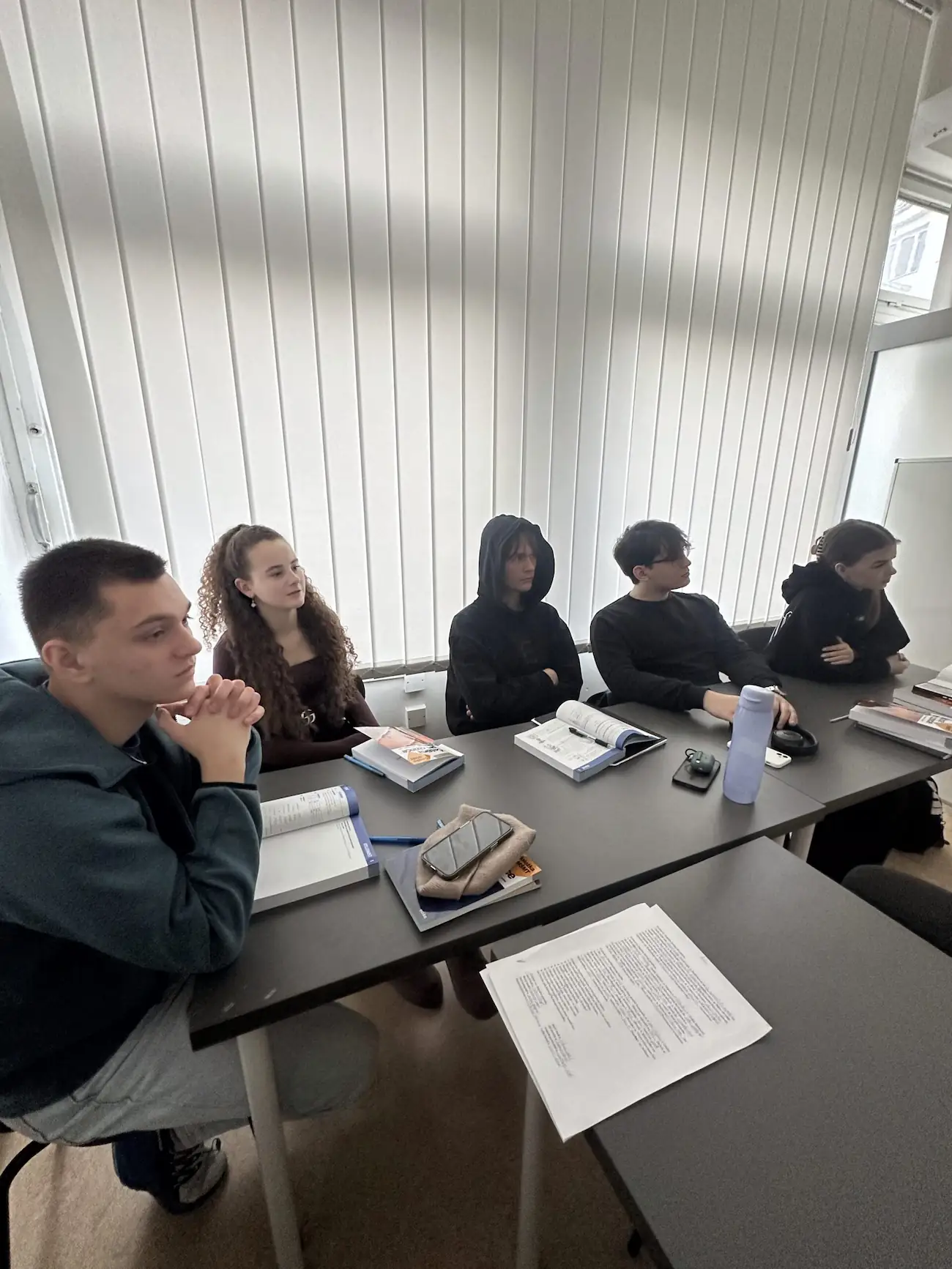
Share post

You may also be interested

Online Czech Intensive B1–B2 in 5 Months: Studying with Headphones at a Laptop

Intensive 5-month course “B1-B2” for entering a Czech university: what is included and what is the result at the finish line

This is an online intensive course for 5 months, which combines the language track “B1-B2” and parallel support for admission to a Czech university: from choosing universities and programs to preparing and submitting applications, documents, and passing the admission stages. This format works as a roadmap, not just a Czech course. The task here is […]

Preparation for Admission to Czech Universities — EdVista Support

Support for admission to Czech universities: what is included in the support and what tasks does it cover?

What is admission support and who needs it? Support for admission to Czech universities is personal support that guides the applicant through the entire preparation and application process: from choosing universities and majors to planning steps, monitoring deadlines, and checking the readiness of the application package. This format is suitable for those who plan to […]

Online Czech language courses: Czech language course, who is it suitable for and what results does it give?

Online Czech language courses are live classes with a teacher in real time, without recordings and independent platforms.

This format is suitable for Ukrainians who want to learn Czech regardless of where the student is, in Ukraine or abroad.

The training allows you to gradually reach the A2, B1 or B2 level depending on the goals: adaptation, work or admission.

All classes are held live with a teacher, which provides constant feedback and progress control.

Who is suitable for online Czech language courses?

The format is suitable:

  • Ukrainians abroad for adaptation, everyday communication and preparation for life in the Czech Republic;
  • for those who plan to enter or move and wants to reach the required language level in advance;
  • for those who are learning Czech from scratch, with gradual explanation and control from the teacher;
  • for those who work or study in parallel thanks to a fixed schedule of live classes.

Why are live classes with a teacher more effective than recordings?

In EdVista courses, the basis of learning is live classes with a teacher in real time, which are supplemented by recorded educational materials. This format allows you to combine live language practice with the opportunity to repeat the material at a convenient time. During live classes, the teacher immediately sees which language structures cause difficulties, where the student gets confused in grammar or tries to translate literally from Ukrainian. Thanks to the combination of live contact with the teacher and supporting materials, the Czech language is learned systematically, not fragmentarily.

A separate role is played by work with pronunciation. For those who start Czech lessons from scratch, correct articulation and intonation are formed precisely during live speech. The teacher corrects mistakes immediately during the conversation, preventing them from taking root and affecting further progress.

The live format also provides constant control of the learning process. The teacher sees the student’s real level, understands which topics have already been mastered and which need to be returned to. Thanks to this, online Czech language courses provide predictable movement between levels without a situation where the theory is learned, but it is difficult to use it in practice.

No less important is discipline. Regular classes on a schedule form a stable rhythm of learning and do not allow for long pauses. It is the regularity and live contact with the teacher that help to learn the Czech language systematically, without losing skills between classes.

Group online Czech language lesson

What results do online Czech language courses give?

The learning outcome depends on the starting level and regularity of classes, but with systematic work, online courses allow you to achieve the following levels:

  • A1–A2 provides understanding basic structures, everyday communication, adaptation in a Czech-speaking environment;
  • B1 provides confident communication, study, work and interaction with institutions;
  • B2 provides academic and professional communication, preparation for universities and complex language situations.

Online Czech language courses for university entrance

Online Czech language courses are often chosen by applicants planning to enter universities in the Czech Republic. The training is focused not only on everyday language, but also on academic vocabulary necessary for the educational process.

During the training, students master the language requirements of levels A2–B2, work with thematic texts and prepare for entrance language exams. The online format allows you to take training in parallel with your studies at school or college.

How long does it take for results?

The duration of the Czech language course depends on the starting level, class format, and regularity. Live classes with a teacher allow you to predict the duration, as the training takes place systematically and with constant progress monitoring.

  • Standard learning pace. In the standard format of classes, students gradually go through the material without overload. This pace is suitable for those who combine a Czech language course with work or study. On average, the transition between levels takes several months and allows you to consolidate knowledge without losing quality.
  • Intensive format. Intensive Czech language courses involve more frequent classes and a larger amount of practice. This option is suitable for those who have a specific goal in time – study, work or adaptation. Intensive allows you to reach level A2 or B1 faster, provided that you consistently participate in classes.
  • Dependence on the starting level. Students who start learning Czech from scratch make their way gradually, forming a base of pronunciation, grammar and vocabulary. Those who already have initial knowledge can move between levels faster, focusing on speaking and practice.

Live training with a teacher allows you to adjust the pace in the process without “skipping” topics and leaving gaps in knowledge.

Common mistakes when learning Czech online

Even with motivation, online learning of the Czech language often does not produce the expected results due to typical mistakes in organizing learning. Most of them are not related to the complexity of the language, but to the wrong approach to the process.

Students in an online Czech language class
  • Absence of a teacher. Independent learning without feedback leads to the consolidation of errors in pronunciation and grammar. Without correction, language is not formed as a tool of communication.
  • Chaotic learning without structure. Learning a language in fragments without a logical transition between topics does not form a holistic system of knowledge.
  • Irregularity of classes. Skipping and long pauses quickly nullify previous progress, even with a high-quality program.
  • Wrong start “from scratch”. Lack of attention to pronunciation and basic constructions complicates further learning and slows down the movement between levels.

Live classes with a teacher allow you to avoid these mistakes, as learning takes place according to a clear program, with regular practice and constant correction.

How to start learning Czech online correctly?

To learn Czech through online courses and get tangible results, the start of training should include level testing, choosing a course for the goal, and a fixed schedule of live classes. Most of the difficulties in the future arise not because of the Czech language itself, but because of mistakes at the initial stage, when a person either overestimates his capabilities or chooses an inappropriate format.

First of all, it is important to correctly determine the starting level. Even those who believe that they are starting Czech from scratch often have fragmentary knowledge: familiar words, basic phrases, passive understanding of the language. Without testing, this knowledge is either ignored, or vice versa – learning begins too difficult. Correctly determining the level allows you to avoid overload or wasting time on topics that are already partially mastered.

The second critical point is choosing a course according to the real goal. Online learning of the Czech language can have different scenarios: adaptation to life, preparation for study, work, or long-term development to level B2. If a Czech language course is not tied to a specific goal, learning quickly loses focus and progress becomes uneven. That is why it is important that the program is built logically and corresponds to what the language is needed for now.

The organization of the learning process plays a separate role. Regular live classes create a stable rhythm in which new material is not just explained, but constantly repeated and applied in practice. In the absence of a clear schedule, even motivated students begin to take pauses that nullify the previous result. Czech requires constant contact, especially at the elementary and intermediate levels.

It is also important to understand the role of the teacher at the start of learning. At this stage, the teacher does not only explain grammar or vocabulary, but also forms the correct language foundation: pronunciation, word order, the logic of sentence construction. If these things are not worked out from the very beginning, then you have to not just study new material, but also correct already established errors, which significantly slows down progress.

A properly organized start makes online Czech language courses a predictable process in which the student understands what and why he is studying, how he moves between levels, and what result he will receive at each stage.

Conclusion: who is suitable for online Czech language courses and how to make the right choice

Online Czech language courses in the format of live classes with a teacher are a practical solution if you need Czech for Ukrainians who plan to study, work or adapt. This format is also suitable for those who are learning Czech from scratch and need a clear structure and support at every stage.

Live learning allows you to work with the language as a tool: speak, ask questions, receive corrections and gradually move between levels A2, B1 and B2 without losing logic. It is constant contact with the teacher, progress monitoring and regular classes that make the Czech language course effective in the long term.

In order for online Czech learning to give the expected result, it is important not only to choose the format, but also to start correctly: determine the level, learning goal and optimal pace. That is why it is advisable to get individual advice and recommendations on the training program before starting the course.

You can learn more about the training formats, duration and levels on the services pages on the EdVista website, and for a personalized course selection, take a short survey for consultation:

👉 https://edvista.com.ua/en/personal-consultation/

If you have any questions about the program, format, or levels of study, the company’s current contact information and contact methods are available on the official EdVista pages. This will allow you to choose Czech courses for Ukrainians that will meet your goals, level of preparation, and real learning conditions. Also join us on Facebook, TikTok, YouTube, and Instagram.

Share post

You may also be interested

Online Czech Intensive B1–B2 in 5 Months: Studying with Headphones at a Laptop

Intensive 5-month course “B1-B2” for entering a Czech university: what is included and what is the result at the finish line

This is an online intensive course for 5 months, which combines the language track “B1-B2” and parallel support for admission to a Czech university: from choosing universities and programs to preparing and submitting applications, documents, and passing the admission stages. This format works as a roadmap, not just a Czech course. The task here is […]

Preparation for Admission to Czech Universities — EdVista Support

Support for admission to Czech universities: what is included in the support and what tasks does it cover?

What is admission support and who needs it? Support for admission to Czech universities is personal support that guides the applicant through the entire preparation and application process: from choosing universities and majors to planning steps, monitoring deadlines, and checking the readiness of the application package. This format is suitable for those who plan to […]

Entrance to a Czech university: a step-by-step applicant calendar

Getting into a Czech university is not a last-minute sprint but it’s a year-long marathon. Success depends on starting on time from choosing a major in the fall, studying the language consistently during winter, taking entrance exams in spring, and applying for a visa in summer. This guide is your step-by-step calendar, from the very first decision to holding the student ID in your hands.

September: we choose the direction

This month is the right time to start looking for universities and study programs. There is no need to rush this step, because you will be studying for several years, so it is important to choose a field that 100%  interests you. 

Start with a list of what you like. Maybe it can be medicine, engineering, design, or economics. Then see which Czech universities are strong in these areas. Charles University, the University of Economics, the Czech Technical University each of them has its own advantages. Pay attention to the language of instruction. Many programs are offered in English, but studying in Czech gives you more opportunities and it’s free if you pass the entrance exams.

Now is the time to realistically assess your chances. Check the requirements for applicants, the average grades needed, and whether entrance exams are required. Some programs might ask for a creative portfolio or challenging math tests, so be prepared.

October: start language training

If you’re planning to study in Czech, it’s best to start in September, but October is your last chance to get started without rushing. For Ukrainians, Czech is relatively accessible thanks to the shared Slavic roots but that doesn’t mean you can learn it in just a week.

Admission usually requires Czech at the B2 level. Some applicants try to reach the B2 level in Czech from scratch in nine months of intensive work. This is possible if you approach the task systematically.

Czech courses are offered by many institutions, but it’s important to choose ones specifically designed for university admission. For example, EdVista focuses on programs that prepare students for academic life, not just everyday conversation  and that makes a big difference.

Beginner Czech lessons usually start with the basics: pronunciation, sounds, and simple grammar. Do not skip this step. The way you say Czech words is not the same as how you say words in Ukrainian. It is best to make good habits now, not later.

November: Sending in your form

Most universities will take your papers from November until the end of February. Some will let you send them until March 31. Because of this, you should have all your papers set by November. Fill out each form with care. If you make a mistake, you might lose your spot at the school.

Some universities require pre-registration in an online system. Don’t put it off until the last day technical glitches happen. It’s better to have some time to spare.

Write your motivation letter honestly, but with care. Explain why you chose this specific major, why this university, and what you can contribute to the academic community. Avoid vague, general statements, admission committees read hundreds of letters like that and really value sincerity and concrete details.

December–January: focus on in-depth preparation and gathering all your documents

The winter months are a time for intensive language practice. By this point, you already have a foundation, and now you need to build your vocabulary, especially academic vocabulary. Czech has its own grammatical subtleties, cases, conjugations, word order  that require attention.

Some documents need to be translated by a certified translator and either legalized or apostilled.

If your program requires a portfolio, now is the time to put it together. Architects, designers, and artists should present their work in the best possible light and think carefully about what shows your skills and meets the university’s requirements.

February: Preparing for entrance exams

Most Czech universities hold entrance exams between April and June, so February is the time to get serious. Each university has its own rules: some test math and physics, some hold interviews in Czech, and others require creative assignments.

Most Czech universities hold entrance exams in April-June, so February is the time to seriously prepare for them. Each university has its own specifics: some have math and physics tests, some have interviews in Czech, and some have creative tasks.

Find examples of last year’s tasks. Many universities publish them on their websites. Solve the test options, see which topics cause the most difficulty, and work on them additionally.

If you plan to take exams in Czech, intensive Czech language courses will be a real lifesaver. They allow you to immerse yourself in the language environment as much as possible in a short period of time. EdVista courses include programs that help you quickly improve your level before critical moments.

March–April: Final Stage of Language Preparation

March and April are the last months before entrance exams begin. By now, your Czech should be at a level strong enough to confidently take the exams. Many applicants take a trial test at this stage to see if they are ready.

If your exam takes place in the Czech Republic, plan to arrive a day or two early. This gives you time to get used to your surroundings, especially if you’re feeling nervous. Make sure to get a good night’s sleep before the exam and eat a normal breakfast. Simple things, but they really affect your focus.

After the exams, there’s usually a waiting period for the results. Don’t worry if it takes a little while universities have hundreds of applications to process.

April–June: Admission to a Czech University Through Entrance Exams

The moment of truth has arrived. Preparation for admission to Czech universities is entering the final stretch — you are taking the exams. Some universities conduct them in person, while others allow them to be taken online or at cultural centers abroad.

Arrive early for the exam if it takes place in the Czech Republic. Give yourself a day or two to acclimatize, especially if you are feeling nervous. Get enough sleep the night before and eat a proper breakfast — basic things, but they affect your concentration.

After the exams, there is usually a waiting period for the results. Do not panic if the response is delayed — universities process hundreds of applications.

May: State exam in Czech

In May, there is a state exam in Czech, if required by your university. An intensive nine-month course, which begins in September, ends in May, preparing you for this important stage. Passing the state exam confirms your B2 level and allows you to continue the admission process.

July: Final stage admission to a Czech university is complete

Results are usually announced in July. If you’ve been accepted, congratulations! The hardest part is behind you. But it’s not time to relax just yet: now you need to apply for a student visa.

You’ll need a confirmation letter from the university, proof of financial means, medical insurance, and proof of accommodation. The process can take anywhere from a few weeks to several months, so start as soon as you receive your acceptance letter.

The Czech Consulate in Ukraine accepts visitors by appointment, so be sure to plan ahead.

August: final preparations

Once you have your visa, it’s time to start planning your move. August is the perfect month to look for accommodation, book your tickets, and prepare yourself mentally. Many Czech language courses for Ukrainians also offer adaptation programs for future students; these help you get familiar with cultural norms and everyday life in the Czech Republic.

Make sure you have everything ready for the start of the academic year: documents, basic clothing for different seasons, and personal belongings. Remember, getting admitted to a Czech university is just the beginning, the real learning starts once you’re there.

If you follow this calendar and don’t leave preparations until the last minute, it’s completely possible to learn Czech and successfully complete all the admission steps. The key is to be consistent and persistent.

Admission to a Czech University Is Behind You: The Key Is Not to Rush and Not to Stop

Preparing for university may seem overwhelming if you look at the whole process at once. But breaking it down into stages makes each step manageable. Some students complete everything in nine months, while others take a year or more — and that’s perfectly fine, because everyone starts from a different place. The most important thing is to start on time and keep going. Czech language study, documents, and entrance exams all require consistency.

If structuring the process on your own feels difficult, don’t hesitate to seek support. Courses like EdVista’s Czech programs and other educational platforms are designed to guide you from your first step all the way to enrollment.

Studying at a Czech university isn’t just about earning a degree, it’s a chance to gain a high-quality European education, meet new people, and open doors to new opportunities. Spending a year preparing for this experience is worth it, because the years ahead can truly change your life. Plan, take action, and don’t be afraid of challenges; they’re part of the journey toward real growth.

If you need Czech for study, work, or relocation, visit our courses page and choose the program that fits your goals. Call +420 770 624 146, or reach out via Telegram or WhatsApp.

Follow us on social media Instagram, Facebook, YouTube, and TikTok  where we regularly share useful tips, case studies, and practical information.

Share post

You may also be interested

Online Czech Intensive B1–B2 in 5 Months: Studying with Headphones at a Laptop

Intensive 5-month course “B1-B2” for entering a Czech university: what is included and what is the result at the finish line

This is an online intensive course for 5 months, which combines the language track “B1-B2” and parallel support for admission to a Czech university: from choosing universities and programs to preparing and submitting applications, documents, and passing the admission stages. This format works as a roadmap, not just a Czech course. The task here is […]

Preparation for Admission to Czech Universities — EdVista Support

Support for admission to Czech universities: what is included in the support and what tasks does it cover?

What is admission support and who needs it? Support for admission to Czech universities is personal support that guides the applicant through the entire preparation and application process: from choosing universities and majors to planning steps, monitoring deadlines, and checking the readiness of the application package. This format is suitable for those who plan to […]

Annual intensive Czech language course: who is it suitable for and what results does it give?

An intensive one-year Czech language course is a structured program that will allow you to reach level B2 in 9 months. This is all subject to systematic learning. Czech language courses include classes 3-5 times a week, conversation practice in clubs, homework, tests, and support from a teacher. This format is suitable for applicants who want to enroll in a Czech university, families who are planning to move, and professionals for whom the language is a prerequisite for career growth. After a year of such training, students gain confidence in using the language in everyday communication, study, and professional activities.

What is a one-year intensive Czech language course?

The approach to learning Czech here is logical: in nine months, you will go from zero to a confident intermediate level, B1, and with enough effort, even to B2. This is not a marathon that will wear you out, nor is it a relaxed once-a-week class. It is a well-thought-out pace for those who understand that in a year’s time they will need the language for study, work, or life in the Czech Republic. Courses at EdVista are built on a clear structure with checkpoints where you don’t just listen to the teacher, but actively speak, write, read, analyze mistakes, and move forward consistently. The pace is intense, but an important thing is taken into account: the brain needs time to really absorb and consolidate the material.

The book used to teach Czech language in courses | EdVista

Who is the intensive one-year Czech language course suitable for?

  • Applicants to Czech universities. If you plan to enroll in a Czech university in a year, you will need a B2 level certificate. In some cases, a B1 certificate will suffice, but only for certain specialties. This is because you will need to understand your teachers, read specialized literature, and write papers. Without the language, you will not be able to move forward.
  • Families planning to relocate. With a year to go before departure, it is important to consider the situation in which you may find yourself in another country without basic communication skills. It is possible to learn Czech to B2 level in a year, but only if you structure the process and don’t put it off until later. Children can adapt quickly, but adults need a clear system, otherwise it can lead to severe stress.
  • Professionals who need Czech for work. Of course, you can work in English in the Czech Republic, but in order to move up the career ladder and communicate fully with colleagues and clients, you need to know the language of the country in which you live. In this case, it is important not just to learn the language, but to learn to speak it fluently in a professional environment.

Why a year, and not sooner?

You may come across offers such as “Czech in three months.” It sounds tempting, but there is a catch: in three months, you can indeed learn the basics, say hello, order coffee, ask for directions. But this is far from B1, let alone B2. Level B1 means that you can hold a conversation on everyday and familiar topics, understand the main content of texts, and cope with everyday situations. B2 is a different matter: you understand complex texts, can argue your position, and communicate spontaneously and quite freely.

A year-long intensive Czech language course gives you time to not just let the information pass you by, but to commit it to memory. The brain needs time to consolidate the material, and even an intensive pace allows for breaks for repetition, practice, and correction of mistakes.

How does a one-year Czech language course work | EdVista

What does the intensive one-year Czech language course include?

The intensive Czech language course is not about classes twice a week, but about a system in which each element complements the other.

  • Schedule. Classes are held 3-5 times a week, depending on what stage of learning you are at. The first few months, of course, are spent on the basics: the alphabet, phonetics, simple grammatical structures, and everyday vocabulary. Czech language lessons are structured in such a way as to gradually introduce more and more complex topics.
  • Conversation clubs. A separate but very important part of language learning. These clubs create an environment where you are not afraid to make mistakes. You practice everything. Topics can vary, from discussing movies to debating social issues. The main thing is that you start speaking Czech. You gradually get used to the intonation and learn to react quickly.
  • Homework. Without independent work, it is almost impossible to learn a language. As a rule, this includes exercises to reinforce what you have learned, reading texts, writing, and listening to various audio materials. The amount is reasonable, but the main thing is regularity.
  • Tests. These help determine what stage of learning you are currently at. These are not exams in the usual sense. They are more like checkpoints that can show the dynamics of your language learning. If something suddenly doesn’t work out, there is time to adjust the program.
  • Support from a tutor. Many people overlook this point, but it is critically important. A teacher is someone who helps you stay on track in the learning process, answers all your questions, advises you on how to organize your study material, and reminds you of deadlines. This is very important, especially for those who are studying remotely or combining study with work.

What results can you expect after a year?

To be honest, the results depend on your involvement. Some people reach a stable B2 level in a year and can communicate freely on any topic. Others reach a B1 level in Czech and continue to work on their language skills in a Czech-speaking environment.

Realistic expectations are as follows: after a year of intensive study, you will be able to communicate in everyday situations, understand the news and simple films, read adapted literature, and write letters and applications. You will not get confused with cases, you will know the basic verb tenses, and you will understand sentence structure. It is not your native language, but it is already a tool that you can use every day.

For applicants, this means the opportunity to take a certificate exam and enter university. For those who are moving, it means confidence that they will not get lost in a new country, will be able to find a job, communicate with neighbors, and solve everyday problems.

Learning to write in Czech language courses for a year | EdVista

How to avoid burnout and finish your studies?

A year is quite a long time, and somewhere between the fourth and fifth month, you may feel like you’ve come to a standstill. This is normal. It’s part of the process. The most important thing at times like this is not to give up, but to keep moving forward despite all the difficulties.

Variety helps a lot. Listen to podcasts in Czech, watch TV series, read the news or blogs, and talk to other students on the course. You may not understand everything yet, but your brain is still getting used to the sound of the language, and you are still practicing. Discipline is what is important in learning a language.

And most importantly, you must remember your goal, why you are doing this. Whether it’s university, relocation, or career. This will help you not to give up at critical moments.

A year-long intensive course is not magic. It is systematic and hard work with a clear plan. But if you are willing to invest time and effort, you will see results. And in a year, you will not only be able to study Czech in textbooks, but also use it in practice.

If you need Czech for study, work, or relocation, go to the EdVista courses page and choose the program that best suits your goals. Call +420 770 624 146. You can also contact us via your preferred messaging apps: Telegram and WhatsApp.

Follow us on social media, Instagram, Facebook, YouTube, and TikTok. We regularly share interesting case studies, useful tips, and relevant information.

Share post

You may also be interested

Online Czech Intensive B1–B2 in 5 Months: Studying with Headphones at a Laptop

Intensive 5-month course “B1-B2” for entering a Czech university: what is included and what is the result at the finish line

This is an online intensive course for 5 months, which combines the language track “B1-B2” and parallel support for admission to a Czech university: from choosing universities and programs to preparing and submitting applications, documents, and passing the admission stages. This format works as a roadmap, not just a Czech course. The task here is […]

Preparation for Admission to Czech Universities — EdVista Support

Support for admission to Czech universities: what is included in the support and what tasks does it cover?

What is admission support and who needs it? Support for admission to Czech universities is personal support that guides the applicant through the entire preparation and application process: from choosing universities and majors to planning steps, monitoring deadlines, and checking the readiness of the application package. This format is suitable for those who plan to […]

Admission to Czech universities for Ukrainians: practical steps for studying in the Czech Republic

Studying in the Czech Republic means getting ready on multiple fronts. Czech at B1-B2 level is officially required for admission, but its real value shows up in everyday life, from dealing with university offices to job hunting and socializing. Those first couple months tend to be the toughest because of cultural differences and having to handle everything yourself, but most universities run support centers and orientation programs that make the transition way smoother.

Language requirements and the role of Czech in adaptation

Most public universities in the Czech Republic require foreign applicants to have a B1 or B2 level of Czech, depending on their field of study.

Why is it important to learn Czech before moving? First, a language certificate is a formal requirement for admission. Second, the language is critically important from the very first days: communicating with the university administration, moving into a dormitory, filling out paperwork, seeing a doctor, shopping, and using transportation.

For Ukrainian applicants, intensive Czech language courses are the most convenient option. They help you systematically prepare for admission in a short period of time, get used to the sound of the language, and master the necessary vocabulary. Czech language courses tailored specifically to the needs of admission relieve a significant amount of stress and boost confidence.

Intensive Czech language learning among students outdoors | EdVista

Studying in the Czech Republic through the eyes of Ukrainian students: adaptation, culture, and challenges

The first few weeks in a new country are the most difficult. Even with a good level of language proficiency, students encounter cultural differences: a different style of communication, formal rules, and distance between teachers and students. In the Czech Republic, independence is valued, you are expected to show initiative and responsibility.

Most universities have support centers for foreigners: adaptation programs, mentors, consultations on studying and everyday life. It is worth actively using these resources from the very first days.

Typical difficulties faced by Ukrainian students:

  • overestimating their own language skills;
  • fear of asking questions;
  • isolation among fellow countrymen.

To socialize more quickly, we recommend participating in student events, language tandems, and volunteer programs. The Czech language becomes much more accessible to Ukrainians when it goes beyond the textbook.

Living in the Czech Republic while studying: accommodation, transport, expenses

  • Accommodation and daily expenses.
    Most students start out living in university dormitories when they arrive in the Czech Republic. This is because it is a very economical and practical option. Living in a dormitory is cheaper than renting a room or apartment.
  • Student expenses.
    On average, a student in the Czech Republic needs 10,000-15,000 crowns per month. But of course, it still depends on the city and lifestyle. Accommodation usually costs 4,000-8,000 korunas, and food costs around 4,000-6,000 Czech korunas. Additional expenses, such as transportation, communications, and small necessities, will cost approximately 2,000-3,000 korunas.
  • Transportation and mobility.
    The Czech Republic has a very accessible infrastructure, and its public transportation systems are considered among the best in Europe. Students, in turn, can receive up to a 75% discount on travel passes. This makes travel within and between cities affordable, even on a limited budget.
  • Health insurance.
    If you are going to the Czech Republic as a student, be sure to pay attention to health insurance, as it is mandatory. Without valid insurance, you will not be able to obtain a student visa and legally stay in the country during your studies.
Ukrainian students in the Czech Republic study outside the classroom | EdVista

How to choose a university and study program in the Czech Republic?

Choosing a study program is a very important step that can influence your future profession and career growth. But choosing a university is just as important, especially for foreigners. This is because it determines the conditions of study and the level of support you will receive.

First of all, you need to clearly define what you are really interested in. Humanities, technical disciplines, economics, medicine, or something else. In the Czech Republic, even the same study program can vary dramatically from one university to another. In terms of the program, practical component, requirements for students, or language of instruction.

When choosing a university, pay attention to the following points:

  • the language in which you will be taught (Czech or English) and what the language proficiency requirements are;
  • whether the university has experience working with foreign students, whether there are preparatory courses or adaptation programs;
  • the reputation and specialization of the university;
  • it is also important to pay attention to the city where you are going to study, the conditions there, the cost of living, and whether there are opportunities for part-time work or internships.

Don’t forget that informed choices are highly valued in the Czech Republic. Universities will expect you to understand why you chose a particular major. Or why you chose them among the wide variety of educational institutions available. Therefore, it is worth comparing several options in advance, studying the curricula, and realistically assessing your language skills and academic abilities.

Documents and mandatory formalities for students

To prepare for admission to Czech universities, you usually need:

  • a certificate or diploma with an appendix;
  • nostrification (recognition of education);
  • language certificate;
  • motivation letter (for certain programs);
  • entrance exams or tests.

A separate issue is a visa or long-term residence permit for the purpose of study. The process takes time, clear deadlines, and the correct set of documents.

Upon arrival, students are required to:

  • register their place of residence;
  • take out or confirm insurance;
  • open a bank account;
  • notify the university of their arrival.

Typical mistakes made by Ukrainians include missed deadlines, incorrect translations of documents, and underestimating language requirements. That is why consulting with specialists significantly reduces risks.

How life changes after the first year of study in the Czech Republic?

After a year, most students notice radical changes. Knowledge of the Czech language opens up access to part-time jobs in their field, paid internships, and better integration into the academic environment.

Students find it easier to change their field of study, transfer to other programs, or plan for a master’s degree. A realistic vision of the future emerges: working in the Czech Republic, long-term residence, permanent residence.

The Czech language ceases to be a barrier and becomes a tool for study, career, and everyday life.

Czech students spend time together | EdVista

Successful study in the Czech Republic begins with language and preparation

Studying in the Czech Republic is not a spontaneous decision, but a process that requires preparation. The key factors for success are clear planning, the right documents, and, above all, the Czech language.

By investing time in learning Czech, especially through intensive Czech language courses, you significantly increase your chances not only of admission but also of a comfortable student life in the Czech Republic.

If you are planning to study abroad and want to avoid common mistakes, it is worth starting with a proven step, choosing high-quality Czech language courses or getting professional advice on admission. Preparation today means peace of mind and opportunities tomorrow. Call +420 770 624 146. You can also contact us via messengers: Telegram and WhatsApp.

Join our social networks, Instagram, Facebook, and TikTok. We regularly share interesting cases, useful tips, and relevant information.

Share post

You may also be interested

Online Czech Intensive B1–B2 in 5 Months: Studying with Headphones at a Laptop

Intensive 5-month course “B1-B2” for entering a Czech university: what is included and what is the result at the finish line

This is an online intensive course for 5 months, which combines the language track “B1-B2” and parallel support for admission to a Czech university: from choosing universities and programs to preparing and submitting applications, documents, and passing the admission stages. This format works as a roadmap, not just a Czech course. The task here is […]

Preparation for Admission to Czech Universities — EdVista Support

Support for admission to Czech universities: what is included in the support and what tasks does it cover?

What is admission support and who needs it? Support for admission to Czech universities is personal support that guides the applicant through the entire preparation and application process: from choosing universities and majors to planning steps, monitoring deadlines, and checking the readiness of the application package. This format is suitable for those who plan to […]