Home » Annual intensive Czech language course: who is it suitable for and what results does it give?
Annual intensive Czech language course: who is it suitable for and what results does it give?
09.01.2026selector.space
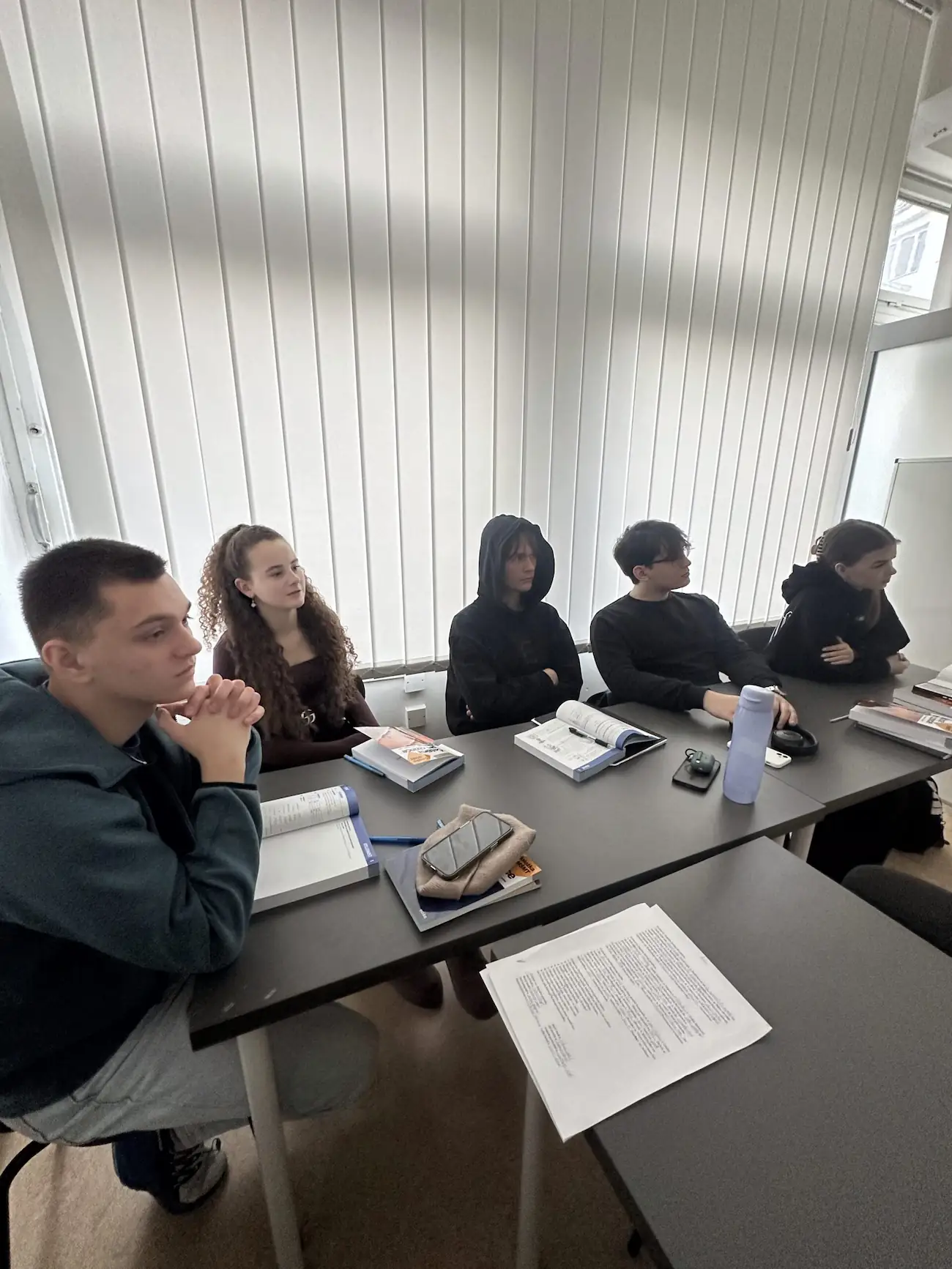
An intensive one-year Czech language course is a structured program that will allow you to reach level B2 in 9 months. This is all subject to systematic learning. Czech language courses include classes 3-5 times a week, conversation practice in clubs, homework, tests, and support from a teacher. This format is suitable for applicants who want to enroll in a Czech university, families who are planning to move, and professionals for whom the language is a prerequisite for career growth. After a year of such training, students gain confidence in using the language in everyday communication, study, and professional activities.
What is a one-year intensive Czech language course?
The approach to learning Czech here is logical: in nine months, you will go from zero to a confident intermediate level, B1, and with enough effort, even to B2. This is not a marathon that will wear you out, nor is it a relaxed once-a-week class. It is a well-thought-out pace for those who understand that in a year’s time they will need the language for study, work, or life in the Czech Republic. Courses at EdVista are built on a clear structure with checkpoints where you don’t just listen to the teacher, but actively speak, write, read, analyze mistakes, and move forward consistently. The pace is intense, but an important thing is taken into account: the brain needs time to really absorb and consolidate the material.
Who is the intensive one-year Czech language course suitable for?
Applicants to Czech universities. If you plan to enroll in a Czech university in a year, you will need a B2 level certificate. In some cases, a B1 certificate will suffice, but only for certain specialties. This is because you will need to understand your teachers, read specialized literature, and write papers. Without the language, you will not be able to move forward.
Families planning to relocate. With a year to go before departure, it is important to consider the situation in which you may find yourself in another country without basic communication skills. It is possible to learn Czech to B2 level in a year, but only if you structure the process and don’t put it off until later. Children can adapt quickly, but adults need a clear system, otherwise it can lead to severe stress.
Professionals who need Czech for work. Of course, you can work in English in the Czech Republic, but in order to move up the career ladder and communicate fully with colleagues and clients, you need to know the language of the country in which you live. In this case, it is important not just to learn the language, but to learn to speak it fluently in a professional environment.
Why a year, and not sooner?
You may come across offers such as “Czech in three months.” It sounds tempting, but there is a catch: in three months, you can indeed learn the basics, say hello, order coffee, ask for directions. But this is far from B1, let alone B2. Level B1 means that you can hold a conversation on everyday and familiar topics, understand the main content of texts, and cope with everyday situations. B2 is a different matter: you understand complex texts, can argue your position, and communicate spontaneously and quite freely.
A year-long intensive Czech language course gives you time to not just let the information pass you by, but to commit it to memory. The brain needs time to consolidate the material, and even an intensive pace allows for breaks for repetition, practice, and correction of mistakes.
What does the intensive one-year Czech language course include?
The intensive Czech language course is not about classes twice a week, but about a system in which each element complements the other.
Schedule. Classes are held 3-5 times a week, depending on what stage of learning you are at. The first few months, of course, are spent on the basics: the alphabet, phonetics, simple grammatical structures, and everyday vocabulary. Czech language lessons are structured in such a way as to gradually introduce more and more complex topics.
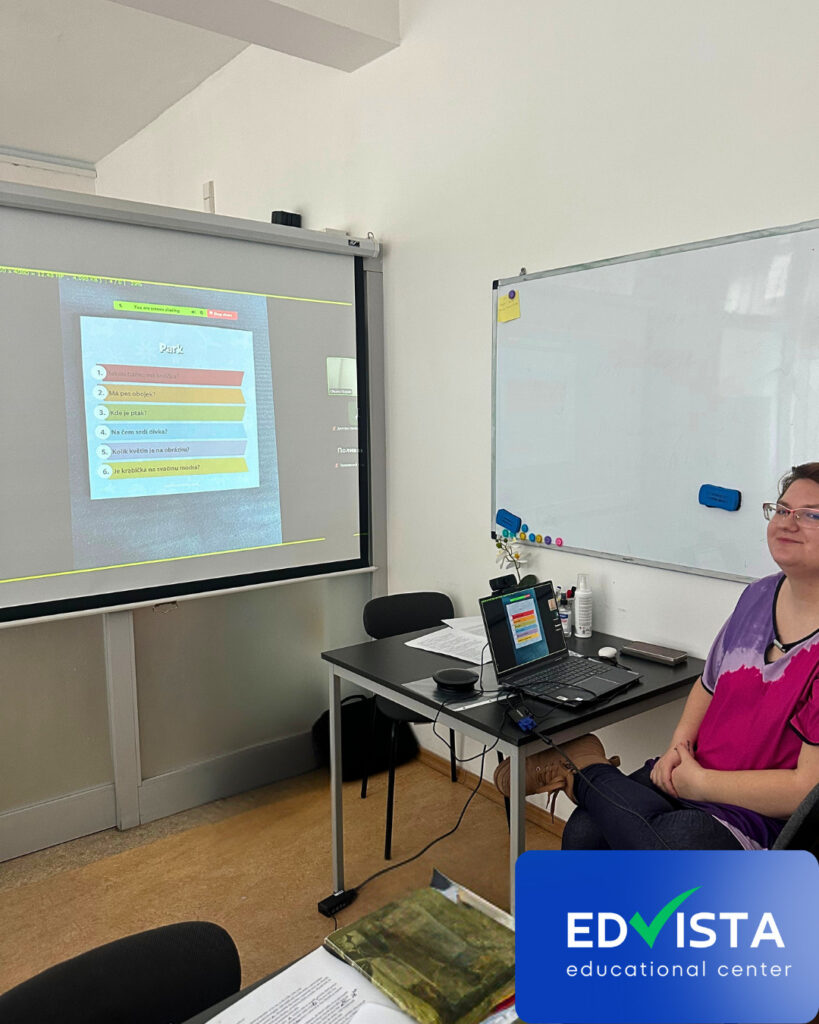
Conversation clubs. A separate but very important part of language learning. These clubs create an environment where you are not afraid to make mistakes. You practice everything. Topics can vary, from discussing movies to debating social issues. The main thing is that you start speaking Czech. You gradually get used to the intonation and learn to react quickly.
Homework. Without independent work, it is almost impossible to learn a language. As a rule, this includes exercises to reinforce what you have learned, reading texts, writing, and listening to various audio materials. The amount is reasonable, but the main thing is regularity.
Tests. These help determine what stage of learning you are currently at. These are not exams in the usual sense. They are more like checkpoints that can show the dynamics of your language learning. If something suddenly doesn’t work out, there is time to adjust the program.
Support from a tutor. Many people overlook this point, but it is critically important. A teacher is someone who helps you stay on track in the learning process, answers all your questions, advises you on how to organize your study material, and reminds you of deadlines. This is very important, especially for those who are studying remotely or combining study with work.
What results can you expect after a year?
To be honest, the results depend on your involvement. Some people reach a stable B2 level in a year and can communicate freely on any topic. Others reach a B1 level in Czech and continue to work on their language skills in a Czech-speaking environment.
Realistic expectations are as follows: after a year of intensive study, you will be able to communicate in everyday situations, understand the news and simple films, read adapted literature, and write letters and applications. You will not get confused with cases, you will know the basic verb tenses, and you will understand sentence structure. It is not your native language, but it is already a tool that you can use every day.
For applicants, this means the opportunity to take a certificate exam and enter university. For those who are moving, it means confidence that they will not get lost in a new country, will be able to find a job, communicate with neighbors, and solve everyday problems.
How to avoid burnout and finish your studies?
A year is quite a long time, and somewhere between the fourth and fifth month, you may feel like you’ve come to a standstill. This is normal. It’s part of the process. The most important thing at times like this is not to give up, but to keep moving forward despite all the difficulties.
Variety helps a lot. Listen to podcasts in Czech, watch TV series, read the news or blogs, and talk to other students on the course. You may not understand everything yet, but your brain is still getting used to the sound of the language, and you are still practicing. Discipline is what is important in learning a language.
And most importantly, you must remember your goal, why you are doing this. Whether it’s university, relocation, or career. This will help you not to give up at critical moments.
A year-long intensive course is not magic. It is systematic and hard work with a clear plan. But if you are willing to invest time and effort, you will see results. And in a year, you will not only be able to study Czech in textbooks, but also use it in practice.
If you need Czech for study, work, or relocation, go to the EdVista courses page and choose the program that best suits your goals. Call +380771033253. You can also contact us via your preferred messaging apps: Telegram and WhatsApp.
Follow us on social media, Instagram, Facebook, YouTube, and TikTok. We regularly share interesting case studies, useful tips, and relevant information.