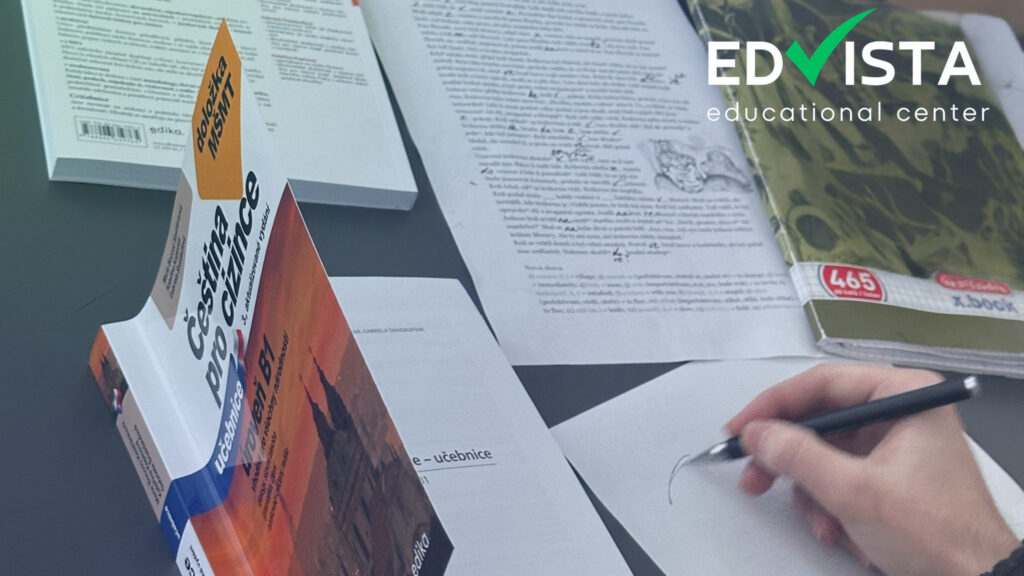
Entrance to a Czech university: a step-by-step applicant calendar
13.01.2026selector.space
Getting into a Czech university is not a last-minute sprint but it’s a year-long marathon. Success depends on starting on time from choosing a major in the fall, studying the language consistently during winter, taking entrance exams in spring, and applying for a visa in summer. This guide is your step-by-step calendar, from the very first decision to holding the student ID in your hands.
September: we choose the direction
This month is the right time to start looking for universities and study programs. There is no need to rush this step, because you will be studying for several years, so it is important to choose a field that 100% interests you.
Start with a list of what you like. Maybe it can be medicine, engineering, design, or economics. Then see which Czech universities are strong in these areas. Charles University, the University of Economics, the Czech Technical University each of them has its own advantages. Pay attention to the language of instruction. Many programs are offered in English, but studying in Czech gives you more opportunities and it’s free if you pass the entrance exams.
Now is the time to realistically assess your chances. Check the requirements for applicants, the average grades needed, and whether entrance exams are required. Some programs might ask for a creative portfolio or challenging math tests, so be prepared.
October: start language training
If you’re planning to study in Czech, it’s best to start in September, but October is your last chance to get started without rushing. For Ukrainians, Czech is relatively accessible thanks to the shared Slavic roots but that doesn’t mean you can learn it in just a week.
Admission usually requires Czech at the B2 level. Some applicants try to reach the B2 level in Czech from scratch in nine months of intensive work. This is possible if you approach the task systematically.
Czech courses are offered by many institutions, but it’s important to choose ones specifically designed for university admission. For example, EdVista focuses on programs that prepare students for academic life, not just everyday conversation and that makes a big difference.
Beginner Czech lessons usually start with the basics: pronunciation, sounds, and simple grammar. Do not skip this step. The way you say Czech words is not the same as how you say words in Ukrainian. It is best to make good habits now, not later.
November: Sending in your form
Most universities will take your papers from November until the end of February. Some will let you send them until March 31. Because of this, you should have all your papers set by November. Fill out each form with care. If you make a mistake, you might lose your spot at the school.
Some universities require pre-registration in an online system. Don’t put it off until the last day technical glitches happen. It’s better to have some time to spare.
Write your motivation letter honestly, but with care. Explain why you chose this specific major, why this university, and what you can contribute to the academic community. Avoid vague, general statements, admission committees read hundreds of letters like that and really value sincerity and concrete details.
December–January: focus on in-depth preparation and gathering all your documents
The winter months are a time for intensive language practice. By this point, you already have a foundation, and now you need to build your vocabulary, especially academic vocabulary. Czech has its own grammatical subtleties, cases, conjugations, word order that require attention.
Some documents need to be translated by a certified translator and either legalized or apostilled.
If your program requires a portfolio, now is the time to put it together. Architects, designers, and artists should present their work in the best possible light and think carefully about what shows your skills and meets the university’s requirements.
February: Preparing for entrance exams
Most Czech universities hold entrance exams between April and June, so February is the time to get serious. Each university has its own rules: some test math and physics, some hold interviews in Czech, and others require creative assignments.
Most Czech universities hold entrance exams in April-June, so February is the time to seriously prepare for them. Each university has its own specifics: some have math and physics tests, some have interviews in Czech, and some have creative tasks.
Find examples of last year’s tasks. Many universities publish them on their websites. Solve the test options, see which topics cause the most difficulty, and work on them additionally.
If you plan to take exams in Czech, intensive Czech language courses will be a real lifesaver. They allow you to immerse yourself in the language environment as much as possible in a short period of time. EdVista courses include programs that help you quickly improve your level before critical moments.
March–April: Final Stage of Language Preparation
March and April are the last months before entrance exams begin. By now, your Czech should be at a level strong enough to confidently take the exams. Many applicants take a trial test at this stage to see if they are ready.
If your exam takes place in the Czech Republic, plan to arrive a day or two early. This gives you time to get used to your surroundings, especially if you’re feeling nervous. Make sure to get a good night’s sleep before the exam and eat a normal breakfast. Simple things, but they really affect your focus.
After the exams, there’s usually a waiting period for the results. Don’t worry if it takes a little while universities have hundreds of applications to process.
April–June: Admission to a Czech University Through Entrance Exams
The moment of truth has arrived. Preparation for admission to Czech universities is entering the final stretch — you are taking the exams. Some universities conduct them in person, while others allow them to be taken online or at cultural centers abroad.
Arrive early for the exam if it takes place in the Czech Republic. Give yourself a day or two to acclimatize, especially if you are feeling nervous. Get enough sleep the night before and eat a proper breakfast — basic things, but they affect your concentration.
After the exams, there is usually a waiting period for the results. Do not panic if the response is delayed — universities process hundreds of applications.
May: State exam in Czech
In May, there is a state exam in Czech, if required by your university. An intensive nine-month course, which begins in September, ends in May, preparing you for this important stage. Passing the state exam confirms your B2 level and allows you to continue the admission process.
July: Final stage admission to a Czech university is complete
Results are usually announced in July. If you’ve been accepted, congratulations! The hardest part is behind you. But it’s not time to relax just yet: now you need to apply for a student visa.
You’ll need a confirmation letter from the university, proof of financial means, medical insurance, and proof of accommodation. The process can take anywhere from a few weeks to several months, so start as soon as you receive your acceptance letter.
The Czech Consulate in Ukraine accepts visitors by appointment, so be sure to plan ahead.
August: final preparations
Once you have your visa, it’s time to start planning your move. August is the perfect month to look for accommodation, book your tickets, and prepare yourself mentally. Many Czech language courses for Ukrainians also offer adaptation programs for future students; these help you get familiar with cultural norms and everyday life in the Czech Republic.
Make sure you have everything ready for the start of the academic year: documents, basic clothing for different seasons, and personal belongings. Remember, getting admitted to a Czech university is just the beginning, the real learning starts once you’re there.
If you follow this calendar and don’t leave preparations until the last minute, it’s completely possible to learn Czech and successfully complete all the admission steps. The key is to be consistent and persistent.
Admission to a Czech University Is Behind You: The Key Is Not to Rush and Not to Stop
Preparing for university may seem overwhelming if you look at the whole process at once. But breaking it down into stages makes each step manageable. Some students complete everything in nine months, while others take a year or more — and that’s perfectly fine, because everyone starts from a different place. The most important thing is to start on time and keep going. Czech language study, documents, and entrance exams all require consistency.
If structuring the process on your own feels difficult, don’t hesitate to seek support. Courses like EdVista’s Czech programs and other educational platforms are designed to guide you from your first step all the way to enrollment.
Studying at a Czech university isn’t just about earning a degree, it’s a chance to gain a high-quality European education, meet new people, and open doors to new opportunities. Spending a year preparing for this experience is worth it, because the years ahead can truly change your life. Plan, take action, and don’t be afraid of challenges; they’re part of the journey toward real growth.
If you need Czech for study, work, or relocation, visit our courses page and choose the program that fits your goals. Call +420 770 624 146, or reach out via Telegram or WhatsApp.
Follow us on social media Instagram, Facebook, YouTube, and TikTok where we regularly share useful tips, case studies, and practical information.
Annual intensive Czech language course: who is it suitable for and what results does it give?
09.01.2026selector.space
An intensive one-year Czech language course is a structured program that will allow you to reach level B2 in 9 months. This is all subject to systematic learning. Czech language courses include classes 3-5 times a week, conversation practice in clubs, homework, tests, and support from a teacher. This format is suitable for applicants who want to enroll in a Czech university, families who are planning to move, and professionals for whom the language is a prerequisite for career growth. After a year of such training, students gain confidence in using the language in everyday communication, study, and professional activities.
What is a one-year intensive Czech language course?
The approach to learning Czech here is logical: in nine months, you will go from zero to a confident intermediate level, B1, and with enough effort, even to B2. This is not a marathon that will wear you out, nor is it a relaxed once-a-week class. It is a well-thought-out pace for those who understand that in a year’s time they will need the language for study, work, or life in the Czech Republic. Courses at EdVista are built on a clear structure with checkpoints where you don’t just listen to the teacher, but actively speak, write, read, analyze mistakes, and move forward consistently. The pace is intense, but an important thing is taken into account: the brain needs time to really absorb and consolidate the material.
Who is the intensive one-year Czech language course suitable for?
Applicants to Czech universities. If you plan to enroll in a Czech university in a year, you will need a B2 level certificate. In some cases, a B1 certificate will suffice, but only for certain specialties. This is because you will need to understand your teachers, read specialized literature, and write papers. Without the language, you will not be able to move forward.
Families planning to relocate. With a year to go before departure, it is important to consider the situation in which you may find yourself in another country without basic communication skills. It is possible to learn Czech to B2 level in a year, but only if you structure the process and don’t put it off until later. Children can adapt quickly, but adults need a clear system, otherwise it can lead to severe stress.
Professionals who need Czech for work. Of course, you can work in English in the Czech Republic, but in order to move up the career ladder and communicate fully with colleagues and clients, you need to know the language of the country in which you live. In this case, it is important not just to learn the language, but to learn to speak it fluently in a professional environment.
Why a year, and not sooner?
You may come across offers such as “Czech in three months.” It sounds tempting, but there is a catch: in three months, you can indeed learn the basics, say hello, order coffee, ask for directions. But this is far from B1, let alone B2. Level B1 means that you can hold a conversation on everyday and familiar topics, understand the main content of texts, and cope with everyday situations. B2 is a different matter: you understand complex texts, can argue your position, and communicate spontaneously and quite freely.
A year-long intensive Czech language course gives you time to not just let the information pass you by, but to commit it to memory. The brain needs time to consolidate the material, and even an intensive pace allows for breaks for repetition, practice, and correction of mistakes.
What does the intensive one-year Czech language course include?
The intensive Czech language course is not about classes twice a week, but about a system in which each element complements the other.
Schedule. Classes are held 3-5 times a week, depending on what stage of learning you are at. The first few months, of course, are spent on the basics: the alphabet, phonetics, simple grammatical structures, and everyday vocabulary. Czech language lessons are structured in such a way as to gradually introduce more and more complex topics.
Conversation clubs. A separate but very important part of language learning. These clubs create an environment where you are not afraid to make mistakes. You practice everything. Topics can vary, from discussing movies to debating social issues. The main thing is that you start speaking Czech. You gradually get used to the intonation and learn to react quickly.
Homework. Without independent work, it is almost impossible to learn a language. As a rule, this includes exercises to reinforce what you have learned, reading texts, writing, and listening to various audio materials. The amount is reasonable, but the main thing is regularity.
Tests. These help determine what stage of learning you are currently at. These are not exams in the usual sense. They are more like checkpoints that can show the dynamics of your language learning. If something suddenly doesn’t work out, there is time to adjust the program.
Support from a tutor. Many people overlook this point, but it is critically important. A teacher is someone who helps you stay on track in the learning process, answers all your questions, advises you on how to organize your study material, and reminds you of deadlines. This is very important, especially for those who are studying remotely or combining study with work.
What results can you expect after a year?
To be honest, the results depend on your involvement. Some people reach a stable B2 level in a year and can communicate freely on any topic. Others reach a B1 level in Czech and continue to work on their language skills in a Czech-speaking environment.
Realistic expectations are as follows: after a year of intensive study, you will be able to communicate in everyday situations, understand the news and simple films, read adapted literature, and write letters and applications. You will not get confused with cases, you will know the basic verb tenses, and you will understand sentence structure. It is not your native language, but it is already a tool that you can use every day.
For applicants, this means the opportunity to take a certificate exam and enter university. For those who are moving, it means confidence that they will not get lost in a new country, will be able to find a job, communicate with neighbors, and solve everyday problems.
How to avoid burnout and finish your studies?
A year is quite a long time, and somewhere between the fourth and fifth month, you may feel like you’ve come to a standstill. This is normal. It’s part of the process. The most important thing at times like this is not to give up, but to keep moving forward despite all the difficulties.
Variety helps a lot. Listen to podcasts in Czech, watch TV series, read the news or blogs, and talk to other students on the course. You may not understand everything yet, but your brain is still getting used to the sound of the language, and you are still practicing. Discipline is what is important in learning a language.
And most importantly, you must remember your goal, why you are doing this. Whether it’s university, relocation, or career. This will help you not to give up at critical moments.
A year-long intensive course is not magic. It is systematic and hard work with a clear plan. But if you are willing to invest time and effort, you will see results. And in a year, you will not only be able to study Czech in textbooks, but also use it in practice.
If you need Czech for study, work, or relocation, go to the EdVista courses page and choose the program that best suits your goals. Call +420 770 624 146. You can also contact us via your preferred messaging apps: Telegram and WhatsApp.
Follow us on social media, Instagram, Facebook, YouTube, and TikTok. We regularly share interesting case studies, useful tips, and relevant information.