
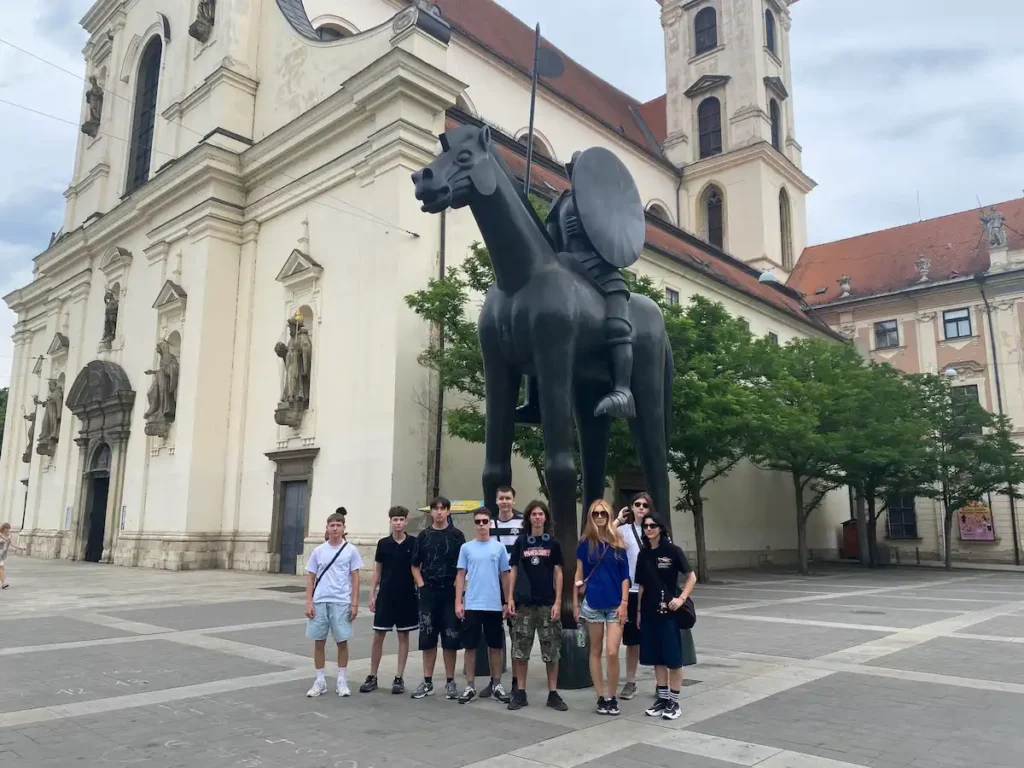
The EdVista Czech summer school in Brno lasted from July 4 to 20, 2026. Participants studied Czech every day, met Ukrainian students of Czech universities, went on excursions in Brno, visited Masaryk University and the Technical University in Brno, and in Prague they visited Charles University. The program combined language learning with immersion in the life of a Czech student city.
This article tells how the event went, not invites you to it. A separate page of the summer school in Brno covers the format and conditions of participation. Here we share what happened each day, who the participants met, and what places they visited during their two weeks in Brno.
The EdVista team ran the school under the leadership of founder Oksana Stupak, a doctor of pedagogical sciences and lecturer at Masaryk University. The format combined classroom lessons with language practice in a real environment, so participants spoke Czech not only in class but also on the streets of the city.
What is the Czech summer school in Brno from EdVista?
EdVista Summer School is a two-week offline program for those who are learning Czech and planning to study in the Czech Republic. It combined daily language classes with a cultural program and an introduction to student life. Participants came to Brno and lived in the rhythm of the Czech city for two weeks.
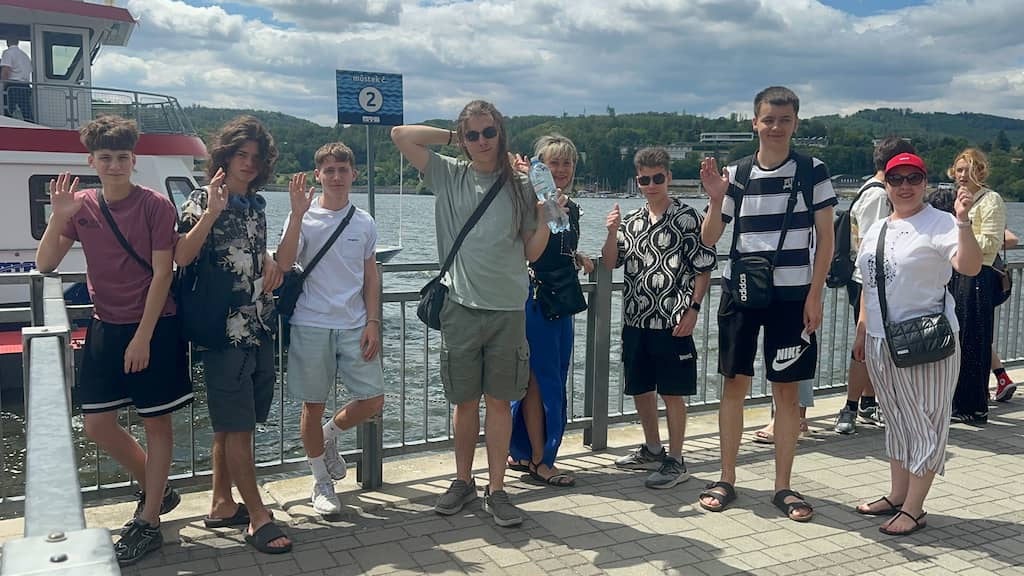
Above all, the main idea of the school is immersion. Instead of learning the language only from a textbook, participants immediately apply it in the city: in cafes, on public transport, in museums and on excursions. This format speeds up the transition from theory to confident communication.
The school brought together Ukrainian students who are preparing to enter Czech universities. For many, it was their first trip to Brno and their first opportunity to see the city where they plan to study. Two weeks gave them a taste of what everyday student life in the Czech Republic is like.
In addition, the participants came from different cities in Ukraine and had different language levels. Some had just started learning Czech, while others were already preparing for the entrance exam. The group was formed so that everyone received tasks according to their level, so beginners didn’t get lost, and stronger students had more difficult exercises.
The program was designed to alternate between study and rest. Participants spent the morning in classes and the afternoon on excursions and language practice in the city. This rhythm was not tiring and gave the participants time to absorb what they had learned without overload.
Czech courses every day at the summer school in Brno
The core of the program was daily Czech language training in Brno. Participants studied in classrooms with teachers, and then reinforced the material in real-life situations outside the classroom. Each day combined grammar, vocabulary, and conversational practice.
Czech-speaking teachers taught the classes, so the participants heard the live language from day one. After the lessons, they went out into the city and immediately applied what they had learned, from ordering coffee to talking to locals. This mix of theory and practice consolidated the language faster than regular courses.
Moreover, the language environment worked 24/7. The participants lived among native speakers, so Czech was heard not only in classes, but also in everyday life. This is the main advantage of the offline format over distance learning: the language cannot be turned off when you live in a Czech city.
The teachers selected the topics of the lessons according to the real situations that awaited the participants that day. Before the excursion, they analyzed the vocabulary about the city and transport, before the visit to the university, words about studies and documents. Therefore, each lesson immediately had a practical application, and did not remain an abstract theory.

At the end of each day, the participants summarized what they had learned. They recounted their impressions in Czech, and the teacher saw which topics had been mastered and which needed to be repeated. Such daily control kept the pace and prevented what had been learned from being forgotten.
Speaking practice was a prominent part of each session. Participants worked in pairs and small groups, acting out dialogues and asking each other questions. This removed the language barrier that often prevents beginners from speaking.
Czech summer school in Brno: excursions and acquaintances
A separate part of the program consisted of excursions, city walks, and meetings with those who were already studying in the Czech Republic. This part combined relaxation, cultural acquaintance, and language practice in one block. The participants saw Brno and immediately spoke about it in Czech.
Trips: Prague and Brno Universities
The participants saw the historical center of Brno, the main squares and landmarks of the city. You can learn more about them on the official Brno tourist portal. The walks gave them a feel for the atmosphere of the city, where many of them plan to study.
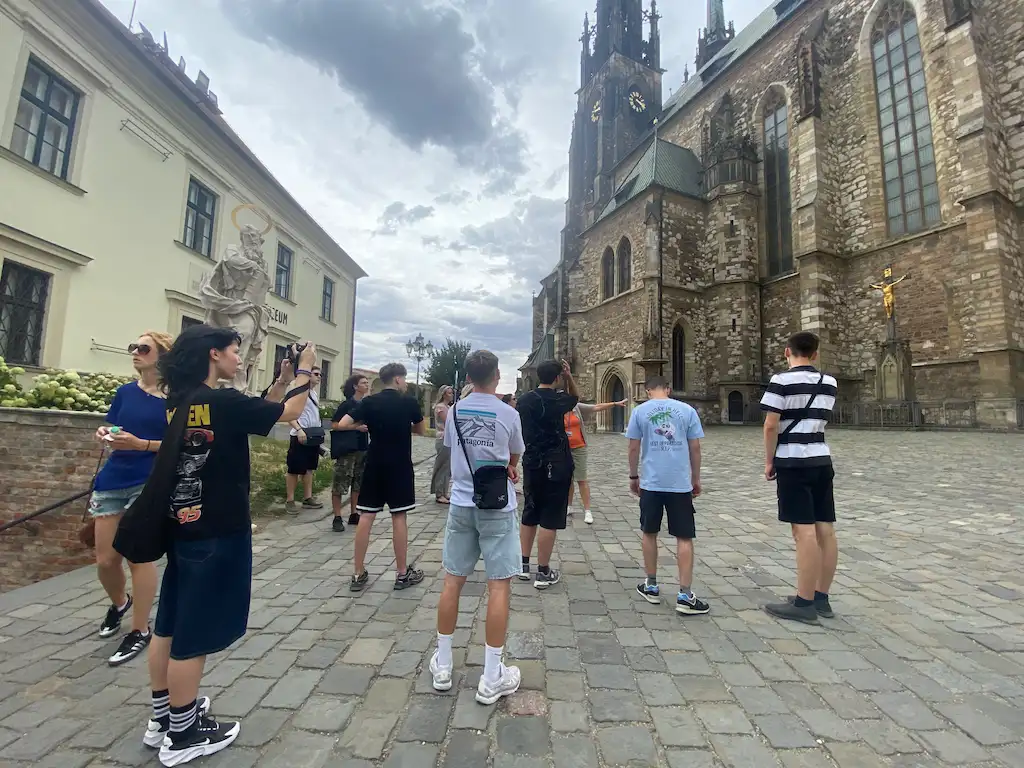
Each walk was also a language practice, because the guides and escorts spoke Czech. The participants listened to explanations, asked questions, and gradually got used to perceiving the language by ear at a natural pace. The walks through the city became a continuation of the classes, not just a break.
The participants saw Brno not as a tourist attraction, but as a city to live in. They saw where students study, where they relax, and what a daily route through the city looks like. This formed a realistic idea of future student life.
Meeting with Ukrainian students of Czech universities
An important part was meeting Ukrainian students who are already studying at Czech universities. They talked about admission, study, and life in the Czech Republic from their own experience. For the school participants, it was an opportunity to hear about student life not from advertising, but from those who have already gone through this path.
Students answered practical questions about housing, dormitories, and combining studies with part-time work. Participants learned how much it costs to live in a Czech city and what a student’s day is like. This specifics turned out to be more useful than general advice, because it was about real experience.
As a result, such meetings remove the fear of moving. Applicants saw real people who were in their place a few years ago and are now confidently studying in the Czech Republic. This gave confidence to those who are still hesitant about applying.
Excursion to VUT: a look at the university from the inside
A separate event was a field trip to the VUT University in Brno, one of the largest technical universities in the country. More information about the institution can be found on the official VUT website. The participants saw the campus from the inside and imagined themselves in the shoes of students.
The visit to the university had a practical purpose. The applicants saw how a Czech university is organized, what classrooms and spaces there are for studying. For those preparing for admission, it was a concrete reference point, not an abstract goal.
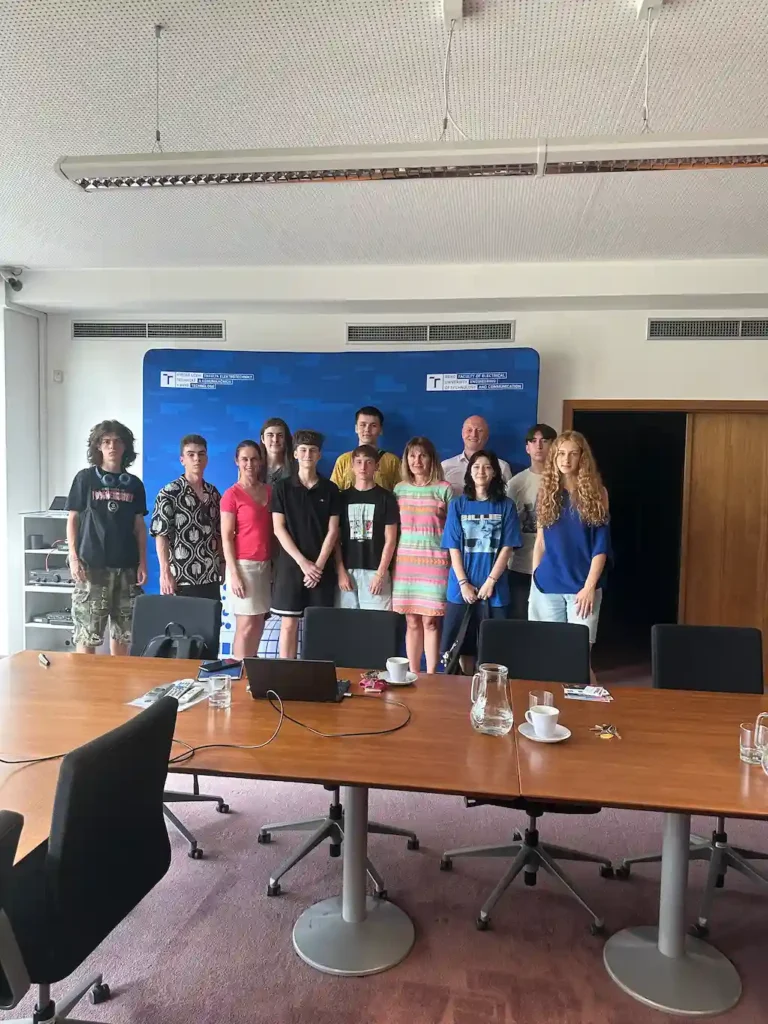
The excursion showed that entering a Czech university is an achievable goal, not a distant dream. The participants walked the same corridors that students walk through and saw the environment in which they will study. This made the preparation for admission more objective.
Trip to Prague
The trip to Prague showed the participants another side of Czech life. They saw the capital and its scale, and also visited Charles University. This event made their future studies more concrete.
One day in Prague
Among the program events was a trip to Prague. The participants saw the capital of the Czech Republic, walked through the historic center and felt the scale of the city, which many knew only from photographs. The trip expanded their understanding of the country beyond Brno.
The one-day trip to Prague was full of activities, but it didn’t turn into a typical tourist excursion. Participants spoke Czech, navigated the city using signs, and ordered food on their own. The capital became a platform for practicing the language in real-world settings.
Prague showed the participants that Czech cities differ in rhythm and scale. After the calmer Brno, they felt the pace of the capital and understood what to choose from when entering. This helped to form a more complete picture of life in the Czech Republic.
The road between cities also became part of the experience. The participants saw how transport is arranged in the Czech Republic and how long it takes to travel between major cities. This trifle turned out to be useful for those who plan to choose a university far from their future home.
Results of the Czech summer school in Brno and the student project
The school ended with the project “I am a student at a Czech university”. In it, participants tried on the role of a student at a Czech institution and summarized everything they had learned in two weeks. The project combined language, acquaintances and impressions of universities into one experience. The participants presented their conclusions in Czech, and this became a final test of everything they had learned in two weeks.
In two weeks, the participants not only improved their Czech, but also saw the country, the city, and the university with their own eyes. They talked to students, visited the institution, and experienced what studying in the Czech Republic looks like from the inside. This is the main result of the school, and it is difficult to obtain it in a distance learning format.
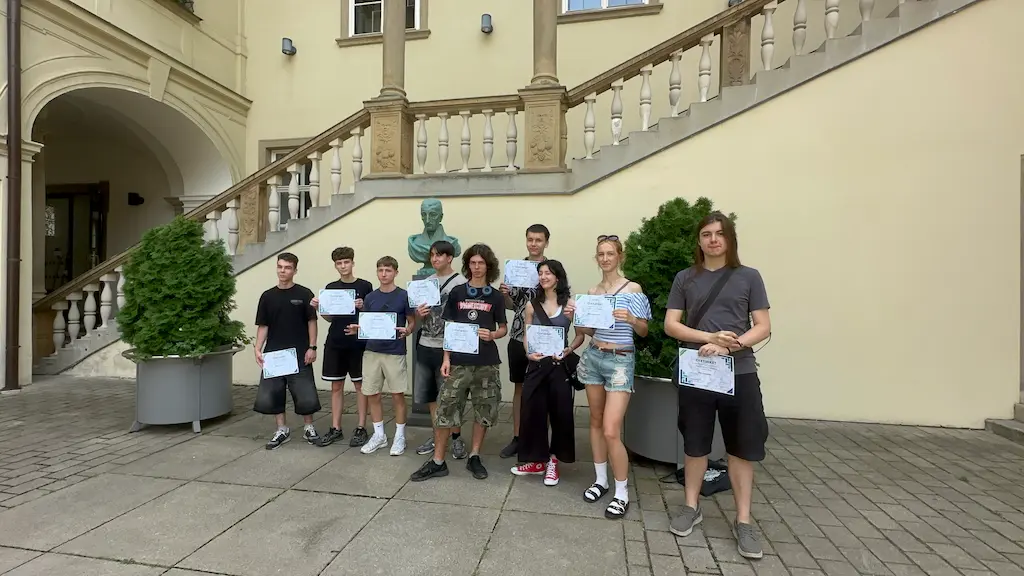
Many participants left with a clear plan of action. Some decided to improve their language skills before entering, others decided on a city and direction. Instead of a general intention to study in the Czech Republic, they received specific steps with which they will begin their preparation this year.
Offline or online: choosing a Czech learning format
The Czech summer school in Brno has shown that offline immersion accelerates both language and admission decisions. For those who cannot come to Brno, there is an online intensive Czech language course that takes students from zero to B2 according to a structured program. It offers the same system of classes, only in a distance format.
The school’s experience will also be useful to those who are choosing between offline and online formats. Some participants decided to continue their studies remotely after Brno, while others will return for future offline events. Both paths lead to the same goal, and the choice depends on everyone’s capabilities.
For those who are preparing for admission, university entrance preparation, which combines language and entrance exams, is suitable. You can find out about the format of the next school on the Brno summer school page, and the impressions of the participants are collected in the reviews.