

Czech to B2 for entry after 10-11th grade is realistic in 5-12 months: the terms depend on the current language level and the format of study. A graduate without knowledge of Czech will need more time than someone who already has a base of A1-A2. The route is chosen once: if you choose too slow a pace, the admission campaign will simply end before the language level is ready. Next: specific terms, formats and steps that help you go through this path without unnecessary stops.
Czech to B2 for entry: how much time is really needed
The guideline is simple: CEFR level B2 in Czech requires 600 to 800 hours of study for a native speaker of a Slavic language. For a Ukrainian-speaking student, this is less than for an English-speaking student, but it still requires systematic work without long breaks.
The actual time depends on the starting level:
- From zero (A0) to B2: 10 to 14 months with daily classes of 1.5-2 hours
- From level A1-A2 to B2: 6 to 9 months
- From level B1 to B2: 4 to 6 months
These terms are confirmed by the practice of preparing for entry to Czech universities: students who study systematically and without long breaks reach B2 within the specified time.
It is important to understand: universities check the language level differently. Some accept a state exam certificate (zkouška z češtiny), others conduct their own testing when submitting documents. Specific requirements should be checked on the official website of the chosen university or through the DZS (Dům zahradní spolupráce), a state body that coordinates academic mobility in the Czech Republic.
There is another nuance. Language knowledge at level B2 and confirmation of this level with a certificate are different things. The exam has its own format, and you need to prepare for it separately, and not expect that the language level will “automatically” convert into a result.
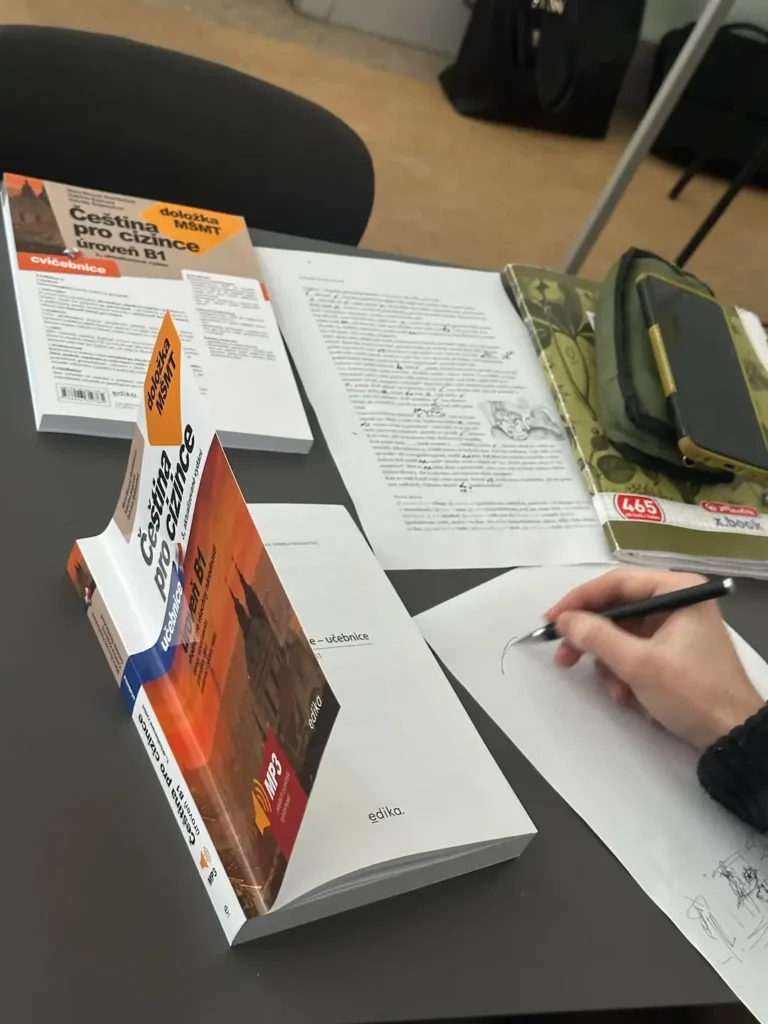
Online intensive or year-long course: what is suitable after school
After graduating from grade 11, most applicants have a clear time frame: summer plus autumn until the start of the entry campaign. It is this period that determines which format is suitable.
Online intensive Czech language: for those who have 5-7 months
The online intensive Czech language is designed for those who already have level A2-B1 and want to reach B2 in 5 months. The format allows you to study from anywhere in the world, adjust your schedule to suit yourself and prepare documents for entry at the same time.
What a typical intensive includes:
- grammar and vocabulary at level B1-B2
- conversational classes with a teacher
- preparation for a specific language exam format
- feedback on written work
If you start at B1, the online intensive B1-B2 will cover the language requirement for the start of the entry campaign at most universities in 5 months. This is the shortest route for those who already have a base.
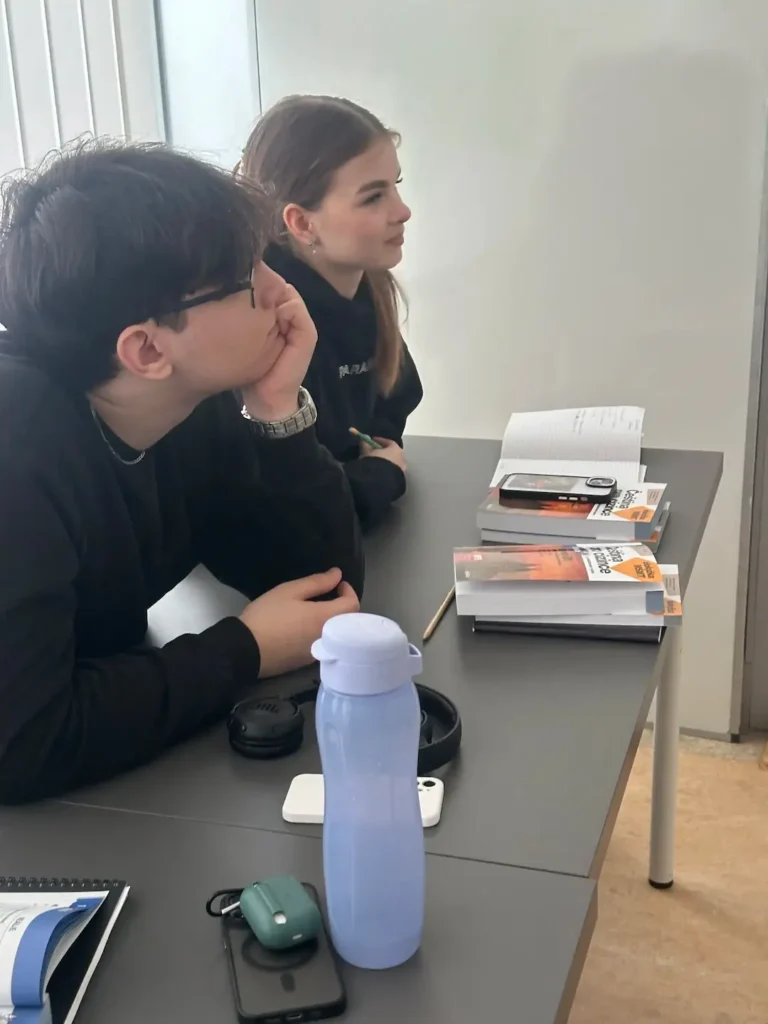
One-year intensive Czech language course: for those starting from scratch or A1
The one-year intensive Czech language course is suitable for those who plan to enter in a year and want to go from scratch to B2 without rushing. This is a structured route, where each month has a specific result: A1, A2, B1, B2.
The one-year format gives more time to consolidate the material, practice speaking and prepare for the exam. It is suitable for graduates of grades 10-11 who have not yet decided on a specialty or are planning to enter the autumn stream of the next academic year.
If you are currently in grade 10 and plan to enter after grade 11, the one-year course gives you a margin of time and reduces the risk of not being able to keep up with the language. If you have already finished school and want to enter next season, focus on intensive formats.
What is included in the preparation for B2 for entry besides grammar
A common mistake: focusing only on grammar and vocabulary. B2 is a level that requires the ability to conduct a discussion, understand academic texts and write detailed answers in Czech.
Full-fledged preparation of the Czech language to B2 includes four components.
Conversational practice. Live speaking cannot be replaced by tests. Regular classes with a teacher, participation in conversation clubs are separate work that takes time and is not replaced by grammar exercises.
Listening. University lectures are given in live Czech, not textbook Czech. You need to train the perception of different accents and speech rates in advance, and not in the classroom.
Academic writing. Some universities test writing skills during the entrance test. The ability to structure an answer of 150-200 words is a separate skill that needs to be trained.
Preparing for the exam. The format of the B2 exam varies depending on which certificate the university requires. You need to prepare for a specific format, not a general one. More details about how long it actually takes to learn Czech up to B2 are described in a separate article.
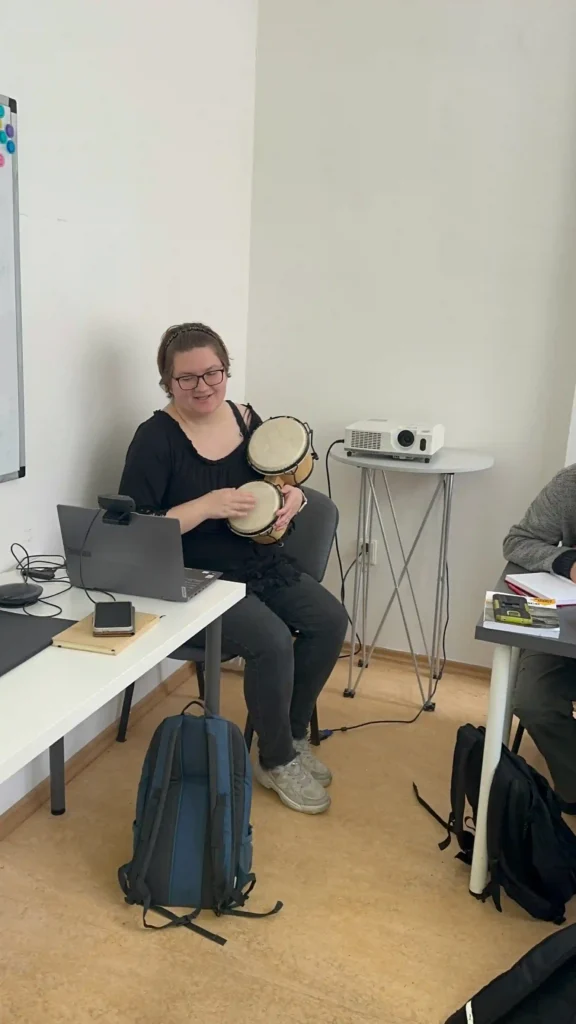
How to combine studying Czech with preparing documents
Simultaneous preparation of language and documents is not an exception, it is the norm for most applicants. The main rule: these processes should not block each other.
While language preparation is in progress, it is worth:
- collecting documents for nostrification of the certificate (terms: 1-4 months)
- determine the list of universities and check the deadlines for submitting applications
- prepare a motivation letter or start writing it
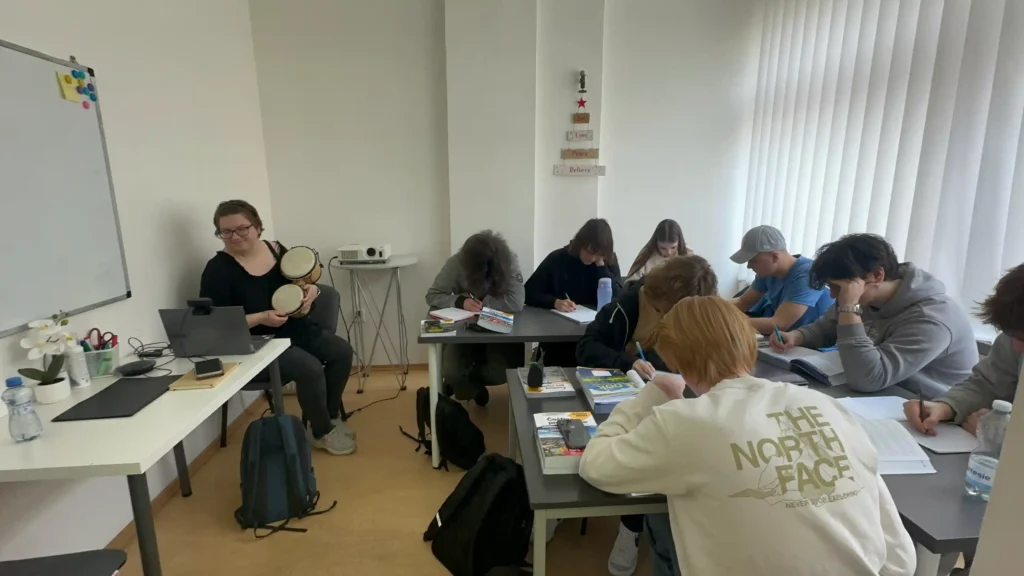
Some of these steps do not require knowledge of the language at the B2 level. Nostrification can be initiated in the first months of study, there is no need to wait for the end of the course.
If you want to go this way without the risk of missing deadlines, consider comprehensive support for admission to Czech universities: it includes control of deadlines, assistance with documents and coordination of all steps in parallel.
An indicative route for a graduate of grades 10-11
May-June: determining the language level through entrance testing, choosing a study format, starting preparation.
June-August: submitting documents for nostrification of the certificate, narrowing the list of universities and specialties.
September-November: active language preparation, preparation of a motivation letter, final choice of university.
December-February: taking a language exam with confirmation of level B2, submitting applications to universities.
This schedule is realistic for those starting from level A2-B1. For a start from scratch, the route is shifted a year earlier or requires a more intensive pace.
Czech to B2 for admission and preparation of documents are two tasks that are solved in parallel. Whoever understands this at the beginning does not waste time correcting mistakes in April, when the deadlines are already closing.