Home » Nostrification for entry into the Czech Republic: step by step, deadlines, common mistakes
Nostrification for entry into the Czech Republic: step by step, deadlines, common mistakes
06.02.2026selector.space
Nostrification in the Czech Republic is the stage at which admission deadlines are most often “burned out”: formally everything is simple (prepare documents and submit), but in practice, minor discrepancies in data easily disrupt deadlines, the wrong translation format, an incomplete package, or additional requests during consideration. The problem is not in the procedure itself. It runs parallel to preparation for admission, language, document submission, and communication with universities – so there may be no time left to correct errors.
This material is for those who plan to enter the Czech Republic and need to confirm their previous education: 11th grade students, graduates of vocational education, as well as those entering Czech universities after a bachelor’s/master’s degree. Are you choosing a program or already collecting documents? The step-by-step instructions below will help you plan nostrification so it does not become a “bottleneck” in admission.
If you want to pass nostrification without delays and unnecessary nerves, support closes the routine: we help determine the right type of nostrification for your case. We collect and check the package, control deadlines and communication – so you do not waste time on rework and “bring this and that”.
What is nostrification in the Czech Republic and when is it needed?
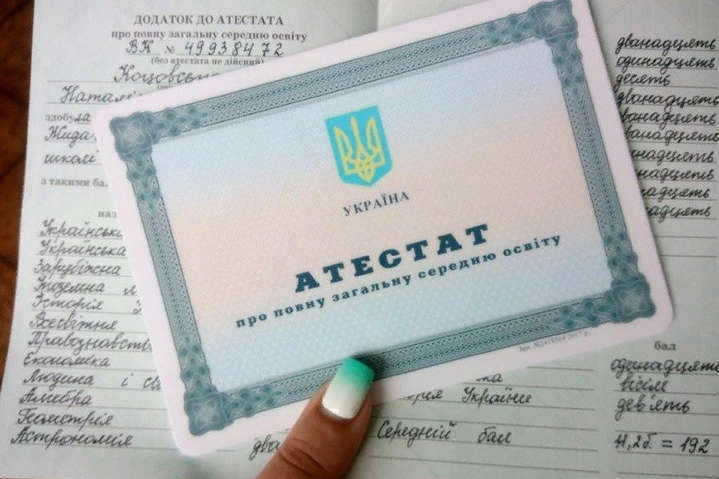
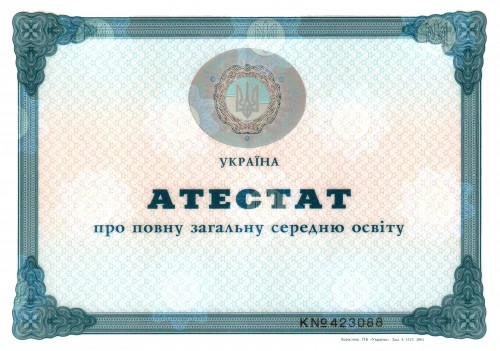
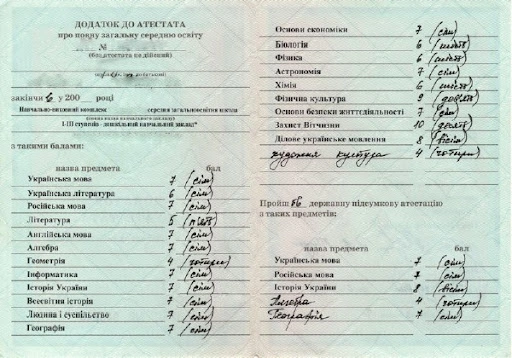
Nostrification is the official recognition in the Czech Republic of your educational document issued in Ukraine (or another country): a certificate of complete general secondary education, a diploma from a vocational pre-higher education institution/vocational education or university together with an appendix. In simple words: the Czech side confirms that your level of education meets their requirements, so a university can accept you for further study.
Most often, Czech educational institutions – universities and some specialized programs – require nostrification for admission. In this article, we consider nostrification specifically for admission to Czech universities.
An important point: in some cases, nostrification may not be mandatory when you submit documents. Some universities accept the package “conditionally” (without a ready-made decision), but then require nostrification before enrollment. Therefore, the rule is simple: the requirements of a specific higher education institution and your program determine the status “required/not required”, not general advice from forums.
Nostrification ≠ translation of documents. Translation is only part of the preparation of the package, and nostrification is a separate review and decision process that has its own deadlines, requirements, and risks of delays.
External nostrification (outside the university)
External nostrification is the confirmation of a certificate/diploma through a government agency outside the university.
You do it once and can use the result to apply to different universities and programs.
You submit the application to the education department of the respective region (kraj), so the requirements and route depend on where you apply.
As part of external nostrification, the authority may assign nostrification exams if subjects or the number of hours differ.
Internal nostrification (at the faculty/at the university)
Internal nostrification is a confirmation of education directly at the university, at a specific faculty.
It is usually faster and often passes without nostrification exams, but the faculty itself sets the rules.
Such confirmation is valid within the framework of this university/faculty, so when entering another higher education institution, you may need to repeat the procedure.
Check the exact list of documents and the submission format against the requirements of the selected faculty.
Documents for nostrification in the Czech Republic: checklist (without water)
Before collecting documents, check the requirements of the selected higher education institution; their list and format may vary.
Documents for external validation of the certificate
Apostille on the certificate (for external nostrification).
Court (official) translation into Czech (an authorized translator in the Czech Republic must do the translation).
Translation of the certificate + appendix with grades/subjects/hours.
Submission to the education department of the relevant region (how to submit).
Documents for internal nostrification (at the faculty)
Translated certificate into Czech + supplement with grades – in the format accepted by the specific faculty.
Important: internal nostrification is valid only for this faculty/university (for another faculty/HEI, you need to go through the procedure again).
The faculty may have its own submission format and file/communication requirements – check them on the admission page of the selected program. Internal nostrification usually takes up to a month and often starts after the faculty confirms (that you are accepted/recommended for enrollment). Internal nostrification is often faster and usually without exams. It costs approximately 700–1000 CZK (depending on the faculty).
Translations and certification – what is most often confused
Three mistakes are most common here. First, the “wrong format” of the translation. Second, not translating all necessary pages (or omitting the appendix/stamps/signatures). Third, discrepancies in the data – for example, different spellings of full names, dates, or institution names in the original and the translation.
Step-by-step instructions for nostrification in the Czech Republic (from preparation to decision)
Below is the logic of the process in steps. It will help you either go through the nostrification process yourself, or clearly see where delays usually occur and what exactly to delegate to support.
Step 1. Determine which document we are nostrifying
First, record what exactly you are confirming: a certificate (school), a diploma of professional pre-higher/vocational education, a bachelor’s/master’s diploma. The package of documents and the logic of consideration depend on this (which pages/appendices are required, what confirmations may be requested, where to submit them).
Step 2. Assemble the package and verify the data
Collect documents according to the checklist and make a “dry” check before submitting:
Full name (on all documents and in translations)
Date of birth
Name of educational institution
Name/type of document (certificate/diploma)
Grades/appendix
Seals, signatures, pages without gaps
This step often saves weeks, as most delays start with small discrepancies.
Step 3. Choose a submission scenario: external or internal
Next – submission to the right institution that considers nostrification of your type of education. Here it is important not to act “according to a template from the Internet”, because the rules and requirements differ depending on the document, region/institution and specific case. Therefore, before submitting, the rule is simple: we compare the requirements with your package and your goal (introduction).
Court translation of the certificate and supplement
Submission to the regional education department
Awaiting a decision / possible nostrification exams
Receive confirmation (suitable for various universities).
Scenario 2 – internal nostrification (at the university/faculty)
Preparation of a translated certificate
Submission to a specific faculty
Confirmation within the faculty (often faster, usually without exams)
Valid only for this faculty/university.
Step 4. Wait for review and responses/requests
After submission, there may be:
request for clarification (on data, translation, pages)
request to deliver a document/copy/confirmation
instruction to correct a specific error (for example, in the name or in the attachment)
The key is not to miss a message and respond quickly, because “pauses” here eat up deadlines.
Step 5. Get the decision and include it in the admission package
Once the solution is ready, properly integrate it into the onboarding package:
or add to the documents for submission, if the university requires it immediately;
or submit it before enrollment, if at the submission stage the nostrification was “in process”.
At this step, it is important to synchronize everything with the deadlines of a specific higher education institution so that nostrification does not become the last “hole” in the package.
The video briefly explains what documents to prepare and what mistakes most often delay nostrification.
Nostrification in the Czech Republic: deadlines and when to start
Nostrification in the Czech Republic runs parallel to admission, so the timing matters. Start nostrification 4–6+ months before the application deadlines to have a buffer for requests and revisions. The main risk is not that nostrification “takes a long time”. The deadlines fluctuate. Somewhere it goes quickly, somewhere there are queues. During the review they may ask you to deliver a document or correct the translation. So the logic is simple. Starting early is not over-caution. It keeps you out of the trap “application is now, but there is no decision yet”.
Focus on the following timeline (without reference to specific dates, but with real “windows”):
4–6+ months before the admission deadlines: choose universities/programs, check their requirements for nostrification, make a list of documents specifically for your case.
3–4 months in advance: make translations, assemble a package, check data (full name/dates/appendices/pages) so as not to redo after submission.
2–3 months in advance: submit documents and go through the waiting phase. Be ready to respond quickly to requests (clarifications, reports, corrections).
1–2 months in advance: set a buffer for the “non-ideal scenario” – error corrections, additional certificates, duplicate copies, delays due to workload.
Time buffer: what to include
Queues and workload: during peak periods, processing and responses may take longer.
Clarifications during processing: they may ask for a page/copy/confirmation – this adds time.
Data discrepancies (name/date/title): even 1 character in different documents often requires translation re-translation or additional explanations.
Duplicate copies/scans: the authority sometimes rejects them due to quality, format or incomplete pages, so you have to reassemble the package.
Logistics and communication: delivery/shipping, responses to emails, approval bevause all this “eats” days, even if it seems like a trifle.
Typical reasons for nostrification delays or refusals: a list with explanations
Incorrect or incomplete translation – the authority returns the document for correction. This happens when the translation does not meet the requirements, or you did not translate all necessary elements (stamps/signatures/appendices).
Missing appendix with grades – the authority considers the package incomplete and requests the appendix, without it the consideration often does not move forward.
Discrepancies in data (full name/dates/titles) – a request for clarification or reworking appears, because the data in different documents “do not converge” even at the level of one letter.
Incorrectly certified copies or scans – the authority may reject documents due to format, quality, lack of necessary pages or incorrect design of copies.
Submitted to the wrong institution or by the wrong procedure – the authority returns the application or delays consideration. Your type of education follows a different submission logic.
Scheduled nostrification exams (external nostrification) – a delay occurs when the exams are scheduled 1–3 months in advance and preparation in Czech is required.
Missing confirmations regarding the educational institution (when required) – the consideration is “on hold” until additional confirmations or certificates regarding the institution/program are provided.
Violation of the deadlines for submission regarding admission – formally the process is underway, but the decision does not make it to the university deadlines, and this blocks the admission package.
Lost communication / did not respond to the request on time – due to a missed letter or untimely response, the procedure is paused, and sometimes it has to be actually restarted.
“Red flags” to check before submitting
You write the full name and date of birth the same in all documents and translations.
The appendix with grades is added and translated (if translation is required) – without “missing pages”.
You include all pages with stamps/signatures in copies/scans without cropping.
The translation meets the requirements of the institution (format/officiality/completeness), not “as it turned out”.
The submission goes to the correct institution specifically for your document (certificate/diploma).
There is a contact for correspondence and you actually control it (mail/phone/address, if necessary).
You leave a time buffer before the admission deadlines in case of document delivery or rework.
How we help with nostrification in the Czech Republic
We check the requirements for your universities and your case → you don’t start the “wrong” procedure and don’t waste time on rework.
We create a checklist of documents and control their completeness → the authority does not return the package with the wording “bring it in again…”, because everything is collected immediately.
We check data and discrepancies before submission → minus delays due to errors in full names, dates, names of documents and educational institutions.
We advise on translations and certifications → translations are made in the required format the first time, without “the wrong pages / the wrong type of translation”.
We maintain communication and deadlines (calendar, reminders, response control) → you don’t miss requests during consideration and don’t lose weeks due to silence/downtime.
We integrate the nostrification solution into the admission package. At the submission or enrollment stage, you have all documents in the required logic, without the “last missing item”.
Nostrification is not a separate “tick”, but part of the admission strategy: it must be synchronized with the choice of universities, application deadlines, other documents and preparation for admission. That is why we include it in the admission support and online intensive for admission to a Czech university: so that you can move through the documents in parallel, control the deadlines and not fail admission due to the bureaucratic stage.
FAQ: frequently asked questions about nostrification
What is the difference between internal and external nostrification?
External is done once and is suitable for different universities, but may include exams; internal is done at the university/faculty, often faster, but is valid only for that HEI.
How long does nostrification in the Czech Republic take on average?
Usually it is from several weeks to several months, but the exact time depends on the type of document (certificate/diploma), institution, season (peak workload), and whether there will be requests for clarification or delivery of documents.
Is it possible to submit documents for admission if nostrification is still in process?
Sometimes – yes: some universities accept the package at the application stage without a ready-made decision, but may require nostrification before enrollment. The specific higher education institution and program always determine this.
What to do if the documents spell the name differently?
Do not ignore. Bring the data to a consistent form before submission. Check where exactly the discrepancy is (letter, transliteration, space, ending). Prepare the correct translation/explanation to the institution’s requirements, so the process does not stop at “clarify the data”.
Is nostrification in the Czech Republic required for all universities?
No. Requirements may vary: in some cases, nostrification is mandatory immediately, in others – only before enrollment, and in others there may be a different logic for confirming education. The correct answer is always the same: look at the requirements of a specific university, faculty, and program.
What mistakes most often “eat up” time?
The three most common are: incomplete package (forgotten appendix/pages), errors or discrepancies in data (full name/dates/titles), wrong translation format or certification. Next in frequency are submission to the wrong place and missed requests during review.
Need help with nostrification in the Czech Republic for admission deadlines?
Leave an application and we will tell you what type of nostrification is needed in your case and compile a list of documents for the admission deadlines. We will tell you whether internal nostrification at the university is suitable for you or whether external nostrification is needed.