Pohoda: a community for students and parents about life in the Czech Republic
Monthly Zoom meetings with Oksana Stupak and a private Telegram chat with threads on medicine, documents, visas, banks, and Ukrainian communities in the Czech Republic.
Join the community
Life in the Czech Republic for a student does not end with lectures and exams. After admission, a student has to find housing, sort out documents, register with a doctor and open a bank account. Parents worry about their child in another country and do not always know where to find verified answers. EdVista created Pohoda for this purpose, a private community for applicants, students and their parents.
What is life like in the Czech Republic in the first months, and what do students need to arrange? Below we explain the first steps, documents, health insurance and how the community works.
Life in the Czech Republic: what students and parents face
The first months after admission are usually the busiest. Housing comes first: a place in a dormitory or a room in a flat. First-year students do not always get a dormitory place, so it is worth starting the search early.
Housing rules depend on the faculty. Oksana Stupak described two cases at an EdVista webinar. At a faculty of education, a student received student status in July and used it to register for a dormitory. The Faculty of Medicine at Masaryk University gives priority to senior students. There, a first-year student had to rent a room in a flat.
EdVista founder Oksana Stupak describes adaptation as several waves. At first everything new seems interesting, then a dip follows and you want to go home. Later you make friends, find a routine and feel at home. Both students and their parents in Ukraine go through these waves. Knowing about them in advance helps you see a dip as a normal stage.
A Czech university treats a student as an adult who chose their own path. Nobody will remind you about deadlines or missed classes. Language helps students adapt faster, as we explain in our article about Czech language courses.
Is life in the Czech Republic expensive?
Expenses depend on the city, the type of housing and your lifestyle. Prague is usually more expensive than Brno or Ostrava, and a dormitory costs less than a rented room. The ISIC student card gives discounts on transport and books, while home cooking reduces costs further. Plan the one-off costs of the first month separately. For a detailed breakdown, see our article on the cost of studying in the Czech Republic.
Health insurance for students
Who pays for health insurance depends on residence status and age. For people with temporary protection, the state automatically insures children under 18 and adults over 65. Adults aged 18 to 65 have state insurance only during the first 150 days after receiving protection.
After that, state insurance continues only for certain groups. These include students aged 18 to 26 who study in the Czech Republic or in Ukraine. They submit a confirmation of study to their insurer. Current conditions for Ukrainians are on the VZP website.
Students who come on long-term residence for study arrange insurance differently. They need health insurance for the whole stay, and the embassy sets the required scope. For example, the Czech Embassy in Kyiv describes the requirements. Check them before you submit documents for residence, because the rules change.
Documents, residence and bank: first steps after arrival
OAMP is the Department for Asylum and Migration Policy of the Czech Ministry of the Interior. Foreigners contact it with questions about residence, including temporary protection.
The Ministry announces the procedure for extending temporary protection in advance. Usually you first register online and then visit an OAMP office at the set time. Do not miss the registration deadlines, because protection can end after them. Letters from the Ministry and the university often arrive by email, so check it regularly.
Those who come specifically to study apply for long-term residence after the university decides on admission. Processing can take several months.
A bank account helps you pay for the dormitory and transport and receive pay for a part-time job. Banks usually ask for a passport and a document confirming residence in the Czech Republic. Without residence status it is hard to open an account, so plan these steps in order. While you are in Ukraine, prepare your passport, the admission decision and translations of your documents.
In the first weeks after arrival, go through this list:
- Check the validity of your residence status.
- Report your address to the Ministry of the Interior.
- Submit a confirmation of study to your insurer if you have temporary protection.
- Open a bank account.
- Get an ISIC student card.
Temporary protection or long-term residence for study
You can study at a Czech university with temporary protection, so changing your status after admission is optional. The EU has extended temporary protection for Ukrainians until March 2027. What happens after that depends on new decisions, so follow announcements from the Ministry of the Interior.
Both statuses allow study, but they differ in health insurance, work conditions and the extension procedure. If your status changes during your studies, the conditions for insurance and part-time work change too. Check the consequences on the Ministry website before you switch.
Student life in the Czech Republic: language and everyday adaptation
Many applicants ask whether people in the Czech Republic widely speak English. For study, the answer depends on the program. Czech-taught programs require Czech at B2 level, and public universities teach them free of charge. Read more in our article on free education in the Czech Republic.
Czech also matters in everyday life: at the doctor, at the post office and at a part-time job. Liza, a guest of the EdVista webinar, came to the Czech Republic at 19 without Czech. Within three months she spoke freely and found a part-time job.
Studies bring their own rhythm. Dmytro, a student at Mendel University in Brno, said lectures can have about 200 students and attendance is optional. Seminars give extra points, and the first tests start in November. His advice is to switch your phone to Czech so you hear the language every day.
Ukrainians in the Czech Republic: where to find answers and support
Ukrainians in the Czech Republic have many communities, groups and chats. Social media groups give quick answers, but often nobody checks the information there. Rules change regularly, while old posts stay in the feed.
Oksana Stupak created Pohoda so that students and parents go through adaptation more calmly. The community helps members integrate into Czech society while keeping a connection with Ukrainian culture. Pohoda communicates in Ukrainian.
Once a month, Oksana Stupak hosts a Zoom meeting and invites experts in healthcare, documents and studying. Guests include Ukrainian doctors, teachers and Ukrainians who already have their status in the Czech Republic. In the private Telegram chat, topics cover healthcare, documents and visas, OAMP and banks, Ukrainian communities and news. Members share a goal: admission and study in the Czech Republic. They talk about life in the Czech Republic with people who have already gone through the same steps.
Applicants, students of Czech universities and their parents can join, including those who prepare for admission on their own. Access is free for clients who chose admission support to a Czech university. Other members pay a monthly subscription and can join with the button on this page.
Join Pohoda so the first months in the Czech Republic go more calmly for the whole family.
Pohoda Community
A monthly Zoom meeting and a private Telegram chat
How it works Pohoda
Monthly meetings
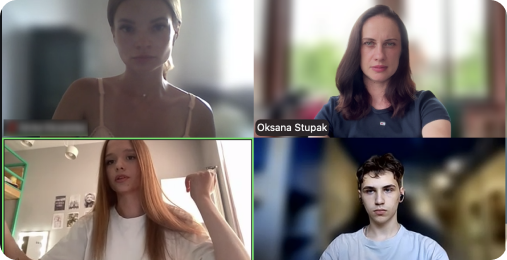
Once a month, Oksana Stupak hosts a Zoom meeting and invites experts on healthcare, documentation, and education in the Czech Republic.
Private Telegram with threads
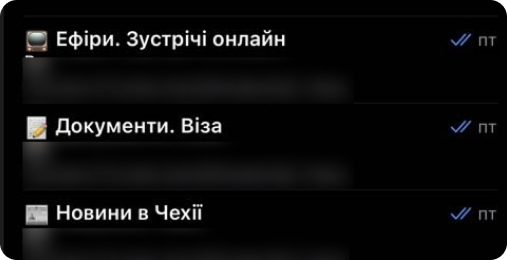
The topics are organized by category: medicine, documents and visas, OAMP and banks, Ukrainian communities, and news.
For Students and Parents
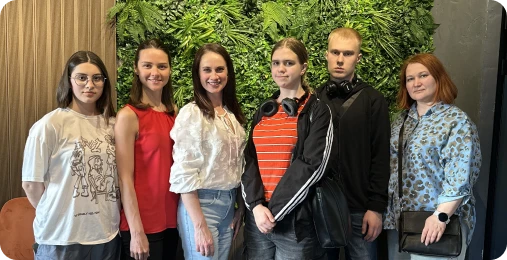
The participants include prospective students, students at Czech universities, and their parents, who gain insights based on the personal experiences of others.
You might also be interested in
High-quality preparation, supported by qualified lecturers and consultants
Online intensive Czech language course
The online Czech language intensive course is a comprehensive program for Ukrainians who plan to study in the Czech Republic and want to reach B2 level in a structured format.
Details
Speaking club
Live Czech conversation practice online, 1-2 times a week. It helps you overcome the language barrier and reinforce what you have learned in your courses.
Details
Preparation for admission to Czech universities
Czech up to B2 level and preparation for the OSP and TSP entrance exams. We handle the organizational side of admission together with you, from the application to enrollment.
Details
Czech courses from 0 to B2
Individual and group Czech language lessons with experienced Czech lecturers
Details